Understanding Triplex Cables: Features, Benefits, and Applications
In all locations
for electrical distributions and wirings, cables are at the centre of power
supply installations. Amongst all those numerous millions of cables we have
today, one of the superior and most efficient mediums for power distribution in
overhead service installations is the triplex cable. Strong, inexpensive, and
reliable when operating at its full capacity when subjected to adverse
circumstances, it has its usage with any residential, commercial, and utility
industry application.
The article
further clarifies all about Triplex Cables, their distinguishing features, advantages, and some locations where
we simply can't bring ourselves to do without them.
What are Triplex Cables?
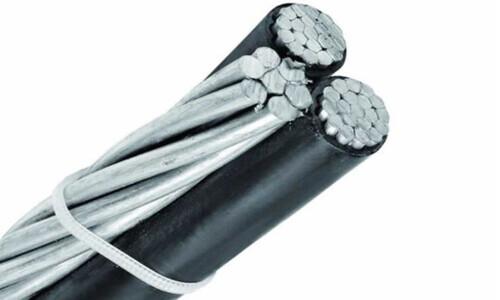
Triplex cable is
an overhead cable with three twisted conductors: two insulated phase conductors
and a neutral or bare wire conductor. The phase conductors are normally
aluminum conductors with polyethylene (PE) or cross-linked polyethylene
insulation and the neutral is normally a bare aluminum cable.
Besides providing
mechanical strength to the cable through twisting conductors helically,
electromagnetic interference is reduced and stability during transmission is
enhanced.
Triplex cables
are usually employed for secondary distribution lines, utility poles to
buildings, houses, or small transformer stations.
Triplex Cable Structure
The construction
of triplex cable is extremely simple but extremely useful. These are made up
of:
Conduction
- Aluminum, conventionally, by its light weight, corrosion-resistive nature, and its comparatively inexpensive price relative to copper.
- For some applications it can be replaced by copper if there is greater performance or if conductance is needed.
Insulation
- The conductors are insulated with PE (Polyethylene) or XLPE (Cross-linked Polyethylene).
- The electrically good insulation of XLPE has good thermal resistivity and durable performance.
Neutral Conductor
- Bare aluminum conductor that is used to give the neutral and at the same time acts as a mechanical reinforcement of the structure.
- Very often steel reinforcement is utilized by means of supplementary strength to withstand tension, especially for broader spans in overhead cable installations.
Twisted
Construction
- The three
conductors are twisted into a triplex shape and thus form a cable withstanding
mechanical tension and climatic variations.
Main Features of Triplex Cable
Triplex cables do
have some typical attributes by which they are only preferred for power
distributions:
- Usage for Overhead: Is generally used for overhead usage, connecting utility poles to commercial or residential service points.
- High Tensile Strength: Is subjected to heavy winds, ice, and mechanical loads and never cracks.
- Corrosion Resistance: Aluminum conductors are corrosion resistant, especially in the open environment.
- Good Electrical Properties: The XLPE insulation has a high dielectric strength and minimum leakage current with thermal stability.
- Cost-Effectiveness: The lightness and cost benefit of using aluminum over copper make the entire cable less expensive.
- Light Construction: Lighter and less difficult to lift and install compared to heavyweight copper cables.
- Safety: The usage of hard insulation for phase conductors decreases electric fault hazards and is useful for safe operation.
Pros of Triplex Cable Use
Triplex cables do
have certain points to support for large-scale application:
1. Longevity and
Durability
They are designed
in a way so that they are resistant to rough weather like hot and cold climatic
conditions, rainfalls, snowfalls, and ultraviolet radiation. Triplex cables,
when properly installed, work for a number of years with minimal maintenance.
2. Installation
Ease
The lightweight
character of the aluminum material facilitates easy and less manpower-driven
hauling and installation with respect to copper cables. The twisted formation
further facilitates convenient stringing over utility poles.
3. Laminations to
Avoid
Triplex cables
are cheap since XLPE insulation is cheap and reduces dielectric losses and
leakage energies.
4. Cost
Effectiveness
The simplicity of
the design and aluminium conductors make triplex cables cheaper at the onset
and cheaper to replace over time.
5. High
Mechanical Strength
The neutral
conductor is generally a messenger wire and is used to transmit mechanically
the mechanical stresses of the cable and to fight environmental stresses.
6. Versatility
Adequate for
domestic and industrial installations, these cables are ideal for small to
medium power distributions.
7. Eco-F
Aluminium
conductors are simple to reuse and bring green technology to the power
industry.
Applications of Triplex Cables
Triplex cables
are common to power distribution schemes for the reason that these are apt to
provide power at any condition with reliability. Some common applications are:
1. Secondary
Distribution Lines
The optimum use
of triplex cables is with reference to employing secondary overhead
distribution lines. They are employed to serve commercial and household
customers' individual service drops with power from distribution transformers.
2. Service Drops
to Domiciles Baumgart
It is most
commonly being utilized to connect utility-pole-supplied power to small
buildings and houses. It works best when connecting short spans with minimal
sag because it is light but extremely strong.
3. Rural
electrification schemes
The triplex
cables are generally applied at rural and semi-city locations because they are
worth money, easy to install and can perform well irrespective of varied
environments.
4. Temporary
Power Supply
Temporary supply
installations are also installed with triplex cables during construction work,
festivals, or emergency applications when installation at a faster rate is
possible.
5. Street
Lighting
They can provide
power to streetlights, with a perpetual supply of power to streets and open
spaces.
Specifications and Standards
Triplex cables
are made to different national and international standards to ensure optimum
performance and safety. A few of those popular standards are:
- ASTM Standards (for conductivity properties)
- ICEA Standards (for construction and performance of cable)
- IEEE/ANSI Standards (for electric specification)
Depending upon
localized area needs, cables may at some points have to comply with local
utility or governmental requirements.
Summary
Triplex cables
form the backbone to advance power delivery with ultimate strength, durability
and cost advantage. The twisted cable consisting of two-phase conductors and a
bare neutral conductor, triplex cables are suitable for overhead service
installations. From energizing homes in urban towns to enabling rural village
electrification, triplex cables have become a necessity as far as providing
unbroken access to power is concerned.
Due to their multiple advantages, such as simplicity of installation, cost-effectiveness, and stability against environmental conditions, utilities and contractors opt to use them. As the world imperatives of providing efficient and cleaner electrical infrastructure are sought, triplex cables will be an effective solution to the utilization of energy distribution sectors.
Also Read: Top-Rated Mining Cables for Underground and Surface Operations

Comments