Wayfinding vs. Signage: What's the Real Difference?

Wayfinding vs. Signage: What's the Real Difference?
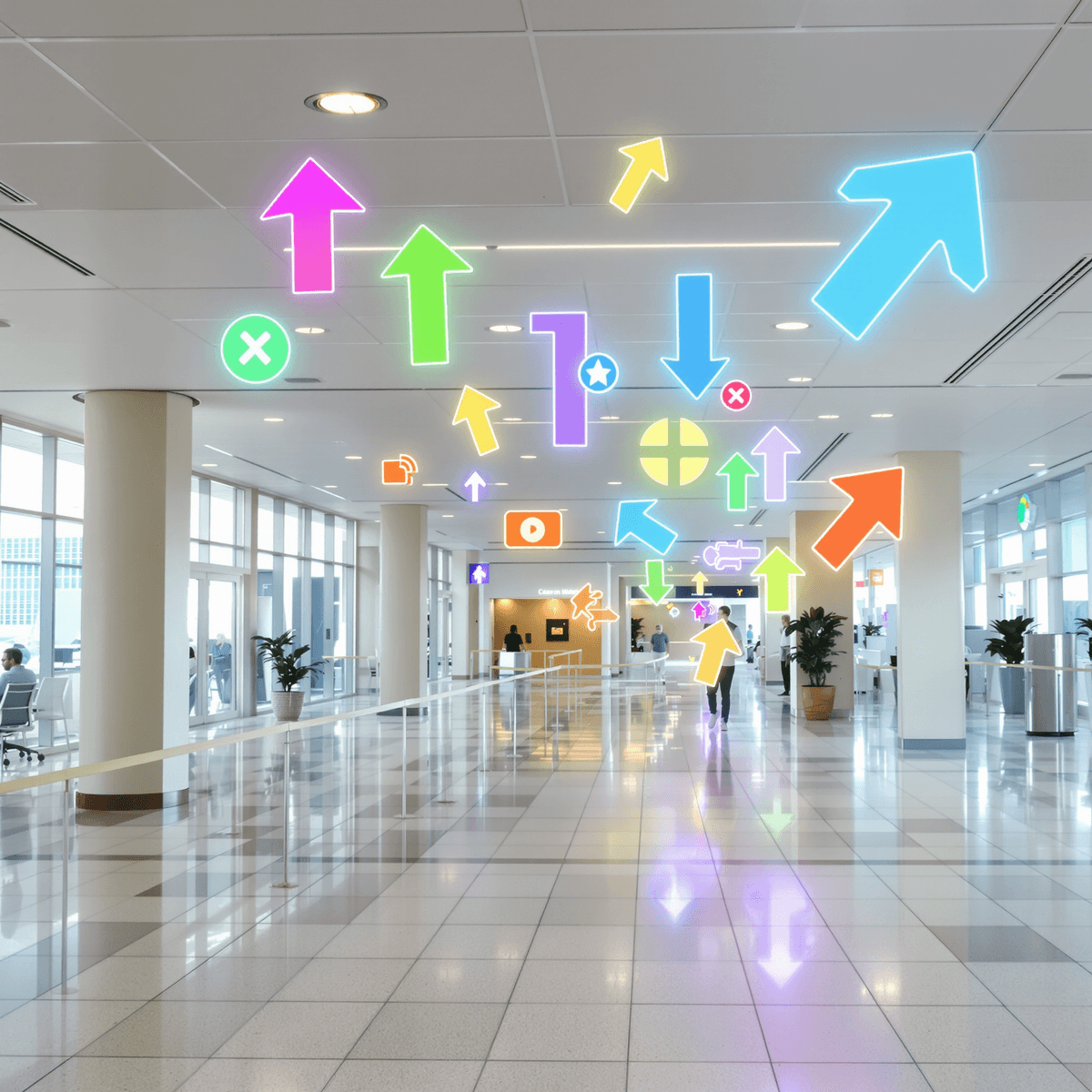
When you walk through a busy airport, hospital, or office building, you rely on visual cues to find your destination. Two terms often get mixed up in these scenarios: signage and wayfinding. While they're closely related, understanding the difference between wayfinding and signage can transform how you approach navigation systems.
Signage refers to the physical visual elements you see—the directional arrows, room numbers, maps, and informational displays that provide specific location data and directions. These are the tangible markers that catch your eye and deliver immediate information.
Wayfinding, however, represents something much broader. It's the complete navigational experience that includes signage but extends far beyond it. Wayfinding encompasses how your brain processes those visual cues, interprets environmental information, and guides you through complex spaces using multiple tools and strategies.
The wayfinding vs signage debate isn't about choosing one over the other. These navigation systems work together, with signage serving as a crucial component within the larger wayfinding framework. This article will explore their distinct roles and show you how they combine to create seamless navigation experiences.
Understanding Signage
Signage refers to physical visual markers that convey information using visual elements. These communication tools include signs, symbols, maps, directional arrows, and various markers strategically positioned in different environments to effectively guide users.
Physical signs are the building blocks of visual communication systems. They provide crucial information at the exact moment and place where you need it most. You come across these elements every day—such as street signs directing traffic or building directories helping you find specific offices or departments.
Types of Signage
There are four main types of signage that cater to different navigational needs:
- Directional signage: This type of signage guides movement through spaces by using arrows, pathways, and route indicators to show you where to go.
- Identification signage: Identification signs label specific locations, rooms, buildings, or areas to confirm your current position.
- Informational signage: Informational signs offer detailed content about services, hours, policies, or educational material relevant to the location.
- Regulatory signage: Regulatory signs communicate rules, restrictions, safety requirements, or legal obligations that govern behavior in specific areas.
Each type of signage plays a unique role in creating comprehensive visual communication networks. Directional signs eliminate uncertainty when deciding between multiple pathways, while identification markers confirm that you've arrived at your intended destination. Informational displays enhance your understanding of available resources, and regulatory signs ensure compliance with necessary protocols.
Interestingly, the principles of sign language share similarities with physical signage. Both serve as vital communication tools that convey messages clearly and efficiently. The success of any signage system relies on careful placement, clear messaging, and consistent design elements working together to minimize navigation confusion and promote confident decision-making throughout your journey.
Understanding Wayfinding
Wayfinding is more than just putting up signs—it's a complete system that guides people through any space. This approach combines physical elements with an understanding of how people think to create smooth and enjoyable movement experiences.
The Complexity of Navigation
When we navigate, our brains are doing a lot of work behind the scenes. In just a few seconds, we process various pieces of information:
- Visual landmarks: Things we can see and recognize
- Spatial relationships: How different areas or objects are positioned relative to each other
- Directional cues: Signs or indicators that tell us which way to go
- Past experiences: Memories of similar places we've been before
This mental mapping process is complex and involves making decisions based on all these factors. Effective wayfinding systems should support and enhance this decision-making process.
Tools and Strategies for Modern Wayfinding
Today's wayfinding solutions use a variety of tools and strategies to make movement easier:
- Digital technologies: Interactive kiosks and mobile apps provide real-time information and directions.
- Environmental cues: Lighting, color schemes, and architectural features guide users along their path.
- Sensory elements: Tactile surfaces and audio guidance offer additional ways to navigate.
- Spatial design principles: Thoughtful layout and flow patterns create intuitive routes.
The Importance of Environmental Cues
Environmental cues are particularly important in making wayfinding effective. For example, natural light can lead people toward exits, while consistent use of colors helps them remember different areas. These subtle design choices work together with traditional signs to create what researchers call "environmental legibility"—how well a space communicates its organization and navigation options.
The Goal of Wayfinding
The ultimate goal of wayfinding is to make navigation effortless. When all these elements—physical signs, digital tools, environmental cues—work together seamlessly, users feel confident in their movements and require less mental effort to reach their destinations.
Key Differences Between Wayfinding and Signage
The difference between wayfinding and signage lies in scope and function. Signage serves as individual visual markers—the physical signs, symbols, and maps you encounter throughout a space. These elements provide specific directional information at discrete points along your journey. Wayfinding, however, represents the complete navigational ecosystem that encompasses signage while extending far beyond it.
What Is The Difference Between Signage And Wayfinding becomes clear when you consider their relationship:
- Signage = The tools (individual signs, maps, symbols)
- Wayfinding = The entire system (signage + technology + user psychology + environmental design)
Signage wayfinding integration demonstrates this distinction perfectly. In a hospital, directional signs pointing to the emergency room represent signage. The comprehensive wayfinding system includes those signs plus color-coded floor pathways, digital kiosks with interactive maps, mobile apps providing turn-by-turn directions, and strategically placed landmarks that work together to guide patients seamlessly.
Wayfinding and signage differ significantly in their approach to user psychology. Signage delivers information directly through visual communication. On the other hand, wayfinding strategies consider how stressed hospital visitors process information differently than relaxed museum guests, adapting the entire navigation vs physical markers approach accordingly. A shopping mall's wayfinding system might incorporate scent marketing near food courts and specific lighting schemes to complement traditional signage, creating intuitive pathways that feel natural rather than forced.
The Role of Signage Within Wayfinding Systems
Signage in wayfinding serves as the foundation that transforms complex environments into navigable spaces. You need strategically placed signs that work harmoniously with the broader navigation system to create seamless user journeys. Well-designed signage acts as the visual backbone, providing critical decision points that guide users through their intended paths.
The effectiveness of sign design relies on three fundamental principles that determine success or failure in navigation systems: visibility, legibility, and clarity. For a deeper understanding of these principles, you can explore these 6 essential principles of sign design.
Visibility: Signs must be positioned at eye level and in locations where users naturally look for guidance.
Legibility: Typography, contrast ratios, and sizing ensure information can be read quickly from appropriate distances.
Clarity: Simple language, universally understood symbols, and logical information hierarchy prevent cognitive overload. This aspect becomes especially crucial when you consider that users often encounter signs during moments of stress or uncertainty. For instance, a hospital visitor searching for the emergency department needs immediate comprehension—this is where the critical role of wayfinding in healthcare comes into play.
Quality signage reduces decision fatigue by eliminating guesswork from navigation. When signs provide consistent visual language, appropriate information density, and logical placement patterns, users develop confidence in the system. This trust translates into reduced anxiety, fewer wrong turns, and improved satisfaction with the overall environment.
The integration of physical signs with digital wayfinding elements creates redundancy that accommodates different user preferences and accessibility needs, strengthening the entire navigation framework. To achieve this seamless blend of physical and digital elements in your wayfinding strategy, consider leveraging expert insights from sources like McClure Vision's guide on wayfinding design.
National Park Wayfinding Signs: A Case Study
National park wayfinding signs face unique challenges that distinguish them from indoor navigation systems. These outdoor navigation systems must withstand harsh weather conditions, blend harmoniously with natural landscapes, and guide visitors across vast, complex terrains where traditional urban wayfinding principles don't always apply.
Specialized Materials and Construction
National parks typically employ weather-resistant materials like treated wood, aluminum, and high-density polyethylene for their signage. These materials ensure longevity against rain, snow, UV exposure, and temperature fluctuations while maintaining visual appeal that complements the natural environment.
Strategic Placement and Information Hierarchy
Directional wayfinding signs in parks are strategically positioned at:
- Trail intersections and decision points
- Visitor centers and parking areas
- Scenic overlooks and rest areas
- Emergency access points
The information presented follows a carefully structured hierarchy—distance markers, difficulty ratings, safety warnings, and interpretive content work together to support both navigation and education.
Integration with Digital Solutions
Modern park systems combine traditional signage with mobile apps and QR codes, creating comprehensive navigation experiences that respect the natural setting while providing enhanced visitor guidance and safety information.
Modern Innovations in Wayfinding Beyond Traditional Signage
Digital wayfinding tools are changing the way people navigate complex places. These technologies work alongside traditional signs to create more flexible and tailored navigation experiences.
1. Interactive Digital Kiosks
Interactive digital kiosks serve as central information hubs in airports, hospitals, and shopping centers. You can search for specific destinations, view real-time updates, and receive customized directions based on your mobility needs or preferences. These systems often integrate with building management platforms to provide accurate wait times and facility status updates.
2. Mobile Apps in Navigation
Mobile apps in navigation have transformed wayfinding by putting personalized guidance directly in your pocket. Apps like Google Maps for indoor spaces or facility-specific applications use GPS, Bluetooth beacons, and WiFi positioning to provide turn-by-turn directions. You receive notifications about route changes, accessibility options, and points of interest along your path.
3. IoT Sensors
IoT sensors embedded throughout buildings collect data on foot traffic patterns, helping optimize wayfinding strategies. These sensors can trigger dynamic signage updates, adjust lighting to highlight pathways, or send location-based information to your smartphone as you move through the space.
4. Interactive Maps
Interactive maps displayed on touchscreens or accessed through mobile devices allow you to explore floor plans, filter locations by category, and bookmark frequently visited destinations. These tools reduce cognitive load by presenting information in digestible, visual formats that complement your natural navigation instincts.
These innovations demonstrate what is the difference between signage and wayfinding – while signs provide static information, modern wayfinding systems adapt to your specific needs and environmental conditions.
Benefits of Integrating Effective Wayfinding Systems
The benefits of wayfinding systems extend far beyond simple navigation assistance, creating measurable value for both users and facility operators. When you implement comprehensive wayfinding solutions, you unlock multiple layers of advantage that transform how people interact with your space.
User Experience Enhancement
- Intuitive navigation flow eliminates guesswork and reduces time spent searching for destinations
- Stress reduction in navigation occurs when visitors can confidently move through unfamiliar environments
- Increased comfort levels build trust between users and your organization
- Enhanced accessibility ensures all visitors can navigate independently
Implementing effective indoor signage and directional signs can significantly enhance this user experience by providing clear, easy-to-understand information about the layout of the space.
Operational Advantages
Facility managers experience significant efficiency gains through integrated wayfinding systems. Digital analytics provide insights into traffic patterns, helping optimize space utilization and resource allocation. Staff spend less time providing directions, allowing them to focus on core responsibilities.
Psychological Impact
Users perceive well-designed wayfinding as a reflection of organizational competence and care. This perception directly influences satisfaction scores and return visit rates. The improved user experience creates positive associations that extend beyond the navigation process itself, contributing to overall brand perception and customer loyalty.
Moreover, in an office setting, office wayfinding can be a game changer for workplace navigation, further enhancing the operational advantages of integrating effective wayfinding systems.
Conclusion
What Is The Difference Between Signage And Wayfinding? Signage provides the visual foundation while wayfinding creates the complete navigational experience. You need both elements working together to achieve optimal results.
Successful navigation systems depend on combining clear physical markers with cognitive-friendly design principles. Your signage must be visible and legible, but your wayfinding strategy must consider how people actually think and move through spaces.
The importance of integrated approach cannot be overstated. When you thoughtfully implement both signage components and comprehensive wayfinding systems, you create environments where users feel confident and comfortable navigating independently. This integrated methodology transforms confusing spaces into intuitive experiences that benefit everyone involved.
FAQs (Frequently Asked Questions)
What is the difference between signage and wayfinding?
Signage refers to physical visual markers such as signs, symbols, maps, and markers that provide clear location information and directions. Wayfinding, on the other hand, is a holistic navigational system that includes signage but also involves cognitive processes, environmental cues, and other tools to facilitate movement through an environment.
What are the common types of signage used in navigation systems?
Common types of signage include directional signs that guide users along paths, identification signs that label places or objects, informational signs that provide details or instructions, and regulatory signs that indicate rules or restrictions. These physical markers play a crucial role in visual communication within wayfinding systems.
How does wayfinding go beyond traditional signage?
Post Your Ad Here
Comments