What is CRM? (Customer Relationship Management)
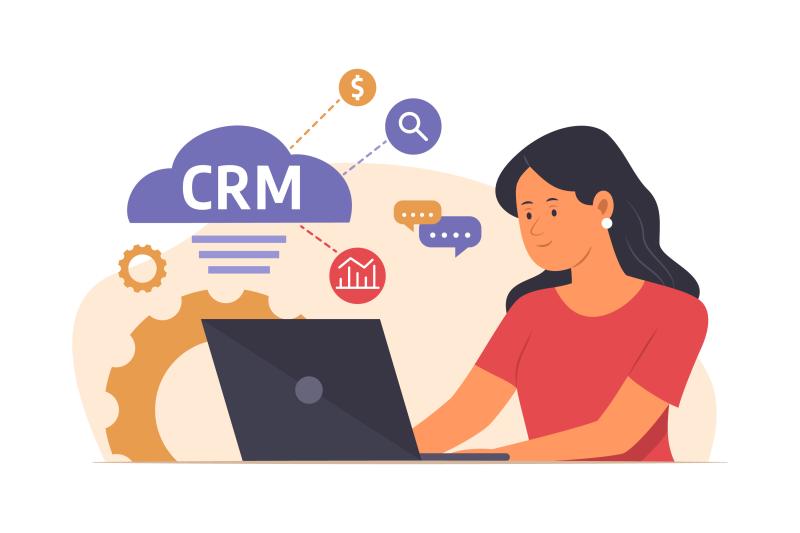
CRM stands for Customer Relationship Management and refers to both a strategy and set of tools designed to assist organizations manage interactions with current and potential clients. At its core, CRM aims to strengthen relationships by tracking data on customer preferences that lead to improved experiences and long-term loyalty among their client base. Companies that successfully implement CRM often witness increased customer satisfaction ratings, sales increases and internal collaboration as a result. CRM in today's digital economy has become more than software; it has become an essential element in how businesses operate and compete within its niche markets.
CRM in Modern Business
CRM (Customer Relationship Management) serves the primary goal of modern businesses by creating a central hub where customer information can be stored and tracked along their customer journey from initial inquiry through post-purchase follow-ups, with no detail missed along the way. Sales teams use CRM to close deals faster, marketing teams target audiences more accurately, support teams respond in context and with accuracy and operational efficiency also benefits significantly through insights gained into customer behavior gathered through tracking trends and preferences that enable businesses to predict needs better and build deeper trust, leading to higher retention rates overall.
The Evolution of CRM Over Time
From its infancy, CRM has undergone immense change since its introduction. At first, salespeople would merely record information manually on paper or spreadsheets. Later on with technological development came digital CRM systems allowing companies to keep customer databases. When email, websites, and e-commerce platforms emerged they also grow CRM's capabilities more by connecting it to these ways as well. Today with artificial intelligence, automation, cloud computing capabilities improving real time insight with predictive analytics, providing easy collaboration among global teams, and transforming CRM from simply an official task into a strategic advantage in industries worldwide! This has transformed CRM from being just another tool into strategic advantage for organizations from every sector worldwide!
Key Features of CRM Solutions
CRM platforms come in different flavors, but the core capabilities designed to enhance customer relationship management remain constant across platforms.
Contact management is at the core of every CRM solution, enabling businesses to store detailed customer profiles that include name, emails address and purchase history.
Sales pipeline tracking helps sales teams visualize where prospects are in their buying journeys to ensure timely follow ups with prospects and ensure timely follow up actions are taken when appropriate.
Marketing automation tools enable businesses to develop targeted campaigns and measure their efficacy.
Customer support features ensure service teams have access to customer histories for faster and more personalized responses from service teams.
Advanced CRMs integrate third-party apps, provide mobile access and include analytics dashboards which turn data into actionable insights.
Benefits of Implementing CRM
There are numerous advantages associated with adopting a CRM system.
Sales teams benefit from having full visibility of pipelines, helping prioritize leads more easily while managing opportunities more effectively.
Marketing departments leverage segmentation for campaign tracking resulting in improved returns on investment.
Customer service teams use CRM's comprehensive history database as quick problem resolution methods while at organizational levels it breaks down silos with shared databases that facilitate collaboration across departments resulting in not only increased efficiency but also better customer relations, stronger bonds between employees, and sustained business expansion.
Challenges in Using CRM
Implementing CRM may bring numerous advantages, but implementation also presents many challenges.
Adoptation
One such challenge is user adoption - employees may resist learning a new system in favor of familiar tools like spreadsheets. Companies need to invest in proper training for employees using CRM.
Data Quality Issues
Another challenge lies within data quality issues - CRM can only ever be as good as what's entered. Erroneous data can lead to missed opportunities and poor decision-making for businesses.
Too Complex to Use
Businesses also must select an adequate CRM platform, one too complex may overwhelm users while one too basic may fail to deliver adequate value.
In order to navigate this complex landscape successfully. These challenges must be met head on through careful planning, ongoing support, and an understanding of business goals.
The Role of CRM in Customer Experience
Customers now expect superior experiences from businesses they do business with, making CRM an integral component in shaping them. Effective CRM implementation enables businesses to personalize interactions at scale for increased satisfaction from both sides. Automated reminders ensure timely follow-ups while segmentation tools facilitate tailored marketing messages. Customer histories stored within CRM assist support teams with swiftly resolving customer issues without asking customers to repeat information over and over. By creating an excellent and seamless customer experience across channels, CRM promotes trust and creates loyalty among clients; companies who prioritize customer experience often see higher lifetime value from clients and more word-of-mouth referrals as a result of prioritizing CRM implementation.
Industries That Benefit from CRM
While CRM may seem to only apply in sales-focused industries, its applications extend much further.
Retail establishments use CRM to track customers' purchases and preferences in order to provide targeted recommendations - while healthcare organizations use it similarly for patient records management and care management purposes.
CRM systems in healthcare settings allow providers to efficiently track patient records while improving communication between providers and patients, while financial services firms use CRM for portfolio tracking purposes and to deliver timely updates to clients.
Educational institutions employ CRM for student inquiries, admissions decisions and alumni relations management.
Nonprofit organizations leverage CRM's capabilities to cultivate donor relations and track fundraising campaigns; virtually any industry that places value in relationships can gain from CRM.
Selecting an Appropriate CRM Solution
Deciding upon an excellent CRM system depends more on factors. Such as organizational size, budget and related requirements. Small businesses may support simplicity over advanced features for more cost-cutting. Large businesses' solutions could need advanced features as well. Cloud-based solutions may be suitable for brands requiring ease of use and scalability, while other services may follow tight data security standards. Integration capabilities must also be taken into consideration, with businesses making sure the CRM they select works seamlessly with tools like email platforms, e-commerce systems and accounting software. Businesses should take time to explore options, test features and ensure it fits with long-term business goals.
Conclusion
Customer Relationship Management, commonly referred to as CRM, has become an indispensable element of modern businesses looking for sustainable growth and relationship-building strategies. CRM empowers organizations to provide customized experiences while driving measurable outcomes by consolidating customer data into one central repository and streamlining communication among teams.
In order to fully harness CRM for your business, it's crucial that you work with experts who possess both technological knowledge and an intimate understanding of customer relations. Pixel Glume, a reliable CRM Software development company, specializes in crafting tailored solutions designed to streamline processes, boost engagement levels with customers, and promote growth for organizations of any size - be they startups or enterprises.

Post Your Ad Here
Comments