Active vs. Passive Portfolio Management: The Long-Term Game
At Passive Capital Management, we love to talk about sports—not only because many of us are washed up athletes, but because sports often parallels investing. The other day we had a conversation about Hall of Fame pitcher Greg Maddux. He didn’t rely on the fastest fastball or the flashiest strikeout numbers. Instead, Maddux dominated with consistency, precision, and discipline—qualities that carried him to 355 wins and four consecutive Cy Young Awards. His success was about playing the long game.
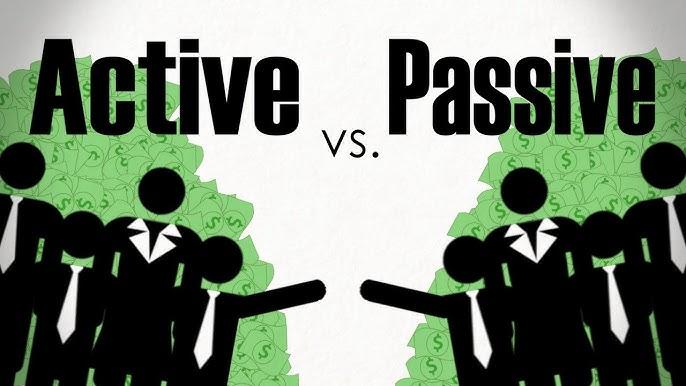
Coming full circle, at a basic level (we will save you from buzz words and confusing acronyms), investing strategies generally fall into two broad categories, active and passive investing. Active investors try to beat the market by sensing market trends to pick winning stocks and trade frequently.
Active investing can sound enticing, offering the thrill of outsmarting the market and the allure of outsized gains. But in practice, consistently identifying the right opportunities at the right time is difficult and costly—even for seasoned professionals with vast resources at their disposal.
Some of the most brilliant investing minds in history have chased their “best ideas”—only to watch them unravel. Star managers have poured money into a single stock, sector, or timing strategy that looked unbeatable at the time, but ultimately lagged the broader market. The dot-com boom, the housing bubble, and even more recent fads like meme stocks all remind us that what feels like the smartest move in the moment often isn’t the most durable path to building wealth.
Passive investing focuses on emulating the performance of a particular market, often through diversified investments and products like mutual funds or ETFs. Though tame in description compared to the excitement of chasing the next “big winner,” the long-term data tells a clear story: broad, low-cost market exposure has outperformed the vast majority of active managers over time. By reducing trading costs, avoiding concentrated bets, and allowing compounding to work uninterrupted, passive investing provides a steadier and more reliable path to building wealth.
At Passive Capital Management, our view aligns with this overwhelming evidence showing that passive investing is a smarter approach, particularly when the goal is building long-term growth, minimizing expenses, and increasing tax efficiency.
Active Management: a High-Stakes Gamble
Active managers operate under the assumption that they can forecast the actions of the market more effectively than the wisdom of millions of investors. They buy and sell constantly and are always responding to news articles, economic changes, or gut feelings. The problem? It is extremely tough to outperform the market. Consider these factors:
Active investing is costly –the increased expenses of active investing consumes profits. Active funds collect more in fees (usually 1 percent or more) to fund research, trading, and the salaries of managers. These fees accumulate over decades, and investors are left with a much smaller amount than in a low-cost index fund.
Active investing is not tax-efficient. Capital gains taxes are incurred when transactions are made frequently, and thus it can consume returns, particularly for those with a high net worth in a high tax bracket.
A majority of active funds underperform. According to S&P Dow Jones Indices’ recent SPIVA Scorecard, over the past 15-year period there were no categories in which a majority of active managers outperformed the market.
Further Evidence: Passive Investing Wins
It is not a coincidence that active managers have underperformed consistently in past decades. The evidence shows that after a long-term window, very few active managers are able to beat the market after adjusting to account for fees, trading costs, and taxes.
Morningstar's recent annual report found that less than one quarter of all active funds beat the average passive funds over a 10-year period.
According to Vanguard, it is highly unlikely that an investor can pick a winning active fund, especially when the investor chases a performance rather than sticking to a disciplined plan.
The data from a recent SPIVA Persistence Scorecard reveals that in the unlikely event that active investing outperforms the market, it tends to be the result of luck rather than genuine skill. In other words, strong returns in a given year do not increase the odds of strong performance in subsequent years
Warren Buffett famously bet $1 million that a simple S&P 500 index fund would beat a selection of hedge funds over 10 years. His investment won by a landslide.
Although active investing sometimes performs well over shorter periods, passive management wins the long game in helping investors accumulate wealth for retirement and build a lasting legacy.
Passive Management: Let the Market Work for You
On the other hand, passive management takes away the guesswork by remaining grounded in evidence-based, long-term investing. Rather than trying to speculate on individual stocks or time a fluctuating market, passive investing is based on comprehensive diversification with less buying and selling. It involves building a diversified portfolio designed to emulate the performance of a broad market index, like the Russell 3000 or a bond market index, rather than trying to beat it.
Instead of trying to pick individual “winners,” a passive portfolio offers broad market exposure, designed to capture the performance of an entire asset class or market segment.
With its low turnover rate, passive investing also incurs lower fees. Passive funds like those offered by Passive Capital Management typically charge a fraction of the fees of active funds. Over 20 or 30 years, that difference can mean hundreds of thousands in extra wealth.
Passive funds are more tax efficient. Because passive funds trade far less, investors encounter fewer taxable events. As Vanguard’s research shows, this can significantly improve after-tax returns.
The client, not recent news or fads, are at the center of the passive philosophy. At PCM, we are very active when it comes to customer service, financial planning, tax efficiency, and research of the thousands of passive products that are available to implement a strategy. In other words, we focus time and effort on things that can add value and avoid unforced errors by not being active with stock selection or market timing.
Unlike active managers, passive managers focus their time and energy on what is controllable such as costs, great planning, communication, and discipline.
The Hot Take: Less Trading = More Tax Savings
Tax efficiency plays a critical role in financial planning because it impacts nearly every aspect of an investor’s portfolio, from retirement savings to estate planning. By integrating the tax-efficient strategies of passive investing, investors can maximize after-tax returns, enhance portfolio longevity, and boost compounding results.
Actively managed mutual funds tend to have higher turnover rates, which can lead to more frequent capital gains distributions and higher tax liabilities for investors. In contrast, index funds and exchange-traded funds (ETFs) typically have lower turnover, making them more tax-efficient.
When an active fund sells a stock at a profit, investors usually owe short-term capital gains taxes. Because passive funds buy and hold, they defer taxes for years or even decades. Especially for investors in higher tax brackets, this can mean keeping thousands more per year compared to active strategies.
The Bottom Line: Play the Long Game
Active investment management attempts to sell an illusion of outperforming the market, but the evidence shows that passive investing is a smarter and more reliable way of accumulating wealth. At Passive Capital Management, we don’t try to outguess the market. We build portfolios based on decades of research and real-world performance, harnessing long-term growth with low-cost, tax-efficient strategies designed for investors who value certainty over speculation.
Much like Greg Maddux’s pitching style, disciplined and prudent approaches to investing may not grab headlines, but there is something much more important to be gained: consistency, transparency, and long-term growth.
If you’re curious about a more trustworthy and cost-effective method of investing, reach out to Passive Capital Management and learn how our philosophy can assist you in pursuing your long-term objectives.


Post Your Ad Here
Comments