How a Website Theme Affects Site Speed and SEO
When building a website, most people focus on design, branding, and content. However, one of the most overlooked factors that directly impacts performance and visibility is the website’s theme. The theme you choose can make or break your site’s speed and, ultimately, your search engine optimization (SEO) efforts.
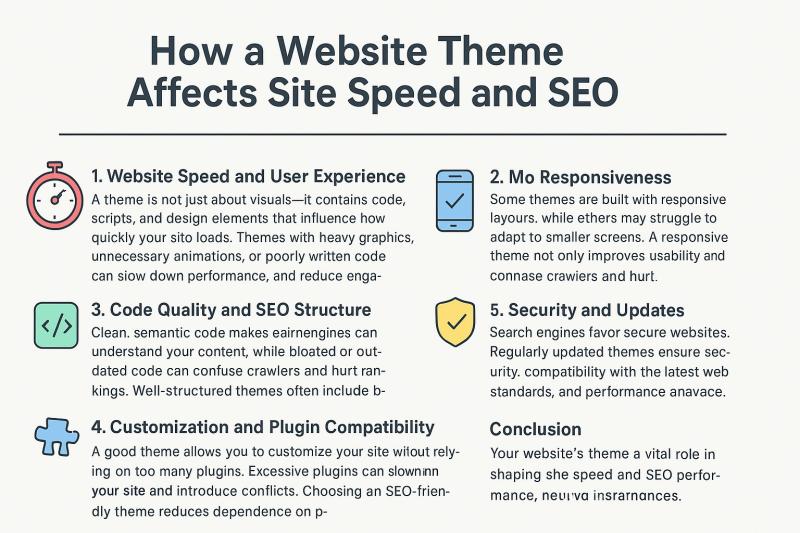
1. Website Speed and User Experience
A theme is not just about visuals-it contains code, scripts, and design elements that influence how quickly your site loads. Themes with heavy graphics, unnecessary animations, or poorly written code can slow down performance. Since users expect a website to load in just a few seconds, a slow site can drive visitors away, increase bounce rates, and reduce engagement.
Search engines like Google also consider page speed as a ranking factor. A lightweight, optimized theme ensures faster load times, which leads to a better user experience and higher chances of ranking well.
2. Mobile Responsiveness
Modern SEO requires mobile-friendly design. Some themes are built with responsive layouts, while others may struggle to adapt to smaller screens. A responsive theme not only improves usability but also aligns with Google’s mobile-first indexing, where the mobile version of your site is prioritized in search rankings.
3. Code Quality and SEO Structure
Behind every theme is code that search engines must crawl and understand. Clean, semantic code makes it easier for search engines to interpret your content, while bloated or outdated code can confuse crawlers and hurt rankings. Additionally, well-structured themes often include built-in SEO best practices, such as proper heading tags, schema markup, and fast CSS/JavaScript loading.
4. Customization and Plugin Compatibility
A good theme allows you to customize your site without relying on too many plugins. Excessive plugins can slow down your site and introduce conflicts. Choosing a theme that integrates SEO-friendly features natively reduces dependence on plugins and keeps your site lean.
5. Security and Updates
Search engines favor secure and trustworthy websites. Regularly updated themes ensure better security, compatibility with the latest web standards, and smoother performance. Outdated themes, on the other hand, may expose your site to vulnerabilities that not only harm security but also impact SEO rankings.
Conclusion
Your website’s theme plays a vital role in shaping both speed and SEO performance. A lightweight, responsive, and well-coded theme ensures faster load times, better usability, and improved search engine rankings. When choosing a theme, don’t just look at design—consider its impact on speed, optimization, and long-term success.


Post Your Ad Here
Comments