Doberman Colors and Types: A Complete Guide for Dog Lovers
If you’ve ever been fascinated by Doberman colors and types, you’re not alone. When I first started researching Dobermans, I was blown away by how much variety this elegant breed actually has. If you want a full breakdown of every recognized coat shade and the differences between Doberman types, check out this in-depth guide on Barklebee.
I’ve lived with Dobermans for years, and one thing I can tell you right away: their looks are only part of the story. Their temperament, energy, and loyalty are what make them unforgettable companions. Still, understanding the variations in coat colors and breed types is an important step for anyone thinking about welcoming a Doberman into their life.
Overview of the Doberman Breed
The Doberman Pinscher was originally developed in Germany during the late 19th century by Karl Friedrich Louis Dobermann. His goal? To create a dog that was loyal, protective, and intelligent enough to serve as both a guard and a companion.
Today, Dobermans are admired worldwide not just for their sleek appearance but also for their versatility. They excel as family dogs, working dogs, therapy companions, and even athletes in dog sports.
What makes them stand out is their unique blend of elegance and power. You’ll often hear Doberman owners (myself included) say: “Living with a Doberman means never being alone, because they’ll follow you everywhere—even to the bathroom.” That’s their loyalty in action.
Different Doberman Types
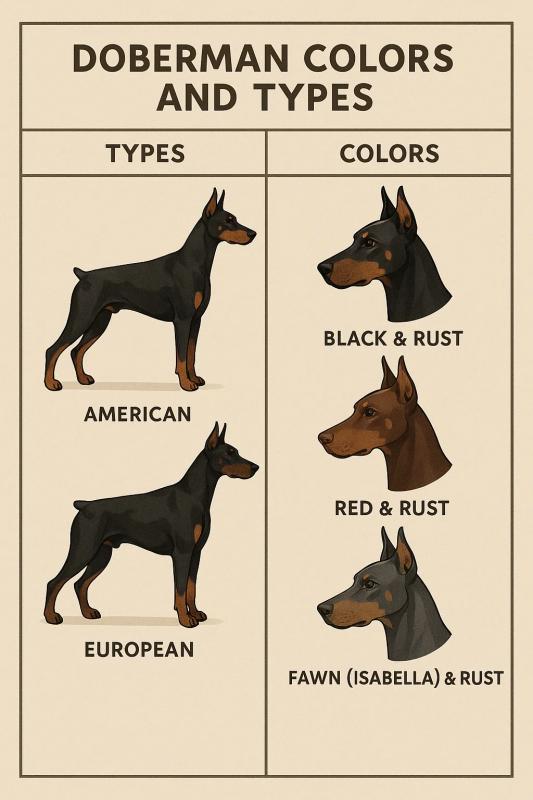
When people talk about Doberman types, they usually mean the difference between the American Doberman and the European Doberman.
-
American Doberman
-
Bred primarily for show and companionship
-
Slightly slimmer and more refined build
-
Known for being family-friendly, affectionate, and graceful
-
-
European Doberman
-
Bred for working ability and protection
-
More muscular, powerful, and driven
-
Often chosen by law enforcement or for protection sports
-
From personal experience, my first Doberman was American-bred, and she was gentle, affectionate, and adored lounging on the couch. Later, I had the chance to work with a European Doberman, and wow—the difference in drive was obvious. He needed constant engagement and thrived when given a “job.”
Quick Comparison Table
| Feature | American Doberman | European Doberman |
|---|---|---|
| Build | Lean, refined | Muscular, powerful |
| Purpose | Show, companion | Working, guarding |
| Temperament | Gentle, affectionate | High-drive, protective |
| Energy Needs | Moderate | High |
Doberman Colors and Patterns
One of the most exciting things about this breed is the wide range of Doberman coat colors. According to breed standards, the American Kennel Club recognizes four main colors:
-
Black and Rust – The most common and iconic look. Sleek black coat with rust markings.
-
Red and Rust – A beautiful reddish-brown base coat with rust markings.
-
Blue and Rust – A diluted version of black; steel-gray appearance.
-
Fawn (Isabella) and Rust – A diluted red, giving a light brown or tan appearance.
Less Common Variations
-
White or Cream Doberman – Rare and controversial due to potential genetic health concerns.
-
Albino Doberman – Extremely rare, with pale coat and blue eyes.
When I first saw a fawn Doberman in person, I was amazed at how unique they looked. Their lighter coat makes them stand out, but it’s important to note that some dilute colors like blue and fawn can be more prone to skin issues.
Personality and Temperament by Type
A common myth is that coat color changes a Doberman’s personality. That’s not true—temperament is more about breeding and training than color. However, Doberman types (American vs European) can influence behavior.
-
American Doberman: Calm, affectionate, and excellent family companions.
-
European Doberman: Intense, driven, and needs more work or training.
In my case, my American Doberman would happily cuddle for hours, while the European Doberman demanded daily runs, agility training, and mental challenges. If you’re active and love having a “shadow” that keeps you moving, the European type might be for you.
Grooming and Care for Dobermans
Dobermans have short, sleek coats, so grooming isn’t difficult—but it’s still necessary. Regular brushing helps reduce shedding and keeps the coat shiny.
Here are some quick care tips:
-
Brush weekly to remove loose hair
-
Bathe only when needed to preserve natural oils
-
Check skin for irritation, especially with blue and fawn Dobermans
-
Keep nails trimmed (Dobermans grow them quickly)
Personal tip: I found that using a simple rubber grooming mitt made brushing feel like a massage for my Doberman. She actually looked forward to grooming time.
Choosing the Right Doberman for You
Before picking a Doberman, think about your lifestyle.
-
Do you want a family-friendly dog that loves lounging and playing? An American Doberman may fit better.
-
Are you highly active and want a working partner? The European Doberman is ideal.
-
Love unique looks? Explore the variety of Doberman colors and types—but remember, temperament matters more than coat.
Also, be careful about breeders. Ethical breeders focus on health, temperament, and responsible genetics, not just color.
Conclusion
Dobermans are more than just stunning dogs—they’re loyal protectors, energetic companions, and lifelong friends. Understanding the different Doberman colors and types helps future owners make informed choices.
Whether you’re drawn to the classic black-and-rust or intrigued by the rare fawn, remember that every Doberman deserves love, training, and commitment.
As one Doberman trainer once told me: “A Doberman doesn’t just live with you—they live for you.” And after sharing my life with them, I couldn’t agree more.
For an even deeper look at all the variations of Doberman colors and types, you can explore the full guide on Barklebee.

Post Your Ad Here
Comments