Wired for survival: How technology decides restaurant success in the UK
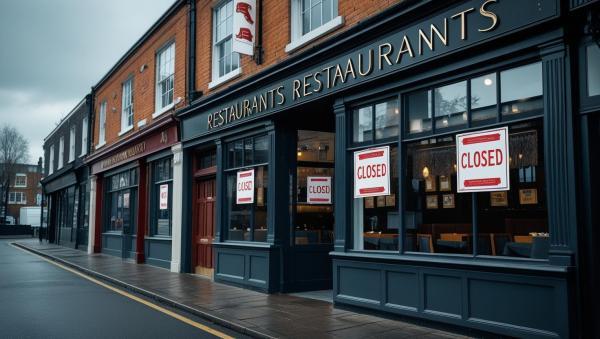
On July 22, 2025, curtains came down on two
successful UK restaurant chains on the same morning. Not from bad reviews,
kitchen fires, or scandal but from something far more insidious. Something that
is silently killing 20% of Britain's restaurants right now, while the owners
remain completely oblivious. The answer is not what you would expect.
More than 6,000 restaurants in the UK face closure in the
next 12 months, according to an assessment of financial data by Price Bailey.
Some 1,409 UK restaurant businesses entered insolvency in 2023/24 (year ending
30 September 2024), up from 1,180 in 2022/23, surpassing the previous
decade-high total by 19%.
Is 2025 the Worst Year for the Hospitality Industry?
Papa John's closes 74 locations after financial losses –
has your local chain shut down?
A major fast-food chain has closed 74 of its stores in
another blow to the British economy. Papa John's has confirmed it will be
shutting down dozens of locations after experiencing financial woes in the last
year.
The company confirmed the losses for the last financial year
before tax jumped to £21.8million, up from £19.2 million. Furthermore, Papa
John's sales also slipped from £95.9million to £88.6million, continuing a
period of sales drops since 2021.
Around 90% of people look up restaurants online before
eating out, with 72% checking social media. In the hospitality industry, the
importance of staying current with technology cannot be overstated.
Popular restaurant chain “Eat the Bird” closes all sites
after going bust with staff left unpaid
A popular UK restaurant chain has collapsed, shutting all
its branches without warning and leaving some staff unpaid. The move comes
after the business fell into serious financial trouble.
Eat the Bird, known for its award-winning fried chicken
burgers, has closed all three of its locations in Exeter, Taunton, and Cardiff
after entering liquidation on July 22. The decision brings an end to nearly a
decade of trading.
The company had built a strong following and a loyal
customer base, but rising costs and mounting debts proved too much to overcome.
The shutdown took place immediately, catching both staff and customers by
surprise.
Liquidators confirmed the closures came after the business
was no longer able to meet its financial obligations, including payments to
suppliers. All operations have now ceased as the company’s assets are being
wound down.
Several employees have yet to receive their final wages
following the abrupt closure. Owner Daniel Aldridge acknowledged the situation,
stating, "Some staff haven't been paid yet, but they will be."
Bouncing back from the pandemic has not been smooth for
restaurants, with supply issues and loan repayments still a struggle. Almost
90% of diners now research restaurants on their phones, but many places are
stuck with outdated digital tools, making them hard to discover.
Most diners now rely on social media to choose where to eat,
but many mid-range restaurants still use outdated systems. Without updating
digitally, they risk losing out and facing closures amid tough competition.
Neat Burger to Close All UK Locations, Citing Financial
and Operational Challenges
Neat Burger, the vegan restaurant chain co-founded by Lewis
Hamilton and Leonardo, has announced the closure of all its UK locations,
marking the end of its six-year run in the country. In 2023, the company
reported significant financial losses, with figures showing a 140% increase in
losses, reaching £7.9 million for the year.
Without integrating advanced technologies, no business can
stay competitive and relevant in today’s fierce competition. In the era of
artificial intelligence and machine learning, technology is evolving rapidly;
the restaurant business is no exception
The Industry Is Changing Fast. Are You Keeping Up?
The restaurant sector has always been dynamic, but 2025 is
proving to be a transformative year. From streamlined kitchen operations to
customer-facing automation, digital transformation in restaurants is no longer
optional; it is essential.
Whether you run a trendy cafe, a takeaway, or a family-run
diner, staying ahead of restaurant technology trends in 2025 will ensure your
business remains competitive, efficient, and profitable.
So, what is next? Let us explore the key food industry
trends reshaping how restaurants operate.
Automation That Enhances, Not Replaces Human Service
Examples of restaurant automation in 2025:
- Cloud
Kitchen, leverages digital platforms for orders, operations and
digital payments.
- Mobile POS
technology turns phones and tablets into payment terminals, cutting
costs and adding flexibility.
- Website
optimization smooths out the payment process, preventing customers
from walking away at checkout.
- AI-driven
personalisation displays preferred payment methods for faster,
tailored checkout.
- Social
media now lets people shop and pay right from their Facebook or
Instagram feeds without leaving the app.
- Self-order
kiosks let people order and pay without waiting for staff, making
things quicker for everyone.
These technologies do not eliminate people they empower
them. Less time spent on manual tasks means more time to delight
customers.
To further augment these technologies, open banking creates
a seamless and secure payment experience that not only saves time but also
deepens customer trust and satisfaction, fostering stronger relationships
between diners and restaurants.
So, “What’s open banking?” you ask.
Open Banking and the Evolution of Digital Payments
Payment
processing is a critical strategy for businesses looking to streamline
their payment infrastructure. Open banking payments technology is reshaping the
UK’s financial ecosystem, offering businesses and consumers innovative ways to
manage payments by enabling direct bank-to-bank transactions and secure data
sharing, simplifying payments by cutting costs and speeding up transactions.
Restaurants often struggle with tight profit margins, and
traditional card processing fees ranging from 1.4% to 2.5%, plus extra charges
can really eat into their earnings. That is where open banking payment
solutions like Wonderful, a UK-based, FCA-regulated instant bank transfer
service, were established. Such services can save restaurants 90% or
more compared to usual card fees. It is a simple, secure, and affordable way
for businesses to keep more of their hard-earned money and get paid faster.
What’s more, they can easily integrate with WooCommerce payment plugins, making
them an ideal payment service provider for WooCommerce-powered e-businesses.
Fortunately, several payment companies have stepped up to
meet these changing demands.
SumUp offers a range of payment solutions tailored to
small and medium-sized businesses, from card readers and POS systems to online
payments via payments
API and invoicing tools.
Stripe, an Irish-American financial software service
company, supplies programming interfaces that allow developers to build payment
processing capabilities directly into their digital platforms.
OrderPay, a UK-based payment technology company,
helps restaurants and cafes handle orders and payments through contactless
solutions, making the whole dining experience quicker and easier for everyone
involved.
"Look, here's the deal"
Britain's restaurant industry is in freefall. With over
6,000 restaurants facing closure and big names like Eat the Bird and Neat
Burger shutting down, we are seeing something unprecedented. It is not the food
quality that’s killing these businesses; it is their failure to keep up with
how people behave in 2025. When 90% of diners research restaurants on their
phones, yet many places still operate like it is 2010, disaster is inevitable.
The survivors will be those who embrace digital
transformation and modern online payment systems. Traditional card fees
eat up to 2.5% of already thin margins, while open banking solutions like Wonderful cost just 1p per
transaction. The technology exists, customers expect it, and the businesses
adapting now will be the ones left standing when this shakeout ends.
Let’s explore how technology-driven solutions can protect UK restaurants
from untimely closures and uncover strategies to support their survival. For a
deeper analysis, check out this detailed article on how
digital innovation can save UK restaurants.
Post Your Ad Here
Comments