Zone 1 CCTV for Chemical Storage and Handling Areas in Birmingham Factories
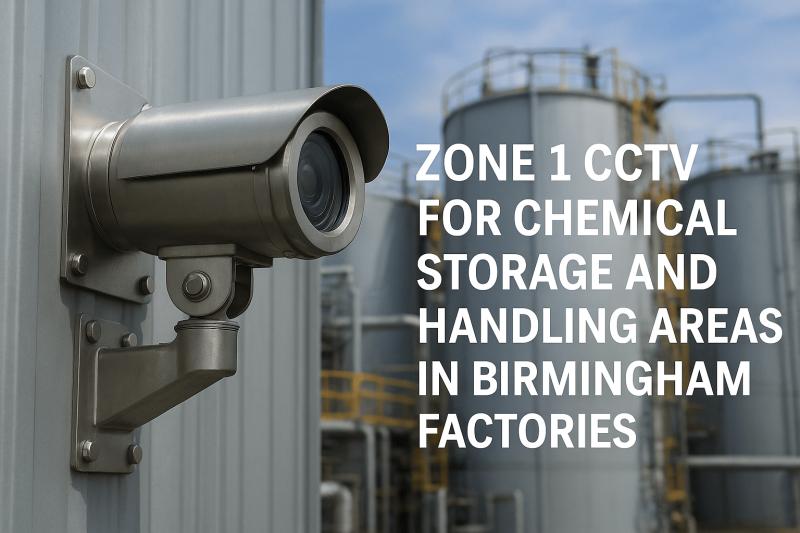
Chemical manufacturing and storage facilities across Birmingham—whether in Tyseley, Aston, or the West Midlands’ wider industrial belt—face a dual challenge: ensuring operational efficiency while mitigating risks associated with volatile substances. These environments often fall under Zone 1 classification, where explosive gas atmospheres are likely to occur during normal operations. For such areas, deploying Zone 1 certified CCTV systems is not just a security upgrade—it is a safety-critical requirement under UK law.
Why Zone 1 Certification Matters
Zone 1 areas typically include spaces around filling stations, chemical mixing points, solvent storage tanks, and drum-handling lines. In these conditions, even a minor spark from electrical equipment can trigger ignition. Zone 1 explosion-proof CCTV is specifically engineered to contain any internal sparks, resist external impacts, and function safely without becoming an ignition source.
This ensures compliance with DSEAR (Dangerous Substances and Explosive Atmospheres Regulations 2002) and ATEX Directives, both of which mandate that electrical devices in hazardous areas must be appropriately certified.
Key Compliance Requirements for Birmingham Factories
-
ATEX / IECEx Certification – The CCTV must carry ATEX Zone 1 marking, confirming suitability for explosive gas atmospheres.
-
DSEAR Risk Assessment Alignment – Cameras should be integrated into the facility’s DSEAR assessment, proving that monitoring equipment does not compromise safety.
-
Health & Safety Executive (HSE) Guidance – Employers are expected to demonstrate proactive risk control, including continuous monitoring of hazardous handling zones.
-
Insurance & Audit Readiness – Certified CCTV acts as a safeguard during inspections, reducing liability and proving compliance with industry standards.
Camera Options for Zone 1 Hazardous Areas
-
Explosion-Proof PTZ Domes: Offer 360° coverage of drum-filling stations, solvent transfer areas, and loading docks. Ideal for tracking people and vehicles in dynamic chemical-handling environments.
-
Fixed Explosion-Proof Cameras: Provide constant surveillance of critical zones such as solvent racks, reactor vessel surroundings, and valve manifolds.
-
Thermal Imaging Cameras: Essential for detecting leaks, unusual heat signatures, or fires in chemical stores—particularly useful during night shifts or in poor visibility conditions.
-
Explosion-Proof Housings: Allow standard cameras with specialist lenses to be safely deployed within hazardous areas.
Features to Consider for Birmingham’s Industrial Climate
-
316L Stainless Steel Construction – Essential for resisting chemical corrosion, humidity, and airborne contaminants.
-
IP66/IP67 Protection – Ensures resistance to dust, washdowns, and accidental chemical splashes.
-
Integrated IR Illumination – Provides clear images in low-light warehouses and outdoor yards without introducing unsafe heat or sparks.
-
Anti-Fog / Temperature Control – Maintains clear optics in facilities where temperature fluctuations between storage rooms and factory floors are common.
-
Analytics & Smart Detection – AI-driven alerts for PPE compliance, line-crossing, or unusual human activity around restricted storage zones.
-
Fail-Safe Recording – Edge storage ensures that data is preserved even if the network temporarily fails.
Strategic Placement of Zone 1 CCTV
-
Chemical Transfer Points – Where chemicals are pumped, mixed, or filled, ensuring no unsafe practices occur.
-
Bulk Storage Tanks – Monitoring valves, pipelines, and connection points for leaks or unsafe handling.
-
Indoor Drum Storage – Watching for accidental spills, unsafe stacking, or unauthorised entry.
-
Dispatch and Loading Bays – Tracking forklift operations, pallet movements, and compliance during hazardous goods loading.
-
Waste Handling Areas – Capturing activities around chemical waste drums and neutralisation zones.
Benefits Beyond Safety
-
Operational Oversight – Managers gain real-time visibility of chemical handling, helping optimise workforce coordination.
-
Incident Prevention – Early detection of unsafe behaviour (smoking, PPE negligence, unsafe stacking) reduces risk.
-
Faster Emergency Response – Live feeds can guide firefighting or spill-response teams during critical incidents.
-
Evidence for Investigations – Recorded footage aids in root-cause analysis of accidents and compliance reporting.
Implementation Roadmap
-
Conduct a Hazard Assessment – Identify exact Zone 1 areas in line with ATEX/DSEAR zoning maps.
-
Select Certified Equipment – Partner with suppliers offering Zone 1 ATEX/IECEx-approved cameras.
-
Integrate with VMS – Ensure the system supports alarm monitoring, access control, and remote viewing.
-
Maintenance Planning – Use certified service providers and schedule regular cleaning/inspection without disrupting operations.
Conclusion
For Birmingham’s chemical factories, Zone 1 CCTV is a frontline defence in hazardous environments. It not only enhances site safety and compliance but also delivers operational clarity and accountability. Investing in ATEX-certified surveillance ensures businesses meet regulatory standards while protecting workers, assets, and the wider community.
Post Your Ad Here
Comments