The Evolution of 3D Motion Capture Market Insights and Future Opportunities 2025 to 2032
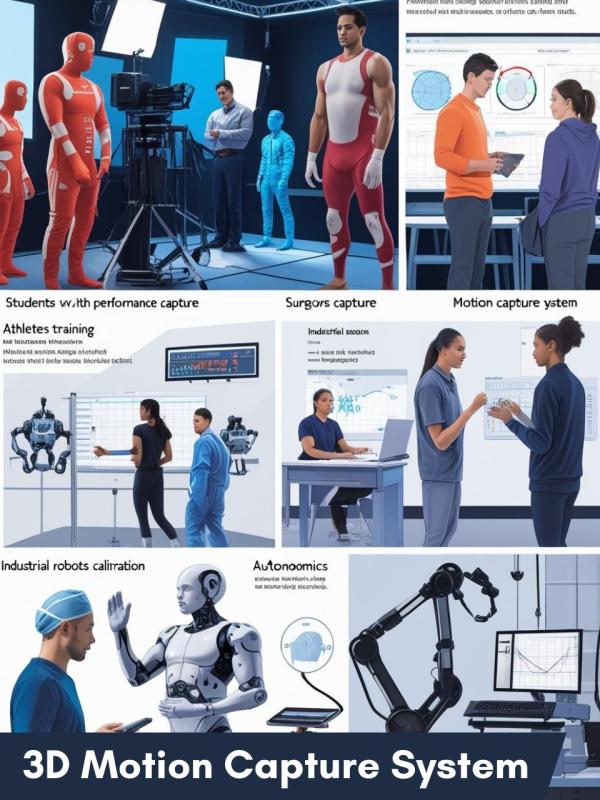
The 3D motion capture system market stands at a pivotal moment in technological evolution, transitioning from a niche entertainment technology to a transformative force across multiple industries. According to comprehensive market analysis by P&S Intelligence, the sector is experiencing unprecedented growth, driven by innovations in hardware, software, and service delivery models that are reshaping how we understand and interact with human movement.
Market Segmentation and Component Analysis
The 3D motion capture ecosystem operates through three primary components, each playing a crucial role in the technology's advancement. Hardware components form the foundation, encompassing sophisticated camera systems, sensors, and tracking devices that capture minute movements with increasing precision. The software segment has emerged as a critical differentiator, with advanced algorithms capable of processing complex movement data in real-time, enabling applications that were previously impossible.
Services represent the fastest-growing segment, as organizations recognize the need for specialized expertise in implementing and optimizing motion capture solutions. This trend reflects the technology's maturation from a do-it-yourself tool to a comprehensive solution requiring professional integration and ongoing support.
Technology Systems: Optical vs. Non-Optical Innovation
The market divides into two primary technological approaches: optical and non-optical systems. Optical systems, traditionally dominant in the market, rely on camera-based tracking of reflective markers or markerless computer vision techniques. These systems excel in precision and have established themselves in high-end applications like film production and clinical research.
Non-optical systems represent the emerging frontier, utilizing inertial sensors, magnetic tracking, and mechanical systems to capture movement data. These solutions offer unprecedented portability and reduced setup complexity, making motion capture accessible to smaller organizations and new application areas. The growing adoption of non-optical systems signals a democratization of motion capture technology, expanding its reach beyond traditional strongholds.
Industry Applications Driving Market Expansion
Media and Entertainment: The Traditional Powerhouse
The media and entertainment sector continues to lead market demand, driven by the explosive growth of digital content creation. Modern film production increasingly relies on virtual sets and digital characters, with motion capture serving as the bridge between human performance and computer-generated imagery. The gaming industry has emerged as an equally significant driver, with real-time motion capture enabling more immersive and responsive gaming experiences.
Healthcare: The Emerging Giant
Healthcare applications represent perhaps the most promising growth opportunity for 3D motion capture technology. Clinical applications span from gait analysis for neurological disorders to rehabilitation monitoring for post-surgical patients. Physical therapy practices are increasingly adopting motion capture systems to provide objective movement assessment and track patient progress with unprecedented precision.
The technology's potential in surgical training and planning has captured significant attention, with medical institutions investing in motion capture systems to improve surgical techniques and reduce patient risk. Biomechanical research applications continue expanding, providing insights into human movement that inform everything from prosthetic design to injury prevention strategies.
Sports and Performance Analysis
Professional sports organizations have embraced motion capture technology as a competitive advantage, using detailed movement analysis to optimize athlete performance and prevent injuries. The technology enables coaches and trainers to identify subtle movement patterns that impact performance, leading to more targeted training programs and improved athletic outcomes.
Amateur and recreational sports markets are beginning to adopt simplified motion capture solutions, driven by decreasing costs and increasing accessibility of the technology.
Industrial and Automotive Applications
Industrial applications focus primarily on ergonomic analysis and human-robot interaction research. Manufacturing companies utilize motion capture to optimize workplace design and reduce injury risk, while robotics developers use the technology to improve human-robot collaboration systems.
The automotive industry leverages motion capture for crash test analysis, driver behavior studies, and autonomous vehicle development. As vehicles become more automated, understanding human movement and behavior patterns becomes increasingly critical for designing safe and intuitive transportation systems.
Competitive Landscape and Market Dynamics
The competitive landscape reflects the market's evolution from specialized equipment manufacturers to comprehensive solution providers. Established companies are expanding their offerings through strategic acquisitions and partnerships, while new entrants focus on specific market niches or innovative technological approaches.
Price competition has intensified as manufacturing costs decrease and alternative technologies emerge. This trend benefits end users but pressures companies to differentiate through software capabilities, service quality, and specialized applications rather than hardware alone.
Future Outlook and Growth Opportunities
The 2025-2032 forecast period promises continued expansion across all market segments, with particular strength in healthcare and industrial applications. Technological advances in artificial intelligence and machine learning will enhance motion capture capabilities, enabling more sophisticated analysis and real-time processing.
The integration of motion capture with virtual and augmented reality platforms represents a significant growth opportunity, creating new applications in training, education, and entertainment. As these technologies converge, motion capture systems will become essential components of immersive digital experiences.
Geographic expansion into emerging markets offers additional growth potential, as improving economic conditions and technological infrastructure make motion capture systems accessible to new regions and industries.
The 3D motion capture market's future appears robust, driven by technological innovation, expanding applications, and growing recognition of the technology's transformative potential across diverse industries.
Post Your Ad Here
Comments