How MLS Real Estate Data Can Predict Housing Market Trends
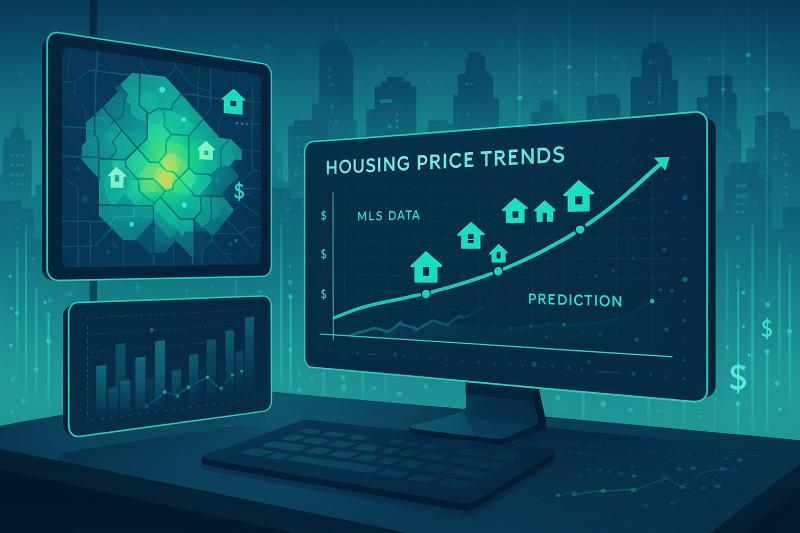
If you’ve been asking yourself whether now is the right time to buy, sell, or invest in property, you’re not alone. Headlines about the housing market often conflict, leaving buyers and sellers unsure where things are headed.
The good news is that reliable tools exist to cut through the noise. One of the most powerful is MLS real estate data. Unlike anecdotal advice or broad national reports, MLS provides granular, real-time insights that help identify trends and guide smarter decisions. When combined with advanced Real estate property data solutions, MLS becomes a predictive compass for the market.
What Is MLS Data and Why It Matters
The Multiple Listing Service (MLS) is a centralized database where real estate professionals share property listings. Originally print-based, today’s MLS is digital, regional, and incredibly detailed. Agents pay for access because it delivers the most accurate and up-to-date view of local housing activity.
Why it stands out:
- It goes far beyond what public portals like Zillow or Trulia can show.
- It captures real-time updates that reflect actual market activity.
- It consolidates listings from multiple brokerages, offering a full market picture.
The Depth of MLS: What Data Does It Provide?
MLS is valuable because of the richness of its dataset. Here’s what makes it a goldmine for market prediction:
- Property details: address, square footage, bedrooms, bathrooms, year built, features, and school districts.
- Pricing history: original listing date, price adjustments, and final sale price.
- Photos and visuals: property condition and market appeal.
- Market dynamics: inventory levels, price fluctuations, and days on market.
This level of detail enables agents, investors, and buyers to analyze patterns with far more precision than consumer-facing platforms allow.
Accuracy and Timeliness: MLS vs. Public Data
Public real estate platforms are convenient but often delayed or incomplete. MLS, updated directly by agents and brokers, provides real-time accuracy. For forecasting housing market trends, that difference is critical.
Key MLS Indicators: Reading the Signals
Think of MLS as the housing market’s language. To interpret it correctly, you need to understand its most important signals.
- Days on Market (DOM): Market Speedometer
Days on Market measures how long a property stays listed before going under contract. A short DOM usually signals strong buyer demand and a competitive seller’s market where homes move quickly. A longer DOM indicates slower activity, giving buyers more leverage and marking conditions closer to a buyer’s market.
- Inventory Levels and Months of Supply
Inventory levels track the number of homes for sale, while months of supply shows how long it would take to sell that inventory at the current pace.
Less than four months signals a seller’s market with rising prices, four to six months reflects balance, and more than six months indicates a buyer’s market with slower price growth.
- Sale-to-List Price Ratio
The sale-to-list price ratio compares a property’s final selling price to its most recent listing price. When the ratio is above 100%, it means homes are selling for more than asking, often due to bidding wars in a competitive market. A ratio below 100% shows that homes are selling for less than listed, giving buyers more room to negotiate.
- Pending Home Sales
A leading indicator. Pending contracts usually close within 1–2 months, signaling upcoming activity. This metric tracks signed purchase agreements, offering insight into future housing market trends, buyer demand, and economic momentum before finalized transactions appear in official sales data.
- Median List Price & Price per Square Foot (PPSF)
The median list price represents the middle point of all active listings, giving a clearer picture of typical market values without being skewed by unusually high or low prices. Price per square foot (PPSF) breaks down the cost of a property relative to its size, making it easier to compare values across different homes and property types.
- Inventory Levels and Months of Supply
Inventory levels track the number of homes for sale, while months of supply shows how long it would take to sell that inventory at the current pace.
Less than four months signals a seller’s market with rising prices, four to six months reflects balance, and more than six months indicates a buyer’s market with slower price growth.
- Sale-to-List Price Ratio
The sale-to-list price ratio compares a property’s final selling price to its most recent listing price. When the ratio is above 100%, it means homes are selling for more than asking, often due to bidding wars in a competitive market. A ratio below 100% shows that homes are selling for less than listed, giving buyers more room to negotiate.
- Pending Home Sales
A leading indicator. Pending contracts usually close within 1–2 months, signaling upcoming activity. This metric tracks signed purchase agreements, offering insight into future housing market trends, buyer demand, and economic momentum before finalized transactions appear in official sales data.
- Median List Price & Price per Square Foot (PPSF)
The median list price represents the middle point of all active listings, giving a clearer picture of typical market values without being skewed by unusually high or low prices. Price per square foot (PPSF) breaks down the cost of a property relative to its size, making it easier to compare values across different homes and property types.
- Pending Home Sales
A leading indicator. Pending contracts usually close within 1–2 months, signaling upcoming activity. This metric tracks signed purchase agreements, offering insight into future housing market trends, buyer demand, and economic momentum before finalized transactions appear in official sales data.
- Median List Price & Price per Square Foot (PPSF)
The median list price represents the middle point of all active listings, giving a clearer picture of typical market values without being skewed by unusually high or low prices. Price per square foot (PPSF) breaks down the cost of a property relative to its size, making it easier to compare values across different homes and property types.
Beyond MLS: External Market Forces
MLS tells you what’s happening inside the market, but external factors shape the bigger picture.
Mortgage Rates
Mortgage rates remain elevated averaging around 6.75%–7% in mid-2025 (Freddie Mac & Bankrate). Higher borrowing costs slow buyer activity, making access to an experienced real estate data provider even more important for staying competitive.
Affordability Challenges
According to the National Association of Realtors, only about 21% of active listings in 2025 were affordable to middle-income buyers. That affordability gap drives demand toward more competitive segments, while pricing out others entirely.
Actionable Insights: How MLS Data Helps Different Stakeholders
For Buyers
- Spot emerging buyer’s markets by tracking DOM and inventory.
- Strengthen negotiations with sale-to-list ratios and comparable data.
- Avoid overpaying by validating pricing with MLS history.
For Sellers
- Set competitive prices using neighborhood medians.
- Anticipate longer sale times or price adjustments.
- Improve marketing with high-quality MLS photos and structured data.
For Investors
- Identify hotspots using PPSF, rental yields, and growth patterns.
- Use predictive analytics with MLS history to forecast value trends.
- Balance portfolios with data-driven buy/hold/sell strategies.
Why Property Listing Management Services Matter
High-quality MLS data doesn’t happen by chance. It requires consistent updating, formatting, and validation. This is where Property listing management services come in. They ensure listings remain accurate, consistent, and optimized across multiple platforms crucial for both predictive analytics and SEO visibility.
Conclusion
The MLS is more than a repository of property listings it’s the pulse of the real estate market. Its accuracy, timeliness, and depth make it a reliable predictor of housing trends. When paired with professional real estate property data solutions, it transforms uncertainty into clarity.
- Buyers gain negotiation power.
- Sellers price realistically and market effectively.
- Investors identify and capitalize on opportunities while managing risk.
To stay ahead, work with professionals who can harness MLS insights alongside advanced data services. That’s how you turn raw information into smarter, more profitable real estate decisions.

Post Your Ad Here
Comments