The importance of e-invoicing for sustainable business practices
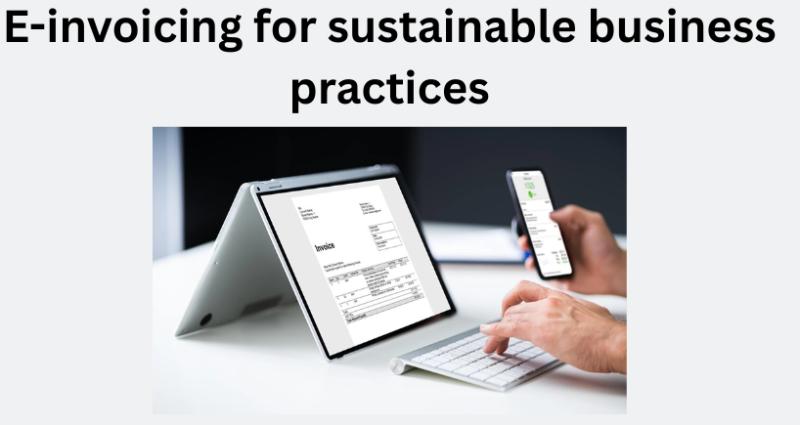
Invoicing is undoubtedly one of the most crucial aspects of financial management. However, the amount of paper used in this process is massive. As a matter of fact, businesses often underestimate the environmental impact of financial management. Apart from this, you'll be surprised to know that simply creating paper invoices uses as much energy every year as the consumption of 20 million households. That's a vast amount of energy, just to create and send invoices. That's why you must understand the relationship between e-invoicing and sustainability, and how electronic invoicing helps companies streamline their tax-related processes. Read on to learn more about this topic.
How does traditional invoicing impact the environment?
A significant amount of paper invoices are generated, mailed, and stored by traditional invoicing methods. This negatively impacts the environment and results in deforestation, higher energy usage, and higher carbon emissions. In fact, organisations have a greater environmental impact because of the substantial resources required for the creation, shipping, and disposal of paper-based invoices.
Furthermore, paper-based invoices can frequently lead to inefficiencies, including processing delays, human error, and higher storage and retrieval costs. Your financial budget may be impacted by these factors, which in turn affect your organisation's sustainability goals. This is where implementing global e-invoicing and reporting solutions becomes a game-changer for organisations.
How does e-invoicing and sustainability work hand in hand?
In comparison to traditional invoicing methods, e-invoicing eliminates paper invoices, which makes it a more environmentally friendly alternative than conventional methods. By transforming the invoicing process, companies can significantly reduce their dependency on paper, leading to the following environmental benefits:
Reduction in paper waste
One of the most important advantages of e-invoicing is the reduction in paper waste as well as deforestation. By transitioning to electronic invoicing and reporting, companies can save thousands of sheets of paper annually, which directly contributes to forest conservation efforts and reduces the environmental load. This is how e-invoicing and sustainability work together and help protect natural resources, minimise energy consumption, and water consumption associated with paper-based invoices.
Curb carbon footprint
With the help of electronic invoicing and reporting, companies can significantly reduce services like mailing and courier that are involved in physically sending invoices, which reduces transportation-related carbon emissions and helps organisations meet their sustainability goals. Furthermore, companies can save energy by eliminating paper-based invoices, which reduces their overall environmental impact.
Energy conservation
The energy involved in the paper production process and its careful disposal is quite significant. In contrast, e-invoicing relies on electronic communications, which use significantly less energy, particularly when effective global e-invoicing and reporting solutions are employed. This energy efficiency supports larger efforts to save resources and reduce greenhouse gas emissions.
Resource management
By making the overall invoicing process more efficient, electronic invoicing makes it possible to manage resources more effectively. Moreover, electronic invoices are easy to send, save, retrieve, and process. Paper-based invoices, on the other hand, require vast amounts of paper documents, which have a negative impact and necessitate more physical storage space. Furthermore, automating invoice processing saves time and money by eliminating human errors, which in turn results in fewer disputes and a reduction in the need for reprocessing.
A paperless workplace
You can initiate a more comprehensive paperless workplace program by merging your e-invoicing and sustainability efforts. Wondering how? Well, by encouraging the electronic invoicing process within your organisation, you can easily contribute to an all-encompassing strategy to cut down on paper consumption throughout the company.
Are there any social advantages of implementing e-invoicing?
While electronic invoicing and sustainability work hand in hand for the betterment of the environment, it also offers several social advantages for organisations. Some of which are:
Accessibility and inclusivity
With e-invoicing, companies can significantly enhance their global accessibility, including remote or previously unreachable regions. Moreover, electronic invoicing facilitates quicker and more efficient transactions, thereby empowering the economic sustainability of organisations and contributing to broader economic growth.
Financial efficiency
Global e-invoicing and reporting solutions offer numerous benefits to companies when it comes to financial efficiency. As a matter of fact, with electronic invoicing, businesses can expect the invoices to be settled within 5-7 days sooner than the paper invoices, thereby reducing the need for external financing. This is specifically important for small and medium enterprises as they often face obstacles in accessing their financial resources. Furthermore, with efficient electronic invoicing solutions, the entire process becomes much more accelerated, less complex, and more seamless.
Transparency and traceability
Another important social benefit of electronic invoicing and reporting is that it provides effective tracking and storage capabilities as opposed to the traditional invoicing methods. This way, electronic invoicing also enhances transactional transparency, facilitating more seamless audits and verification processes. Moreover, it helps in tackling issues associated with fraud and ensuring adherence to regulatory standards, ultimately offering advantages to all parties involved.
Understanding the governance benefits of implementing e-invoicing
Apart from the social advantages, global e-invoicing and reporting solutions help achieve governance benefits as well, some of which are:
Compliance and standardisation
Adopting electronic invoicing helps streamline compliance with regulatory requirements. It helps organisations meet the compliance requirements for mandatory tax laws and invoicing standards. With e-invoicing becoming mandatory across various regions of the world, companies can leverage the flexibility of e-invoicing solutions. This way, companies can adapt to the ever-evolving legal requirements while also ensuring governance standards.
Improved efficiency and accountability
One of the most sought-after advantages of electronic invoicing is that it helps businesses streamline their invoicing processes. Moreover, it helps reduce their administrative burdens and improve accountability. With e-invoicing and sustainability combined, organisations can now achieve more seamless and efficient operations, which help improve transparency within the enterprise.
Enhanced internal controls
Integrating e-invoicing within your business processes also helps in ensuring improved internal controls, specifically providing clear insights into financial transactions. The automated invoice processing and reconciliation help eliminate instances of inaccuracies and fraudulent transactions, thereby ensuring ever more reliable and accurate financial reporting.
Conclusion
As discussed in this article, e-invoicing enables the instant delivery of invoices across geographical borders, eliminating the need for long-distance transportation and thereby further reducing carbon emissions. However, keep in mind that implementing global e-invoicing and reporting solutions requires relevant expertise and domain knowledge. That's why it's highly recommended to seek help from an efficient partner who can guide you through the complexities of the implementation process and help you achieve the desired outcomes.
Post Your Ad Here
Comments