From Lecture Hall to Global Stage: How Transcription and Translation Fuel Academic R&D
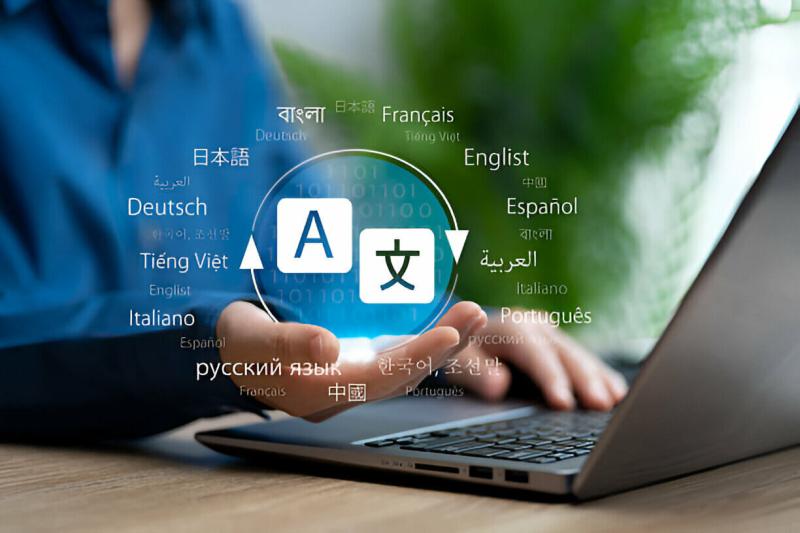
Research and development in different fields are being conducted in developing countries to innovate new solutions that improve lives and drive progress. Transcription and translation convert these innovations from local knowledge to global awareness. They mitigate language barriers, link researchers across borders, and translate complicated findings into diverse discourses.
When carried out with exactness, these services not only complement scholarly work; they amplify its impact and significance. They help the information to be disseminated globally without any distortion.
Unlocking Better Academic Communication
In academic settings, precision is everything. One misplaced word or misinterpreted concept can change meaning and destroy the efforts and time that were spent in research and development. Lecturers, researchers, and institutions dedicate countless hours refining their findings.
Lecturers, researchers, and institutions spend endless hours polishing their results. But without reliable tools for communication, even the most precious ideas have a chance of being ignored or misconstrued.
Academic transcription for lecturers guarantees oral knowledge is converted into exact written accounts. This helps to archive lectures, develop research papers, and open up content to broader audiences. The translation services company then translates this content to various languages and cultures to ensure professionals and students across the globe can access it.
From Local Lecture to International Dialogue
Picture a professor delivering their research to a university seminar. The information is valuable, but it's only available to the audience present and potentially those who are familiar with the language. With academic transcription services for lecturers, that oral presentation materializes as an organized text document. Such a transcript can be circulated to peers, posted onto academic databases, or serve as reference material for subsequent research.
When the same material is sent to a translation services company, it is converted into several languages without being lost in meaning or subtlety. Today, the same study can educate a student in France, a policy analyst in Japan, or a startup entrepreneur in Brazil.
Connecting Minds Beyond Borders
Academic R&D is based on collaboration. Cross-national collaborations tend to join researchers from various linguistic and cultural environments. Transcripts of lectures and presentations are the common platform for discussion. Once such transcripts are translated, barriers to cooperation narrow.
Take the example of an engineering team working on a sustainable energy solution. on different continents and speak different languages. Without accurate transcription and translation from a reliable translation services company, technical jargon could be misunderstood, resulting in delays or inaccuracies. By providing each participant with the same correct information, such a company ensures that teams can work more efficiently and at a faster pace.
Driving Accessibility in Higher Education
Accessibility is not just a compliance issue. It's an ongoing commitment to accessible learning. Transcription benefits students with hearing disabilities, students who learn more easily in text, and non-native speakers who have time to go back over difficult concepts. Translation takes it a step further by making material available to students who may be otherwise unable to participate because of language restrictions.
Preserving and Sharing Knowledge
Scholarly research is not just the creation of new ideas; it's also the extension of previous work. Transcripts give a real, searchable record that is available years after a lecture is delivered. When those records are published in several languages, they're contributed to a global repository of knowledge that can be referred to by future researchers all over the world.
This conversation is especially relevant where information is changing fast, for example, in ecology, technology, and medicine. Scholars can prevent repetition of efforts and work on taking the discussion further.
The Role of Technology in Academic Communication
The advances of digital and AI technology have completely revolutionized the delivery of transcription and translation. Automatic speech recognition can provide preliminary transcripts, with professional checking providing the accuracy. Translation memory software aids in keeping documents consistent, particularly in extended research projects.
Nonetheless, human intervention is best. Academic writing frequently contains specialty jargon, idioms, and cultural allusions that machines can interpret inaccurately. Optimum results derive from a combination of technology for speed and specialist human checking for precision.
Building a Bridge from Academia to the World
For research centers and universities, embracing a process of organized transcription and translation is not merely elective; it's a strategic imperative. By converting lectures, seminars, and talks into accessible, multilingual material, they become active members of the global research world.
The transition from the lecture room to the international arena is achieved by intent. Proper transcription records the substance of knowledge. Efficient translation makes that substance comprehensible, honored, and enacted globally.
Conclusion
In the swift era of academic R&D, concepts have to flow rapidly and precisely. Transcription and translation facilitate that. They turn local knowledge into worldwide influence, mitigate language barriers, and help in collaboration and accessibility.
When done effectively, they don't merely fund research; they magnify it. They enable a single voice in a classroom to be heard, appreciated, and acted upon by a global audience. And in the process, they ensure that the next great discovery is not only made but also disseminated.