Industrial Valves for Chemical Feed: Spotlight on Globe Valves
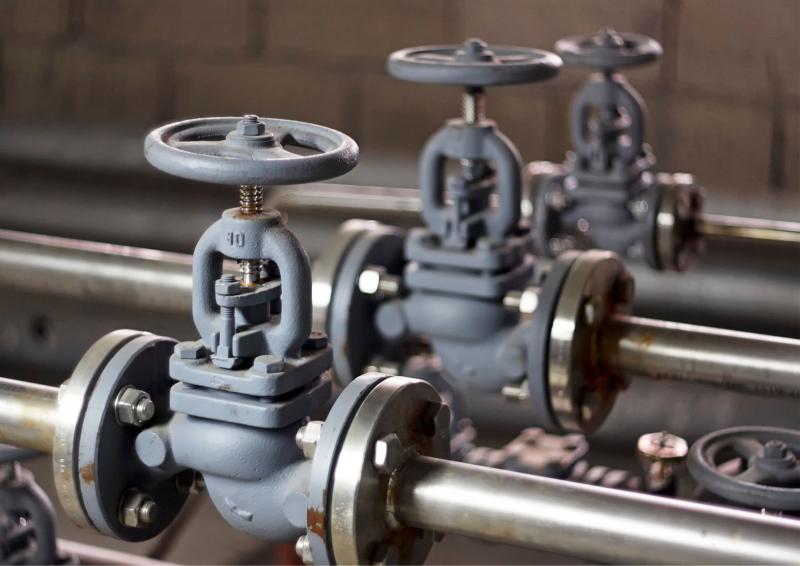
Industrial valves play a critical role in managing, controlling, and optimizing the flow of chemicals in feed systems. Among the various industrial valve types, globe valves stand out for their precision and reliability—two non-negotiable requirements when handling sensitive or corrosive fluids. This article provides a closer look at how globe valves fit into chemical feed operations, their working principles, and what makes them a trusted component in industrial settings.
Globe Valves in Chemical
Applications
What Makes Globe Valves Ideal?
Globe valves are commonly chosen for
chemical feed systems because of their superior flow regulation. Unlike ball or
gate valves, which are more suited for quick shut-off, globe valves are built
for throttling. This makes them ideal when exact control is essential, such as
in metering chemical doses.
Common Globe Valve Applications
In chemical plants and treatment
facilities, globe valves are used in:
●
Chemical dosing skids
●
Acid or base injection lines
●
Flow control in corrosive
environments
●
Water treatment plants that
require precise additive control
Their ability to manage flow rate with high accuracy makes them invaluable where safety and compliance are top priorities.
The Globe Valve Working
Principle: Simple Yet Powerful
Globe valves control flow using a linear
motion. When you turn the handle, the disc moves up or down in relation to a
stationary ring seat. This movement creates a path for fluid to either pass
through or be blocked, giving the operator tight control over flow.
The globe valve working principle is
especially effective when:
●
Adjusting flow incrementally
●
Reducing pressure without
compromising safety
● Avoiding fluid hammer or turbulence
Globe Valve Parts Explained
To better understand their function,
here's a quick breakdown of common globe valve parts:
●
Body – The main casing that contains and
supports internal parts
●
Bonnet – Covers the valve body and houses the
stem
●
Disc (or plug) – The part that moves up and
down to regulate flow
●
Seat – Where the disc rests to stop the flow
●
Stem – Connects the disc to the actuator or
handle
●
Packing – Prevents leaks around the stem
Each part contributes to the valve’s
durability and fine-tuned control, making it well-suited for harsh industrial
settings.
Globe valves come in a few key types,
each with specific strengths:
●
Tee Pattern – Great for throttling, but has
higher pressure drop
●
Angle Pattern – Used when a 90-degree turn in
the piping is needed
●
Wye Pattern – Lower pressure drop, often used
in applications that need minimal flow resistance
Choosing the right globe valve type depends on your system layout, flow requirements, and the chemical properties of the fluid.
Material Selection for
Industrial Valves in Chemical Feed Systems
Selecting the right materials helps
extend service life, maintain system integrity, and reduce maintenance costs.
Common Body Materials for
Chemical Compatibility
Stainless Steel
(SS316/SS304)
Ideal for
corrosive chemicals like acids, chlorides, and caustic solutions. SS316 has
molybdenum for extra corrosion resistance and is a common pick in
pharmaceutical and chemical industries.
Cast Iron/Ductile
Iron
Suitable for less
aggressive fluids and budget-conscious operations. Not ideal for strong acids
or alkalis.
Bronze or Brass
Used in
lower-pressure systems or where mild chemical resistance is acceptable. More
common in water-based applications than aggressive chemical feeds.
PVC, CPVC, or PVDF
Non-metallic options that are chemically resistant and non-conductive. Excellent for highly corrosive applications (e.g., sodium hypochlorite, sulfuric acid), but limited by temperature and pressure ratings.
Trim Materials and Soft Seats
PTFE (Teflon)
Chemically inert
and widely used for valve seats and packing. Offers excellent resistance to
almost all chemicals, but not recommended for abrasive media.
EPDM and Viton
(FKM)
Elastomers often
used for O-rings and gaskets. EPDM resists water-based chemicals, while Viton
handles solvents and hydrocarbons better.
Hastelloy and Monel
High-nickel alloys used for extreme chemical resistance. Often specified for highly corrosive environments like concentrated acids or seawater-based systems.
Pressure and Temperature Ratings
Globe valves used
in chemical feeds typically operate under the following ranges:
-
Pressure: 150 to 600 psi (ANSI Class 150–600)
-
Temperature: -20°C to 260°C (depending on
material)
These parameters must align with both the valve design and the chemical media specifications to avoid failure.
Conclusion: Making the Most of
Industrial Valves in Chemical Feed Systems
From accurate flow regulation to
long-term reliability, globe valves offer a dependable solution for chemical
feed systems. Their design, functionality, and versatility place them among the
top choices in the category of industrial valves. For operations where control
and safety are essential, integrating the right globe valve type is not just a
good decision; it’s a critical one.

Post Your Ad Here
Comments