Black Chia Seed for North America: Sourcing the Right Quality
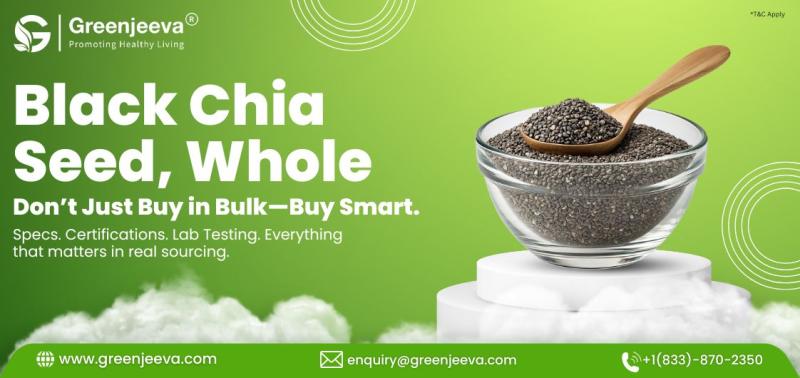
The Chia Boom Nobody Saw Coming
Once considered a niche health food, black chia seeds have now found a permanent place in mainstream nutrition. From smoothies to cereal bars, dairy-free beverages to clean-label supplements, chia seed, whole is rapidly becoming a staple ingredient in North American food innovation. According to market research, chia seed imports to the U.S. and Canada have surged over the past five years, fueled by rising demand for plant-based protein, omega-3s, and dietary fiber.
But as this boom continues, a new question emerges for procurement teams and product developers:
Are you sourcing the right quality of chia seeds to meet both consumer expectations and regulatory compliance?
Chia Market Snapshot in North America
1. U.S. Chia Seed Imports (2018 vs. 2023) take timeline on or after 2025.
- 2018: ~9,800 metric tons
- 2023: ~17,500 metric tons (+78%)
2. Top Exporting Countries to North America
- Paraguay
- Mexico
- Bolivia
- Argentina
3. CAGR for Chia-Based Products (2023-2028)
- Functional beverages: 8.9%
- Nutraceuticals: 7.4%
- Vegan snacks and bakery: 9.1%
Sources: USDA, Statista, Grand View Research
Why Chia? A Functional Superseed That Checks All the Boxes
In an increasingly label-conscious marketplace, whole black chia seeds offer a rare trifecta of value:
Nutrient Density: Omega-3s, fiber, calcium, magnesium, antioxidants
Clean-Label Ready: No processing or synthetics involved
Multi-Industry Use: Functional foods, nutraceuticals, bakery, beverages, and even pet care
This makes bulk chia seed buyers a critical link in the quality control chain.
https://joripress.com/uploads/images/202508/image_870x_6891e4170fbaa.webp
What "Right Quality" Really Means When Buying Bulk Chia Seeds
Not all chia is created equal. With rising demand comes rising risk—including contamination, adulteration, and mislabeling. Here's what sourcing managers need to watch for:
1. Seed Integrity: Whole vs. Milled or Damaged
Bulk chia seeds should be uniform, whole, and unprocessed. Broken or milled seeds degrade faster and may not meet shelf-life or formulation standards.
2. Moisture Content: Ideally < 10%
Post Your Ad Here
Comments