Text Annotation for NLP Projects - Enhancing the Processing Performance and Accuracy
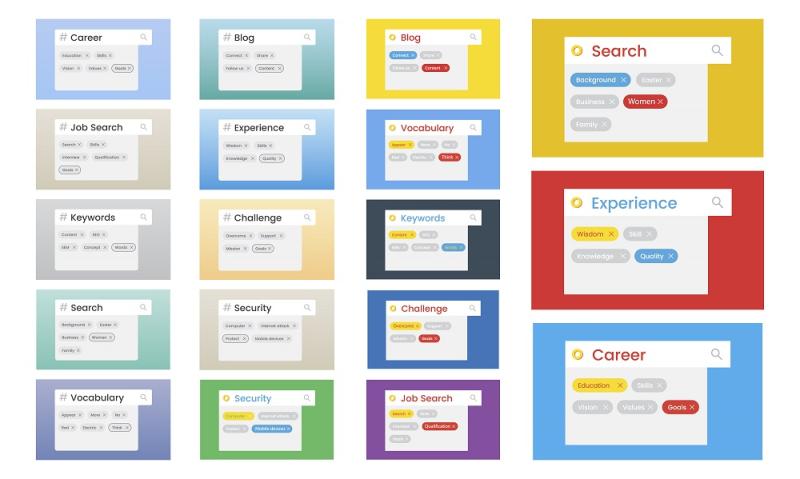
Businesses across industries are investing in natural language processing applications to automate customer interactions and extract insights from text data. Customer service chatbots, language translation systems, and document processing tools have become essential for modern business operations. These applications help companies reduce operational costs and improve response times. What makes these NLP systems work effectively? The answer lies in properly annotated text data. Text annotation is the process where raw text and words are labelled with meaningful tags, classifications, and structural information. These annotations convert unstructured text into structured data that machine learning models can understand and learn from. Without quality annotation, NLP models struggle to interpret human language accurately.
Relevance of Text Annotation Services in NLP Projects
The market for NLP development is expected to move from 38 billion USD in 2025 to 114 billion USD in 2029, emphasizing the rising significance. However, the effectiveness of real-time NLP applications depends on the quality text annotation. Developing quality-rich text annotations for language processing projects requires extensive skills and expertise. When businesses manage annotation projects with internal IT experts, they might find it difficult to create consistent, accurate training data. The text annotation process requires execution of diverse techniques like entity recognition, sentiment analysis, and categorization, each of which necessitates extensive expertise. Companies investing in NLP projects should team up with professional data annotation services. Here's why it helps: Linguistic Expertise and Quality Control - Professional data annotation services providers employ trained linguists who understand language nuances across multiple domains and dialects. These specialists implement multi-level review processes and validation protocols that significantly reduce annotation errors. Established providers maintain quality standards regardless of project size or complexity. Smart Resource Management - Reputable text annotation services providers handle large datasets without compromising quality or timelines. When businesses scale NLP projects, professional annotation teams adjust resources accordingly. This support enables businesses to meet project timelines without straining internal resources. Standardized Guidelines and Consistency - Professional annotation teams follow standardized guidelines that ensure consistency across entire datasets. This consistency eliminates misinterpretations for machine learning algorithms. Consistent annotation quality directly impacts model performance and application effectiveness. The choice of text annotation services partner becomes a strategic business decision that influences NLP application success. Teams with proper training and established processes deliver the structured data foundation that high-performing NLP systems require.List of Text Annotation Techniques for NLP Projects
Text annotation techniques are the foundations of NLP systems that work well. These techniques provide structured data to train algorithms that understand human language. Data annotation services providers use several specialized methods to build high-quality training datasets. 1. Named Entity Recognition Named Entity Recognition technique is ideal for spotting specific entities in text and grouping them into preset aspects like people, dates, organizations and locations. This approach transforms unstructured text into organized, usable data that powers NLP applications like question answering, information retrieval, and machine translation. NER is a vital component in recruitment systems, healthcare record analysis, and many information extraction tasks. 2. Part-of-Speech Tagging Part-of-Speech (POS) tagging labels each word based on its grammatical role, nouns, verbs, adjectives, adverbs, and more. NLP systems use this process to understand sentence structure and clear up word ambiguities. POS tagging makes search engine queries better, optimizes content, and supports complex NLP tasks like parsing and semantic analysis. 3. Semantic Role Labeling Semantic Role Labeling (SRL) determines how entities relate to specific actions or events in sentences. SRL goes beyond POS tagging by figuring out who did what to whom, when, where, and why. This method powers NLP applications in question answering, information extraction, text summarization, and dialog systems. 4. Frame-Level Text Location Video annotation services providers implement the Frame-Level Text Location technique to find and tag text that appears in video frames. The technique matches timestamps with text content to enable video-language grounding and temporal localization. Video content moderators, captioning teams, and multimedia platforms rely on this approach. 5. Text Transcription Text Transcription converts text from images or scanned documents into a digital format. Image annotation services providers use this method to connect visual and textual data. Healthcare teams use it to process patient records, financial services analyze documents with it, and government agencies manage public services through this technique.Challenges in Text Annotation for NLP Projects and How Experts Resolve Them
Text annotation offers many benefits, but organizations don't deal very well with several challenges when they start annotation projects for NLP. These challenges might impact quality and precision of language processing models when left unaddressed. I) Data Volume and Scalability NLP models require massive amounts of labeled input data to generate quality outcomes. Internal teams often struggle with the logistics of handling such volumes. Professional data annotation services solve these problems through specialized teams and reliable project management systems that maintain quality, whatever the dataset size. II) Data Privacy and Ethical Constraints Text data usually contains sensitive information that needs careful handling. That's why, video annotation services follow robust security measures, like data anonymization techniques, non-disclosure agreements, and secure workstation management. By following clear ethical guidelines, annotation experts ethically manage biased or private content and ensure responsible NLP system training and development. III) Language Ambiguity Human language contains idioms, cultural references, and contextual meanings that vary across regions and industries. These ambiguities create inconsistencies in annotation when handled by teams without linguistic expertise. Annotation errors from language misinterpretation directly impact model performance in production environments. Reputable image annotation services providers overcome this by employing native speakers and linguistic experts who understand subtle language variations. These specialists recognize cultural nuances and maintain consistency across different text sources and domains. IV) Domain Knowledge Fields like healthcare, finance, and legal sectors use their own specialized terms and concepts. Annotations lose accuracy without expert knowledge in these areas. Service providers tackle this by hiring annotators with relevant expertise or giving them complete domain-specific training.Final Words
Text annotation is the pillar of effective NLP systems. It turns raw language data into structured information that machines can learn from. The quality of these annotations directly affects how well systems grasp human communication, which makes choosing the right annotation approach crucial for organizations implementing NLP technologies. Many organizations think about handling annotation internally, but the complexities often need specialized expertise. Professional annotation services are a great way to get advantages through their trained annotators, standardized processes, and quality control measures. These providers deal very well with image and video annotation services and resolve challenges like managing large data volumes, working through language ambiguities, applying domain knowledge, and protecting data privacy.
Comments