How Smart Agencies Are Ditching Billable Hours for Scalable Success?
Remember when every agency pitch started with "We're different"? Turns out, they weren't. They all billed by the hour, scope-creeped their way through projects, and wondered why scaling felt like pushing a boulder uphill. Today's smartest service providers have figured out what Silicon Valley knew all along: productization beats customization when it comes to building a real business.
The Great Unbundling of Professional Services
The professional services industry is experiencing its Napster moment. Just as music went from albums to singles, agencies are unbundling their offerings into bite-sized, repeatable packages. The numbers tell the story: companies offering productized services report 60-90% gross margins compared to the industry standard of 40%. That's not a typo.
The Success Stories Driving Change
Design Pickle went from $300,000 to $86.3 million in revenue in under a decade. WP Curve scaled to $1 million ARR in 18 months before GoDaddy snapped them up. These aren't flukes. They're evidence of a fundamental shift in how services get delivered.
What Changed? Everything.
The Buyer Evolution
First, buyers got tired of the dance. The endless discovery calls, the custom proposals, the "it depends" pricing. In an era where you can subscribe to everything from razors to rockets, why should professional services require a three-month negotiation?
The Talent Economics Shift
Second, talent got expensive. Really expensive. The traditional agency model of hiring senior people to manage junior people who do the actual work stopped making sense when those junior people started commanding six figures. Productization lets you systematize expertise instead of hoarding it.
The AI Disruption
Third, AI entered the chat. When ChatGPT can write your blog post and Canva can design your social graphics, agencies need a better value proposition than "we have creative people." Productized services combine human expertise with scalable systems to deliver consistent results that AI alone can't match.
The Anatomy of a Productized Service
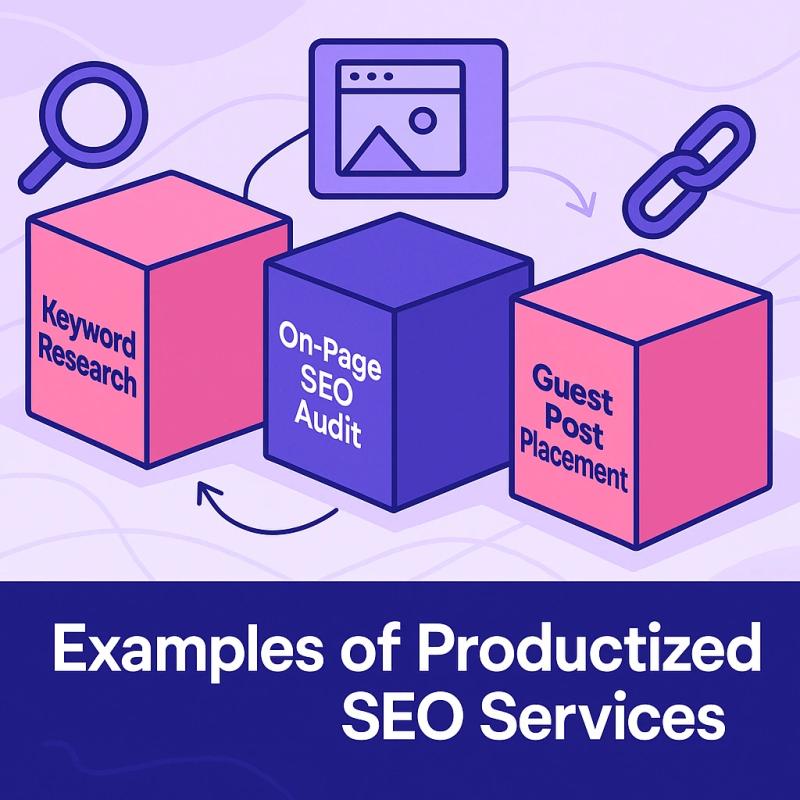
Let me paint you a picture. Traditional service: "We'll help with your SEO." Productized service: "We'll deliver a keyword research report with 50 high-opportunity keywords, competitor gap analysis, and content roadmap within 7 days for $999."
See the difference? One's a relationship. The other's a product.
Real-World Example: SEO Productization
KeywordProbe.com exemplifies this approach in the SEO space. Founded by Fahad Raza after 18 years watching agencies overcomplicate simple processes, the company packages enterprise-level SEO insights into fixed-price offerings starting at $99. No hourly billing. No scope creep. Just clear deliverables with guaranteed timelines.
This isn't about dumbing down services. It's about smartening up delivery. When they helped an absorbent underwear brand achieve 147% growth in organic traffic, they didn't reinvent SEO. They applied proven methodologies consistently, at scale.
The Three Pillars of Productization Success
1. Ruthless Specialization
Every successful productized service does one thing exceptionally well.
Why Focus Wins
- Design Pickle doesn't do "creative services"—they do unlimited graphic design
- Smart Yeti doesn't handle "digital marketing"—they manage AdWords for plastic surgeons
- Draft doesn't offer "consulting"—they optimize e-commerce conversions
This focus feels limiting until you realize it's liberating. When you know exactly what you're selling, you can optimize every aspect of delivery. Your team gets faster. Your quality improves. Your margins expand.
2. Process Over People
Traditional agencies sell access to talent. Productized services sell access to systems. This shift matters because talent walks out the door every night. Systems don't.
Essential Documentation Areas
The best productized services document everything:
- Client onboarding workflows
- Project execution templates
- Quality assurance checklists
- Communication standards
- Delivery frameworks
This isn't bureaucracy—it's the difference between a business and a freelance operation with employees.
3. Value-Based Positioning
Here's where most service providers stumble. They productize their offerings but keep selling inputs. "10 blog posts for $2,000" isn't a productized service. It's bulk freelancing.
Selling Outcomes vs. Outputs
| Traditional Approach | Productized Approach |
|---|---|
| 10 blog posts | 50% increase in organic traffic |
| 20 hours of consulting | Implemented conversion optimization system |
| Monthly design retainer | Unlimited design requests with 48-hour turnaround |
| SEO audit report | First page rankings for target keywords |
Real productization sells outcomes. The case studies prove it: 127% increase in monthly bookings for a medical spa, 67% of revenue from emergency cases for a dental practice. These aren't accidents. They're the result of systematic value delivery.
The Money Actually Makes Sense
Let's talk economics. Traditional service businesses face a cruel math problem. To double revenue, you need to double headcount. But doubling headcount more than doubles complexity. Office space. Management layers. Communication overhead. The marginal cost of growth keeps climbing.
The Productization Economic Model
Productized services break this equation. Once you've built the system, serving 100 clients isn't much harder than serving 10. Your tenth client is as profitable as your first. Maybe more so, since you've refined the process.
Revenue Model Comparison
| Metric | Traditional Services | Productized Services |
|---|---|---|
| Gross Margins | 30-40% | 60-90% |
| Revenue Predictability | Low (project-based) | High (subscription) |
| Scaling Cost | Linear with revenue | Minimal after system build |
| Customer Acquisition Cost | High (custom sales) | Low (self-service possible) |
| Operational Complexity | Increases exponentially | Increases marginally |
The subscription model amplifies this effect. Monthly recurring revenue transforms cash flow from peaks and valleys to predictable streams. Churn rates of 20-35% sound high until you compare them to the 100% "churn" of project-based work.
The Transition Playbook
Converting a traditional service business to a productized model isn't a flip-the-switch operation. The successful ones follow a pattern.
Phase 1: Start Small
Pick your most requested service. The one you could deliver in your sleep. Package it with clear scope, fixed price, and defined timeline. Test with existing clients who trust you.
Phase 2: Maintain the Hybrid
Keep 80% of revenue from custom work while building your productized offering. This isn't cowardice—it's prudence. You're learning what works while keeping the lights on.
Phase 3: Listen and Iterate
Your first productized service probably won't be your best. Smart Yeti started as a general marketing agency before finding their plastic surgery AdWords niche. Successful companies refine their packages based on what businesses actually need, not what experts think they should want.
Phase 4: Scale Deliberately
Resist the urge to add services. Depth beats breadth in productization. Design Pickle could easily offer "unlimited marketing services." They don't. They offer unlimited design, and they're worth $100 million because of that focus.
The Challenges Nobody Talks About
Productization isn't a panacea. It creates new problems while solving old ones.
Client Education Hurdles
Some buyers will always want custom solutions. You'll lose deals to agencies willing to promise anything. That's fine. You're not trying to win every client—you're trying to build a scalable business.
Team Dynamic Shifts
What Changes for Your Team:
- Star performers who thrive on variety might chafe at standardization
- Creative chaos culture transforms into disciplined execution
- Compensation models need rethinking when everyone delivers the same service
- Career paths look different without traditional account management roles
Increased Competition
When you productize, you make your offering easier to copy. Design Pickle spawned dozens of unlimited design services. The winners compete on execution, not innovation.
The AI Wildcard
Here's what keeps smart agency owners up at night: AI is coming for the easy stuff.
Services Most at Risk:
- Basic content writing
- Simple graphic design
- Template-based development
- Standard data analysis
- Routine customer service
But here's the counterintuitive truth: AI makes productization more valuable, not less. When anyone can generate content, the value shifts to strategy. When anyone can create graphics, the value shifts to brand consistency.
The Productization Advantage in an AI World
Productized services that combine human judgment with systematic delivery will thrive. Those selling pure execution won't. The winning formula:
- Human expertise for strategy and quality control
- AI for acceleration and scale
- Systems for consistency and reliability
The Future Looks... Productized
The professional services industry is splitting into two camps:
Camp 1: High-Touch Consultancies
- Solving novel problems for enterprise clients
- Charging premium rates for custom solutions
- Focusing on transformation and strategy
Camp 2: Productized Services
- Delivering consistent value at scale
- Operating on subscription or fixed-price models
- Targeting specific outcomes for defined segments
The messy middle—generalist agencies billing by the hour—is disappearing. They can't compete with consultancies on expertise or productized services on efficiency. They're the Blockbuster Video of professional services.
The Democratization Effect
This shift isn't just about business models. It's about accessibility. When companies offer enterprise-level insights for $99, they're democratizing expertise. When unlimited design costs $649/month, good design becomes affordable for small businesses.
The Bottom Line
Productization isn't about cheapening services. It's about scaling excellence. The best productized services deliver better results than custom agencies because they've perfected their process. They've turned expertise into systems, and systems into products.
For Service Providers
The message is clear: productize or perish. The market is moving toward transparent pricing, defined outcomes, and scalable delivery. Fighting this trend is like fighting gravity.
For Buyers
Productized services offer something revolutionary: professional services that actually work like products. Clear pricing. Defined deliverables. Consistent quality. No drama.
The revolution isn't coming. It's here. And the smart money's on the agencies that figured out how to stop selling time and start selling value. Because in the end, that's what productization really means: finally delivering what clients actually want.
After two decades of watching agencies struggle with the same problems, I'm convinced productization represents the industry's best path forward. Not because it's easier—it's not. But because it forces the focus and discipline that separates real businesses from glorified freelance operations. The agencies thriving today aren't the ones with the best creative. They're the ones with the best systems.
Post Your Ad Here
Comments