Why DTF Printers Are the Future of Fabric Printing
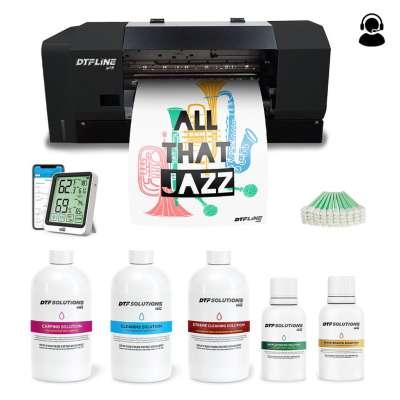
In recent years, the world of textile and garment printing has undergone a major transformation. Among the most exciting developments is the rise of DTF (Direct to Film) printers—a technology that’s quickly reshaping how custom apparel, accessories, and fabric products are created. Known for their flexibility, quality, and affordability, DTF printers are fast becoming the go-to solution for businesses of all sizes. So what makes DTF printers the future of fabric printing? Let’s break it down.
What Are DTF Printers?
DTF printers are a type of digital printing technology that transfers ink from a special PET film onto fabric using heat and pressure. Unlike DTG (Direct to Garment) printers, which print directly onto the fabric, DTF printers work by first printing a design onto a clear film, applying a layer of adhesive powder, curing the design, and then transferring it onto the fabric using a heat press.
This method eliminates the need for pretreatment or expensive garment types, making it a more efficient and cost-effective choice—especially for small businesses and custom orders.
Key Advantages of DTF Printing Technology
There are several reasons why DTF printers are becoming the preferred choice for fabric printing:
✅ Prints on a Wide Variety of Fabrics
One of the biggest advantages of DTF printers is their compatibility with nearly any fabric, including:
-
Cotton
-
Polyester
-
Blends
-
Nylon
-
Denim
-
Leather
This means you can create custom prints on t-shirts, hoodies, tote bags, caps, and even shoes without changing your setup.
✅ No Pretreatment Required
Unlike DTG printers that require fabrics to be pretreated before printing, DTF printing skips that step entirely. This not only saves time and cost but also reduces labor, making the overall process faster and more efficient.
✅ Vibrant, Durable Prints
DTF printers produce high-resolution images with bright, bold colors. Once transferred, the prints are flexible, stretch-resistant, and highly durable through multiple washes, making them perfect for both fashion and workwear.
✅ Great for Short Runs and On-Demand Printing
Whether you're a local print shop or an online seller, DTF printers are ideal for small batches and on-demand printing. You can easily produce one-off designs without the overhead costs associated with traditional methods like screen printing.
How DTF Printing Compares to Other Methods
Let’s look at how DTF printing stacks up against other common fabric printing methods:
| Feature | DTF Printing | DTG Printing | Sublimation Printing |
|---|---|---|---|
| Fabric Compatibility | All types | Mostly cotton | Polyester only |
| Pretreatment Required | No | Yes | No |
| Setup Cost | Medium | High | Medium |
| Print Durability | High | Moderate to High | Very High |
| Design Versatility | High | High | Limited (light colors) |
| Ideal For | Custom orders, mixed fabric types | Cotton garments | Polyester, mugs, hard surfaces |
Clearly, DTF printers offer a more universal solution, especially for businesses dealing with multiple fabric types or customized products.
User-Friendly and Scalable
DTF technology is designed to be user-friendly, even for beginners. Most printers come with intuitive RIP software, and the printing process is straightforward:
-
Print the design
-
Apply adhesive powder
-
Cure the print
-
Transfer using a heat press
Because of its simplicity, DTF printing allows entrepreneurs to start small and scale quickly as demand grows. It's a low-barrier entry point into the garment printing industry, making it an excellent option for home businesses, print-on-demand startups, and growing apparel brands.
Lower Cost, Higher Profit
One of the biggest reasons DTF printers are the future is the cost-to-profit ratio. The initial investment in a DTF setup is generally lower than DTG, and the cost per print is affordable—even for full-color designs.
You save money on:
-
Pretreatment chemicals
-
Waste materials
-
Specialized fabrics
-
Labor and production time
As a result, you can offer competitive pricing to customers while maintaining healthy profit margins.
Sustainability and Minimal Waste
In an era where sustainability matters more than ever, DTF printing offers a more eco-conscious option. Since it uses only the required amount of ink and materials per design, it significantly reduces waste. Additionally, there's no water used in the process (unlike screen printing), and there's less inventory risk since you can print on-demand.
This makes DTF a cleaner, more responsible choice for environmentally aware businesses.
What the Future Holds for DTF Printers
As demand for personalization, quick turnaround, and multi-fabric printing continues to grow, DTF technology is well-positioned to become the standard in digital textile printing. Manufacturers are already developing faster, larger-format DTF machines, automated powder shakers, and eco-friendly inks to improve efficiency and reduce environmental impact.
In the coming years, we can expect:
-
More affordable entry-level DTF printers
-
Software integrations for e-commerce and automation
-
Improved print quality and ink formulations
-
Greater use in industrial apparel and sportswear sectors
Final Thoughts
DTF printers aren’t just a trend—they're a smart solution to meet today’s printing needs. With unmatched fabric versatility, sharp and durable designs, and a streamlined workflow, they offer huge potential for small businesses, hobbyists, and high-volume custom print providers alike. Whether you're starting a new venture or looking to upgrade your printing setup, DTF printing is a technology worth investing in. It combines quality, speed, and affordability in a way that truly defines the future of fabric printing.
Post Your Ad Here
Comments