High Voltage Wires and Cables: Benefits, Design and Specifications
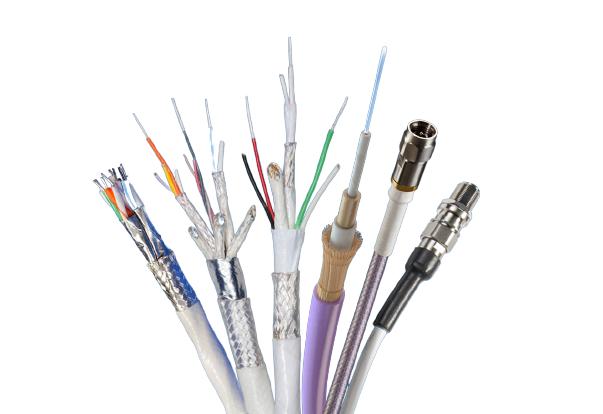
The High-Voltage or HV wire and cable are required for many
industrial projects that depend on high-power transmission. If you're
searching to find the perfect HV cable to suit your needs or want to know more
about the way HV wire and cable work in detail, we'll explain it to help those
who want to know.
We at FLU-TEF WIRES & CABLES PVT. LTD., we are familiar
with the ropes and cables. We're here for you to locate the perfect
solution for your project or requirement.
What is High Voltage (HV) Wire and Cable?
If you're employed in a related to power, then you're or at the very least acquainted of HV wire and cable. HV wire and cable manage the distribution and transmission of power that is greater than 1,000 Volts AC (alternating current).
HV wire and cable are vital for high-voltage applications that require lots of power. This is especially true if power is required to travel across a large distance, without a loss of energy. The high voltage can be found in transfer of power from substations to plants. This is also the case in industrial processes that need massive quantities of energy (e.g. the heavy motors, electrical equipment).
HV cables are constructed to withstand the highest voltage
and extreme environment stress. They are designed to be durable and safe,
which is a prerequisite for meeting the requirements of some of the most
demanding tasks, such as
- EV Charging: Within the EV business, high-voltage cables is utilized to transfer electricity from the battery into the motor, inverter and charger. It handles temperatures ranging from 200V to 800V. A few transmit signals to vehicles for monitoring and control.
- Solar and Wind Farms: HV cables are crucial for transferring the electricity produced by solar panels as well as wind turbines to local grid, or the power collection system.
- Industrial plants: HV wire is vital for the operation of huge industrial facilities. The cable can supply energy to motors with large capacities or heavy-duty equipment, as well as the most powerful equipment.
- Mass Transit and Rail: HV cables power electric rail systems such as light rails and subway trains and provide high-quality power to public transportation.
- Aerospace Applications A lot of aerospace-related applications need this kind of cable, too. Power supplies and hook-up cables need to be able to provide excellent resistance as well as electrical power.
- Mining Wires
with high voltage are used to supply power for long distances, and even
deeper into mine operations, to power excavator’s conveyor belts and
drills.
Benefits of High-Voltage Wire and Cable
If you require high voltage wires & cables, they must be specifically designed to handle the situation. These are the main benefits of selecting a right high-voltage cable suitable for your requirements.
Enhanced Power Transmission and Efficiency:
When you require high voltage transmission, HV cables can be
the solution. These cables are extremely durable, and they can transmit
electric power even across vast distances. In comparison to cable with
lower voltage technology, this cable has less loss of energy in transmission. The
higher the voltage the less current will be needed for transmission. This
reduces the amount of power lost through heat generated from resistance.
Lower Materials and Space Requirements:
Although they're powerful in characteristics, high-voltage cables require smaller conductors (because they're designed to hold greater electricity). Since the cables are smaller they require less space as well as the price of the materials used in cable runs are much lower. These cables are created to have strict tolerances.
Long-lasting and Durable:
Cable and wire are built for tough conditions and toughest tasks. Because of their materials that allows them to withstand high temperatures, UV exposure the elements of underground life, chemicals as well as wet and humid environments. They also withstand tension. High-voltage cables have a sturdy structure that requires minimal maintenance and is durable and affordable.
Large Capacity:
High Voltage Cables are able to handle loads of enormous size and are the most suitable solution for projects that need large power outputs. In the case of industrial equipment or public utilities as well as power stations, HV wire and cable will meet the requirements in peak times.
Secure and stable:
HV cables are extremely well-insulated. The design and construction of their cables utilize the latest technology to increase security. Cables and wires that are HV protect against dangers like power surges as well as electric arches.
High Voltage Cable Design
The high-voltage wires and cables can take on large loads of power because they've been specifically designed to handle them. Every component as well as the design and construction of these cables were designed considering the requirements of power with power demands in the back of their minds. Here are the most popular materials utilized in the production of HV cables.
Conducting Materials:
Each electrical cable and wire requires a conductor in order to transfer the electricity inside. The most commonly used materials for HV cables include aluminium and copper. The majority of applications prefer a copper conductor due to the fact that stranded copper wire is extremely flexible, and is a superb conductor. Aluminum is lighter in weight and more affordable, however it's a little less conductivity.
Insulation Materials:
Insulation shields the conductor inside the wire and cable. The XLPE (cross-linked polyethylene) is the most common insulator option for high-voltage cable. It is a great insulator that has the ability to resist chemical and temperature. Its EPR (ethylene propylene rubber) is a different option because of its great flexible and electrically insulation characteristics. PVC (polyvinyl chloride) is not a common option, but it is utilized in specific HV projects due to its resistance to fire and flexibility.
Sheathing Materials:
Sheathing helps protect the cables from external influences. The materials used for sheeting help guarantee that cables will be able to withstand the effects of environmental elements. Polyethylene, also known as PE, is among the most popular and versatile options. There is also PVC sheathing which is resistant to UV light, oil and various other substances.
Sheathing made of metal is a viable option for cables that
require extra security (such ones that are buried beneath or utilized underwater)
metal sheaths of aluminum or lead shield against environmental and moisture
damages.
High Voltage Wire and Cable Specifications
What are the HV cable specifications and wire? Wire and HV cables are offered in an array of technical specifications which include gauge as well as temperature, voltage tolerances, as well as component materials. The specifications will give you and picture of how a particular cable performs.
Gauge:
HV cables come with a vast spectrum of conductor sizes that are measured by the AWG (American Wire Guage) as well as at times the square millimeter (mm2). The size of the conductor affects the diameter and capacity that the cable has. The majority of gauges are between 2 AWG to 28 AWG. The smaller diameters work best to ensure tighter tolerances.
Voltage:
The voltage rating is the highest voltage that the HV cable is able to safely manage. These cables typically begin at 1000 Volts (1 kV) and some cables reaching 35 kV or greater in order to achieve a higher voltage. It is important to align the rating of the voltage to the voltage that is operating in the system for insulation protection and to make sure that the cable is used safely.
Temperature:
The specification for the temperature range will identify the most and lowest temperatures the cables are able to be able to tolerate. It is crucial to take into consideration the temperature range in fluctuating temperatures.
The majority of HV cables range from 40degC and 90degC. If
other components, such as XLPE or EPR are utilized for support, they are able
to cover more temperature ranges, ranging from 750C up to +2500C. The
greater temperature tolerances are perfect for areas with extreme temperatures
and high stress.
Materials
These specifications will also specify the insulation, conductor and sheathing material. The materials used for conductors are usually aluminium or copper. The insulation materials can include XLPE, PVC or EPR. Jackets and sheathing are made in PVC, PE, and a variety of different metals.
For added thermal and chemical resistance, PTFE sleeves are commonly used in
high-temperature and high-frequency applications. These sleeves provide
superior insulation, excellent dielectric properties, and outstanding
resistance to heat, oils and chemicals, making them ideal for harsh industrial
environments.
Find High Voltage Wire and Cable at FLU-TEF WIRES & CABLES PVT. LTD.
Whatever the need that you need to use it for, from wind turbines to power utilities to oil rigs the HV cable will satisfy your requirements. We at FLU-TEF WIRES & CABLES PVT. LTD., we carry various high voltage cables and wires for a variety of electrical application.
If you require help the selection of high-voltage cables or
wires contact us for an estimate. Our premium products are dependable
robust, sturdy and designed to last. When it comes to high-voltage cable
security and longevity is paramount. When you work with FLU-TEF WIRES
& CABLES PVT. LTD., you can be sure that we will deliver.
Whether you're wiring furnaces, industrial heating systems,
or utilizing RF cable assemblies in high-frequency applications, FLU-TEF
WIRES & CABLES PVT. LTD. offers dependable, high-quality solutions tailored
to your needs.

Post Your Ad Here