Electric Sub Meter Market to Reach USD 35.1 Billion by 2035, Driven by Smart Infrastructure and Energy Efficiency Demands
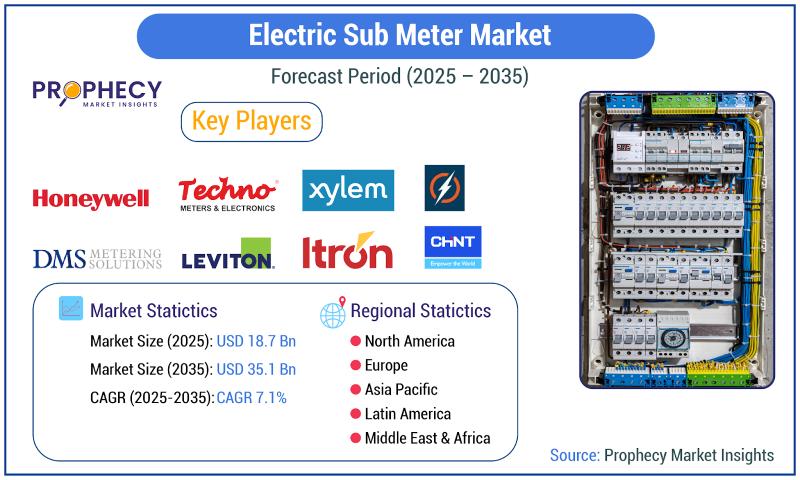
The Electric Sub Meter Market is poised for significant growth, projected to reach USD 35.1 Billion by 2035, up from USD 17.8 Billion in 2024, growing at a robust CAGR of 7.1% during the forecast period. As the global emphasis on energy efficiency and smart building infrastructure continues to intensify, electric sub meters have emerged as a crucial solution for granular energy monitoring and cost allocation.
Get a preview of the Study:-https://www.prophecymarketinsights.com/market_insight/Insight/request-sample/5813
According to a new report by Prophecy Market Insights, the market is segmented by product type, phase, end-user, and region, and features a detailed analysis of the latest trends, growth drivers, and competitive dynamics influencing the sector’s expansion.
Market Overview
Electric sub meters are devices installed downstream of a utility meter to monitor individual energy consumption across departments, tenants, or specific equipment. These devices are pivotal for energy management in residential complexes, commercial buildings, and industrial facilities. Their adoption helps reduce energy waste, promote accountability, and enable detailed usage tracking for billing and compliance.
The market is witnessing a shift from traditional electromechanical devices toward advanced smart sub-meters, which offer real-time data analytics, remote monitoring, and integration with building automation systems.
Market Segmentation
By Product Type
Socket Type/Electromechanical
Non-Socket/Electronic
Smart Sub-Meters
Smart sub-meters are anticipated to dominate the market share by 2035 due to their enhanced functionality, user-friendly interfaces, and rising implementation in smart city projects. Meanwhile, electronic meters remain preferred in retrofitting applications.
By Phase
Single Phase
Three Phase
Single-phase meters are widely used in residential applications, while three-phase meters are more common in commercial and industrial settings due to higher load capacities.
By End-User
Residential
Commercial
Industrial
The commercial segment is a significant revenue contributor, particularly in office buildings, malls, and educational institutions where tenant-based billing is essential. The industrial sector is also growing due to heightened focus on energy cost optimization.
Regional Insights
Geographically, the electric sub meter market is segmented into:
North America
Europe
Asia-Pacific
Latin America
Middle East & Africa
North America leads the global market, backed by stringent energy conservation norms and high adoption of smart grid technologies. Asia-Pacific, particularly China and India, is expected to register the fastest growth, fueled by rising urbanization, infrastructure development, and government-led energy efficiency programs.
Key Market Players
The global market is moderately fragmented, with key players focusing on technological innovation, mergers, and partnerships to stay competitive. Prominent companies operating in the market include:
Honeywell International Inc.
Landis+Gyr
CHINT Group
Xylem
Leviton Manufacturing Co., Inc.
Blazing Energy Solutions
Pioneer Energy Management
Itron Inc.
DMS Ltd
American Disge
TECHNO METERS ELECTRONICS
Zhuhai Pilot Technology Co., Ltd
These companies are investing in IoT-enabled metering solutions, cloud-based energy platforms, and wireless data communication modules to meet the evolving needs of end-users.
Market Trends & Opportunities
Smart Grid Integration: Growing deployment of smart grids globally is driving demand for intelligent sub-metering solutions that provide two-way communication, load forecasting, and peak demand tracking.
Regulatory Push: Government regulations promoting energy conservation, green building certifications, and carbon neutrality are compelling commercial and industrial units to adopt sub-metering systems.
Utility Cost Transparency: Property managers and industrial operators increasingly use sub-meters to allocate energy costs accurately, leading to improved tenant satisfaction and operational savings.
Conclusion
The Electric Sub Meter Market is expected to witness consistent growth as energy accountability becomes a central aspect of sustainable infrastructure. With the rise of smart buildings and connected devices, the role of advanced metering technologies will only grow more critical, presenting ample opportunities for innovation and investment over the next decade.
Post Your Ad Here
Comments