Organic Tea Market Sales to Top USD 3.2 Million in Revenues by 2034 at a CAGR of 11.2%
Introduction
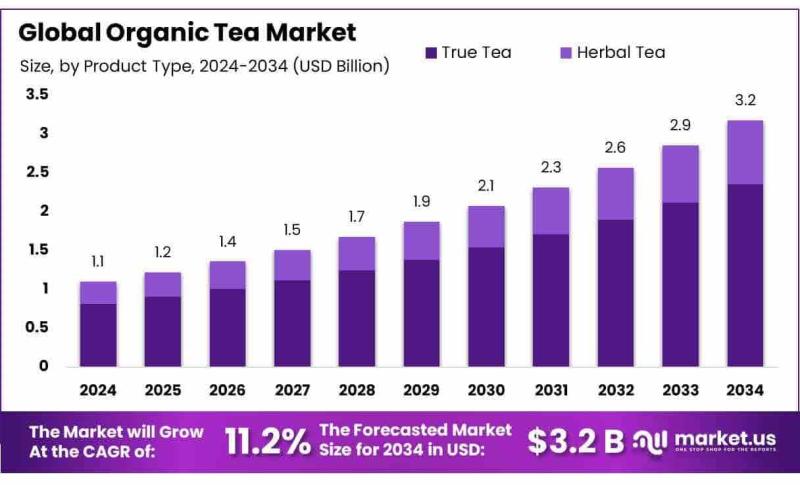
The global organic tea market is experiencing remarkable growth, driven by increasing consumer awareness of health and wellness. In 2024, the market was valued at approximately USD 1.1 billion and is projected to reach around USD 3.2 billion by 2034, reflecting a CAGR of 11.2% during the forecast period from 2024 to 2034. This expansion is fueled by factors such as the rising demand for natural and organic products, health benefits associated with organic tea consumption, and a growing preference for sustainable and environmentally friendly farming practices.
For instance, in January 2024, Tata Consumer Products finalized an agreement to acquire up to 100% equity in Organic India, a company specializing in organic food, beverages, and herbal supplements. Similarly, in October 2019, Yogi Tea announced the acquisition of Choice Organic Teas, expanding its footprint in the organic tea segment. These strategic moves underscore the industry's commitment to meeting the growing consumer demand for organic and health-focused tea options.
Key Takeaways
Organic Tea Market size is expected to be worth around USD 3.2 Bn by 2034, from USD 1.1 Bn in 2024, growing at a CAGR of 11.2%.
True Tea held a dominant position in the organic tea market, capturing an impressive 74.30% share.
Loose Leaves & Powder segment commanded a dominant market position within the organic tea market, securing a 54.40% share.
Supermarkets/hypermarkets held a dominant position in the distribution of organic tea, capturing more than a 48.40% market share.
Asia-Pacific (APAC) region emerged as a powerhouse in the organic tea market, commanding a substantial 38.40% share, which translates to an impressive revenue generation of USD 0.4 billion.
Sample Report Request: Unblock Valuable Insights for Your Business: https://market.us/report/organic-tea-market/free-sample/
Emerging Trends
Health and Wellness Focus: Consumers are increasingly drawn to organic tea due to its perceived health benefits, including antioxidant properties and the absence of harmful chemicals. This shift aligns with a broader global trend towards health and wellness, with many consumers seeking natural and organic products to support their well-being.
Popularity of Specialty Teas: There's a growing demand for specialty teas, such as matcha, driven by social media influence and health trends. However, this surge in popularity has led to concerns about potential shortages, as production struggles to meet the increasing demand.
Impact of Climate and Geopolitical Factors: Tea production is susceptible to climate change and geopolitical events. For instance, India's tea production in 2024 decreased by 7.8% compared to the previous year, primarily due to adverse weather conditions like heatwaves and floods during the peak harvesting season.
Price Volatility: Import prices for tea have surged, influenced by factors such as climate change and political instability. In Australia, import prices increased by 10.5% in the past year, affecting both producers and consumers.
Use Cases
Health and Wellness Beverage: Organic tea is primarily consumed as a beverage, valued for its potential health benefits, including antioxidants and reduced exposure to synthetic pesticides. In 2021, retail sales of organic tea in the United States were approximately $381 million, accounting for 13.3% of the domestic tea market.
Health and Wellness Beverage: Organic tea is primarily consumed as a beverage, valued for its potential health benefits, including antioxidants and reduced exposure to synthetic pesticides.
Ready-to-Drink (RTD) Beverages: The demand for convenient, health-oriented beverages has led to the growth of RTD organic tea products. The global RTD tea market has witnessed significant growth, with consumers seeking convenient options that align with health and wellness trends.
Ready-to-Drink (RTD) Beverages: The demand for convenient, health-oriented beverages has led to the growth of RTD organic tea products. The global RTD tea market has witnessed significant growth, with consumers seeking convenient options that align with health and wellness trends.
Major Challenges
Vulnerability to Climate Change: Tea cultivation is highly sensitive to climatic conditions. Changes in temperature, irregular rainfall, and extreme weather events can adversely affect tea yields and quality. For instance, in 2024, India's tea production decreased by 7.8% to 1,284.78 million kg, primarily due to heatwaves and floods during the peak harvesting season. Such climatic challenges threaten the stability of organic tea supply chains.
Supply Chain Disruptions: The organic tea industry is susceptible to supply chain disturbances caused by geopolitical tensions and global pandemics. These disruptions can lead to delays, increased costs, and challenges in meeting market demand. For example, the COVID-19 pandemic led to restrictions on farming activities in key tea-producing countries like China and India, impacting both production and distribution.
Price Volatility: Fluctuations in global commodity prices can significantly impact the organic tea market. Factors such as changes in international demand, currency fluctuations, and trade policies contribute to price instability. This volatility poses challenges for producers in maintaining consistent revenue and for consumers in accessing affordable organic tea options.
Risk of Fraudulent Practices: The increasing demand for organic products has led to instances of fraudulent practices, such as mislabeling non-organic tea as organic. Such actions undermine consumer trust and can lead to legal repercussions for legitimate producers. Ensuring transparency and implementing strict quality controls are vital to combat this issue.
Buy Now this Premium Report to Grow your Business: https://market.us/purchase-report/?report_id=143703
Market Growth Opportunities
1. Rising Consumer Demand: Consumers worldwide are becoming more health-conscious, leading to a heightened interest in organic products, including tea. This trend is particularly evident in developed markets such as Europe and North America, where consumers are willing to pay a premium for organic and sustainably produced goods.
2. Expansion of Organic Tea Production: Countries like India have recognized the potential of organic tea production. For instance, oil seeds, fiber, and sugar contribute approximately 75% of organic production in India, with organic tea being a significant component. This diversification indicates a strategic move towards meeting global organic tea demand.
3. Growth in Sustainable Certifications: The demand for sustainably certified teas is on the rise. From 2008 to 2016, sustainability standards-certified tea production experienced a compound annual growth rate of about 35%, accounting for at least 19% of overall tea production by 2016. This growth reflects consumers' increasing preference for products that adhere to environmental and ethical standards.
5. Technological Advancements in Production: Advancements in agricultural practices and certification processes are making organic tea production more efficient and accessible. These improvements help producers meet the growing demand while maintaining quality and sustainability standards.
Key Players Analysis
Associated British Foods plc
Bigelow Tea Company
Bombay Burmah Trading Corporation Ltd
Celestial Seasonings Inc
Davidson’s Organics
Ecotone
Hain Celestial Group
Hälssen & Lyon GmbH
Harney & Sons Fine Teas
Little Red Cup Tea Co.
Mighty Leaf Tea
Newman’s Own, Inc.
Numi, Inc.
Organic India Pvt. Ltd.
PepsiCo
Republic of Tea
Shangri-la Tea
Stash Tea Company
Tata Global Beverages Limited
Tazo Tea Company
The Coca‑Cola Company
The Stash Tea Company
Tielka
Vahdam Teas
Conclusion
In conclusion, the global organic tea market is experiencing significant growth, driven by increasing consumer awareness of health benefits and a shift towards natural, chemical-free products. This trend is particularly evident in regions like North America and Europe, where demand for organic beverages is on the rise. As consumers continue to seek healthier alternatives, the organic tea sector presents lucrative opportunities for growth and innovation.
Post Your Ad Here
Comments