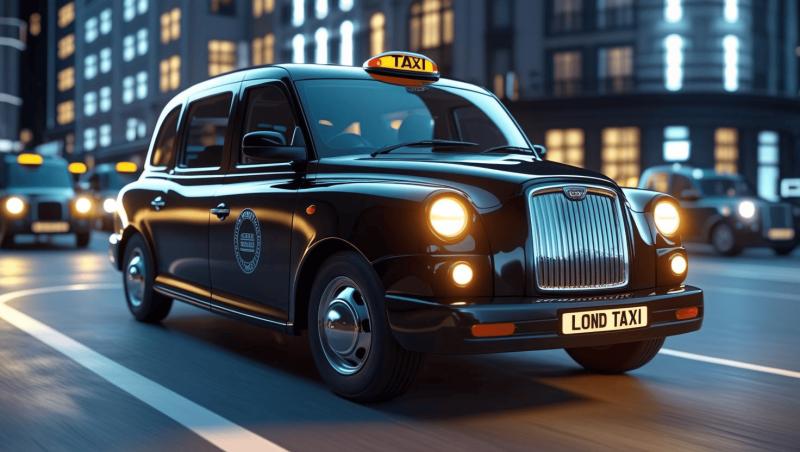
A tale of two taxis: Navigating the UK's evolving transport scene
6:00
AM: A Story of Two Businesses
Sarah runs a five-driver black cab service in
Manchester. David owns a small airport transport company in Birmingham and went
digital two years ago. They both checked driver availability and bookings on a
Tuesday morning, but that’s where the similarities end.
Sarah starts her day with a series of phone
calls. Three drivers called to confirm their shifts, one is sick again, and two
regular customers booked afternoon pickups. She writes notes, checks her diary,
and hopes she hasn't double-booked. Her drivers have financial issues. Vehicle
3's card reader is down, thus they've lost two fares due to cash shortages.
David's morning feels unique. His dispatch
system updated overnight with driver availability, weather alerts indicated
possible flight delays at Birmingham Airport, and his payment dashboard shows
that yesterday's settlements are already in his bank account. His drivers got automatic alerts for schedule
changes, and customer bookings were processed through his integrated platform
with payment pre-authorised.
The difference isn't just luck, it's about the
strategic decisions made in response to industry pressures that impact every
taxi operator in the UK.
The reality of the driver
shortage: More than just London's headlines
London's loss of 8,000 drivers since 2013 is
making waves, but the driver shortage impacts operators across the country in
various ways. Rural operators are dealing with older driver demographics, while
urban operators are up against competition from gig economy platforms that
provide more flexible work options.
Sarah encounters typical recruitment issues.
Prospective drivers see the £10,000+ annual running costs, the 60+ hour weeks
required to make ends meet, and the 15% yearly rise in passenger abuse reports.
They typically choose delivery driving or similar gig jobs instead.
David adopted an alternative method. He
rebranded his company as a tech-enabled service provider, not just advertising
driver positions. His drivers utilise mobile POS systems
that accept contactless cards and QR code payments, eliminating the hassle of
cash handling that can discourage younger passengers and drivers alike. Instant
settlements enable faster payments for drivers, and professional payment
receipts reduce disputes with passengers.
David explains that technology doesn't take
the place of good drivers; instead, it enhances their efficiency and
professionalism. It draws in stronger candidates.
The payment revolution changing
what customers expect
Payment preferences are changing not only with
different generations but also based on location and circumstances. London is
experiencing significant changes, as two-thirds of residents have shifted their
payment habits, leaving just 8% who still prefer cash. Even in smaller cities,
it's clear: 51% of UK consumers have altered their payment habits in the last
year.
Sarah found this out the hard way when a
corporate client cancelled their monthly contract. "She remembers them saying our payment
process was too complicated for their expense reporting." Drivers needed to
call the office with their card details, then they processed payments manually,
and receipts were written by hand. That was pretty embarrassing.
The corporate market really needs advanced
payment processing. Companies like Gett have created business models focused on
corporate clients, offering centralised billing, automatic expense integration,
and detailed reporting that traditional operators struggle to provide.
David's solution included adding pay by link functionality
to his mobile payment systems. Corporate
clients now get professional invoices that include secure payment links.
Transactions are automatically categorised for expenses, and detailed reports
are generated right away. "We
shifted from losing corporate accounts to actually winning them from our
competitors," he says.
The technology adoption paradox:
Balancing complexity and necessity
Lots of operators feel the same technology
anxiety as Sarah. "Every month, there's a new system we need to
adopt," she says. Mobile POS, online
payment systems, dispatch software, tracking apps, how far does it go?
"Who has the time to learn everything?"
This feeling highlights a bigger issue in the
industry: many think that adopting technology means completely transforming the
business, which demands a lot of investment and technical know-how.
It's a more complex situation. David took a
step-by-step approach. He began using a mobile POS solution, such as the One
app by Wonderful, transforming his
drivers' smartphones into payment terminals without needing new hardware. The
flat-fee pricing model eliminated any upfront costs, and the offline feature
tackled his biggest worry about signal issues in airport parking lots.
“I didn’t turn into a tech company,” David
stresses. "I started a taxi company that leverages technology to tackle
real issues."
The unseen costs of staying put
Sarah is starting to see the hidden costs of
her resistance to change. It's not just about the customers who want digital
payments; there are daily operational inefficiencies that add up too.
Her manual booking system often results in
scheduling clashes, leading to lengthy phone calls to resolve them. Drivers
lose valuable time dealing with payment issues, faulty card machines, customers
without cash, and disputes over change. Slow settlements from her traditional
payment processor create cash flow shortfalls, forcing her to rely more heavily
on her overdraft.
Her lack of detailed payment data makes it
really tough to acquire corporate clients. Today’s businesses look for
integration with expense management systems, automated receipt generation, and
clear billing, things that manual processes just can’t provide.
The open banking opportunity:
More than just lower fees
Payment
processing companies often highlight cost savings, but the true value of
innovations like open banking payments is in transforming operations.
Traditional card processing fees of 1.5-3% per transaction can really add up,
but the 2-3 day settlement delay poses bigger issues for cash-intensive
businesses.
Open banking
payments provide instant bank-to-bank transfers, completely removing
settlement delays. For operators like David, this allows drivers to get paid
right after their shifts, covers vehicle expenses without cash flow issues, and
significantly lowers working capital needs.
Wonderful's open banking solution shows this
advantage by offering instant settlements and lower transaction costs. The
technology does more than just handle payments; it provides detailed
transaction data that enhances business intelligence, automates reconciliation,
and simplifies accounting processes.
The competitive landscape:
Working together vs. competing
Not all operators have been impacted equally
by the rise of app-based platforms. Businesses focused on niche markets like
airport transfers, corporate clients, and wheelchair-accessible transport often
leverage their local expertise and specialised services to build strong
competitive advantages.
David's airport transfer business actually
gains from app-based competition. "He explains that Uber and Bolt have set
the expectation for customers to receive professional, tech-enabled service.
They also left gaps we can fill, like corporate billing, advance reservations,
and specialised vehicles for group travel."
His QR pay
solution lets passengers pay before their journey starts, removing that awkward
moment of transaction while luggage is being loaded. Business travellers are
drawn to the professional receipts and expense integration features because
they make expense reporting effortless.
Industry pressures beyond
payments
Regulatory and Tax Maze
Beyond payments, both operators confront
growing regulatory complexity. Transport for London's 57-page Action Plan shows
how compliance requirements are growing as authorities enforce multiple vehicle
standards and emissions restrictions. Incompatible licensing regulations
prevent Sarah from expanding into Liverpool.
The VAT decision is more dangerous. If the
Supreme Court demands 20% VAT on all private hire fares in July 2025, Sarah
must decide whether to absorb the expense and lose profits or pass it on and
lose price-sensitive consumers. This affects almost every operator since 78% of
UK rides are outside London.
The EV Transition Problem
60% of London's cabs are zero-emission, but
the move strains cash flow. Although the £6,000 Plug-in Taxi Grant helps,
operators still face greater upfront costs and charging infrastructure issues.
Not all of Sarah's drivers' homes have charging stations.
David is practical: "Before committing
the fleet, we're piloting one EV to determine operational consequences.
Planning the change is better than forcing it."
Regulatory, financial, and environmental
concerns make payment issues worse, making technology adoption
survival-critical for UK cab firms.
Excited for what's next: The need
for integration
Operators that combine traditional and
contemporary skills will lead the UK taxi sector. The goal is to improve
reliability and local expertise with the digital tools clients demand, not
history over innovation.
Sarah is learning. She's considering a payment
system upgrade after losing another corporate client last week. “I’m not
looking to turn into Uber,” she explains. "I want to serve my customers
well."
David says, "Focus on one problem and
tackle it effectively." They focused on payment processing. Once that
worked, they integrated booking and streamlined dispatch. David's motto:
“Technology should enhance your current business, not take its place.”
Explore what’s next for UK
taxi and airport transfers in 2025: trends, payment options and challenges,
to see how the industry is evolving and what that means for operators like
Sarah and David.
Post Your Ad Here
Comments