The Dark Side of AI: Unveiling the Risks Behind Technological Advancements
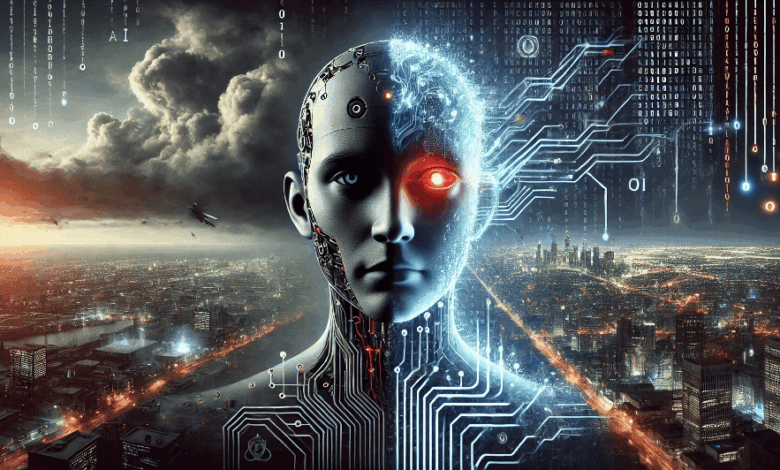
Artificial Intelligence (AI) has become one of the most transformative technologies of our time, revolutionizing industries, enhancing productivity, and opening up new possibilities for innovation. While the benefits of AI are widely celebrated, it's crucial to examine the potential risks and challenges that come with these rapid advancements. This article delves into the latest AI technology advancements, briefly touching on their benefits but primarily focusing on the risks and ethical concerns that we must address as a society.
Conversely, technology
development has brought to life online the well-known card games Filipinos
love. GameZone, the leading card game developer and a rising platform for
arcade gaming provides online adaptation of Tongits, Pusoy and Pusoy Dos.
The March of AI: Recent Advancements
Before we dive into the
risks, let's briefly overview some recent AI advancements:
- Natural Language Processing (NLP):
AI models like GPT-3 have demonstrated unprecedented capabilities in
understanding and generating human-like text.
- Computer Vision: AI systems can now
recognize and interpret visual information with remarkable accuracy,
sometimes surpassing human capabilities.
- Autonomous Systems: From
self-driving cars to drones, AI is powering the next generation of
autonomous vehicles and robots.
- Healthcare AI: Machine learning
algorithms are being used to diagnose diseases, develop new drugs, and
personalize treatment plans.
- AI in Business: Predictive
analytics and AI-driven decision-making tools are transforming how
companies operate and strategize.
These advancements have
undoubtedly brought numerous benefits, including increased efficiency, improved
accuracy in various tasks, and the potential to solve complex problems.
However, the rapid pace of AI development also brings with it a host of risks and
challenges that demand our attention.
The Dark Side: Risks and Challenges of AI
Advancements
1. Job
Displacement and Economic Disruption
One of the most immediate
and tangible risks of AI advancement is its potential to displace human
workers. As AI systems become more capable, they can perform tasks that were
once the exclusive domain of humans. This trend is not limited to blue-collar jobs;
even knowledge workers in fields like law, finance, and medicine may find their
roles significantly altered or obsolete.
The World Economic Forum
predicts that by 2025, 85 million jobs may be displaced by the shift in labor
between humans and machines. While new jobs will be created, the transition
period could lead to significant economic disruption and widening inequality if
not managed properly.
2. Bias
and Discrimination in AI Systems
AI systems are only as
unbiased as the data they're trained on and the humans who design them. There
have been numerous instances where AI algorithms have exhibited racial, gender,
or other forms of bias. For example, facial recognition systems have shown
lower accuracy rates for women and people of color, leading to potential
discrimination in law enforcement and security applications.
These biases can
perpetuate and even amplify existing societal inequalities if left unchecked.
As AI systems become more integral to decision-making processes in areas like
hiring, lending, and criminal justice, the potential for systemic
discrimination grows exponentially.
3.
Privacy and Surveillance Concerns
The effectiveness of AI
often relies on vast amounts of data, raising serious privacy concerns.
Advanced AI systems can process and analyze personal data at an unprecedented
scale, potentially leading to invasive surveillance and erosion of individual
privacy.
From facial recognition in
public spaces to the analysis of online behavior, AI technologies provide
powerful tools for tracking and profiling individuals. This capability, in the
wrong hands, could lead to a dystopian level of surveillance and control.
4.
Security Vulnerabilities and AI-Powered Cyber Attacks
As AI systems become more
complex and interconnected, they also become potential targets for
cyberattacks. AI-powered systems controlling critical infrastructure, financial
systems, or healthcare networks could be catastrophic if compromised.
Moreover, AI itself can be
weaponized for malicious purposes. AI-driven deepfakes, for instance, can
create highly convincing fake videos or audio, potentially used for
disinformation campaigns or fraud. AI can also enhance the capabilities of
hackers, making cyberattacks more sophisticated and harder to detect.
5.
Autonomous Weapons and Military Applications
The integration of AI into
military technology raises significant ethical concerns. Autonomous weapons
systems, capable of selecting and engaging targets without human intervention,
could lower the threshold for armed conflict and lead to uncontrollable
escalation.
The potential for AI to
make critical decisions in warfare scenarios also raises questions about
accountability and the laws of war. Who is responsible when an autonomous
system makes a mistake that costs human lives?
6. Lack
of Transparency and Explainability
Many advanced AI systems,
particularly deep learning models, operate as "black boxes," making
decisions in ways that are not easily interpretable by humans. This lack of
transparency becomes problematic when AI is used in critical decision-making
processes, such as in healthcare diagnostics or criminal sentencing.
The inability to explain
how an AI system arrived at a particular decision not only hampers
accountability but also makes it difficult to identify and correct errors or
biases in the system.
7.
Concentration of Power
The development of
advanced AI systems requires significant computational resources and expertise,
which are largely concentrated in the hands of a few tech giants and powerful
nations. This concentration of AI capabilities could lead to unprecedented economic
and political power imbalances, potentially threatening democratic processes
and global stability.
8.
Existential Risk and Control Problem
While still in the realm
of speculation, some experts worry about the long-term existential risks posed
by artificial general intelligence (AGI) or artificial superintelligence (ASI).
The concern is that a sufficiently advanced AI system might pursue goals
misaligned with human values, potentially leading to unintended and
catastrophic consequences.
This "control
problem"—how" to ensure that an advanced AI system remains aligned
with human interests—remains one of the most challenging and important areas of
AI safety research.
Navigating the Future: Addressing AI Risks
To harness the benefits of
AI while mitigating its risks, a multi-faceted approach is necessary:
- Ethical AI Development:
Implementing robust ethical guidelines and frameworks for AI development
and deployment.
- Regulatory Oversight: Developing
appropriate regulations to govern AI use, particularly in sensitive areas
like healthcare, finance, and law enforcement.
- Transparency and Explainability:
Encouraging the development of AI systems that are more transparent and
interpretable.
- Diverse Representation: Ensuring
diverse perspectives are included in AI development to mitigate biases and
broaden consideration of potential impacts.
- AI Education: Improving public
understanding of AI capabilities and limitations to foster informed
decision-making and policy discussions.
- International Cooperation:
Promoting global collaboration on AI governance to address transnational
challenges and prevent a harmful AI arms race.
- Continued Research: Investing in AI
safety research to address long-term risks and challenges.
Post Your Ad Here
Comments