How to Start Retirement Planning in Your 20s, 30s, and 40s
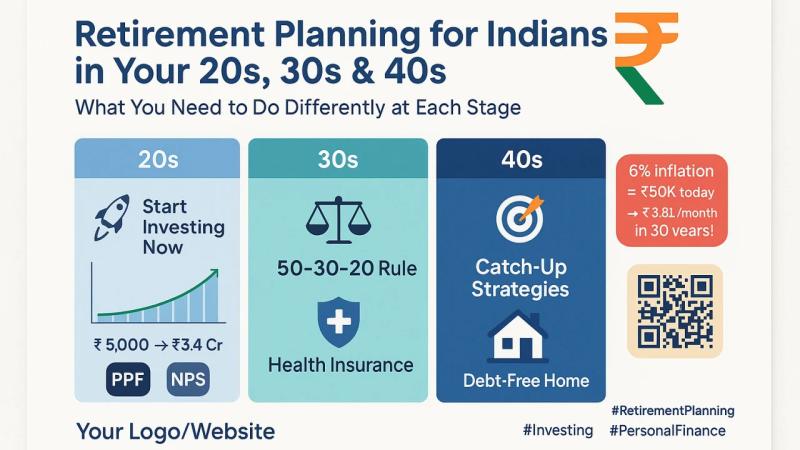
In India, retirement planning often takes a back seat to immediate financial goals like buying a house or funding children’s education. However, the earlier you start, the easier it becomes to build a sufficient retirement corpus. Whether you are in your 20s, 30s, or 40s, the right strategy at the right time can help you secure a financially independent future. Let’s break it down decade-wise.
Starting
in Your 20s: The Power of Early Action
Your 20s are the golden years for
retirement planning. Time is your biggest asset because it allows the power of
compounding to work in your favor. Starting early means you can invest smaller
amounts and still build a substantial corpus over time.
Key Steps:
- Begin with SIPs: Systematic Investment Plans
(SIPs) in equity mutual funds are an excellent way to start. With a long
horizon, equities can outpace inflation and grow wealth.
- Open an NPS Account: The National Pension System
(NPS) is a government-backed scheme offering tax benefits and a
disciplined retirement saving approach.
- Set Financial Goals: Even if retirement feels
decades away, setting a target amount based on expected expenses helps you
stay focused.
- Invest Aggressively: At this stage, your risk
appetite is high. Allocate more towards equities (around 80%) and lesser
to debt instruments.
Tip: Start with even ₹500 a month if
that’s all you can afford. The habit is more important than the amount
initially.
Planning
in Your 30s: Balancing Growth and Responsibilities
Your 30s typically come with
increased financial responsibilities — marriage, children, home loans. However,
it’s also the decade when your income stabilizes and grows, giving you more
investing capacity.
Key Steps:
- Increase Contributions: As your salary increases,
step up your SIP amounts by at least 10% annually.
- Diversify Investments: Apart from equities, include
Public Provident Fund (PPF), EPF (Employees’ Provident Fund), and debt
mutual funds to create a balanced portfolio.
- Purchase Adequate Insurance: Secure your family’s future
with term insurance and health insurance. Retirement savings should not be
derailed by medical emergencies.
- Evaluate Retirement Corpus: Reassess your retirement goal
considering inflation, lifestyle upgrades, and family needs.
Tip: A thumb rule is to invest at least
20-25% of your monthly income towards retirement savings at this stage.
Catching
Up in Your 40s: Strategic and Focused Moves
If you’ve delayed retirement
planning until your 40s, don't panic. You still have two decades left but need
a more aggressive and disciplined approach.
Key Steps:
- Maximize Savings: Save a higher percentage (up
to 35-40%) of your income towards retirement.
- Invest Smartly: Create a mix of moderately
aggressive investments — a 60:40 split between equity and debt works well.
- Use Tax-Advantaged Instruments: Maximize benefits under
Section 80C through investments in ELSS, PPF, and NPS.
- Consider Annuities and
Retirement Plans:
Start looking into retirement-specific products like pension plans or
annuities to secure regular income post-retirement.
- Minimize Debt: Aim to become debt-free
before you retire. Pay off home loans and personal loans to reduce
financial burdens later.
Tip: It's critical to review and adjust
your investment portfolio every year to stay on track.
Final
Thoughts
No matter your age, the best time to
start retirement planning is now. Starting in your 20s gives you a massive
advantage, but even a late start in your 40s can be salvaged with focused
efforts. In the Indian context, where joint families are transitioning to
nuclear ones and healthcare costs are rising, financial independence after
retirement is crucial.
Adopt a disciplined approach, stay consistent with investments, and adapt your strategies as your life circumstances change. Your future self will thank you for the financial freedom you secured today.
Would you also like me to create a
short summary version (around 150 words) for social media sharing?
Post Your Ad Here
Comments