Is Ketamine Assisted Psychotherapy Evidence Based?
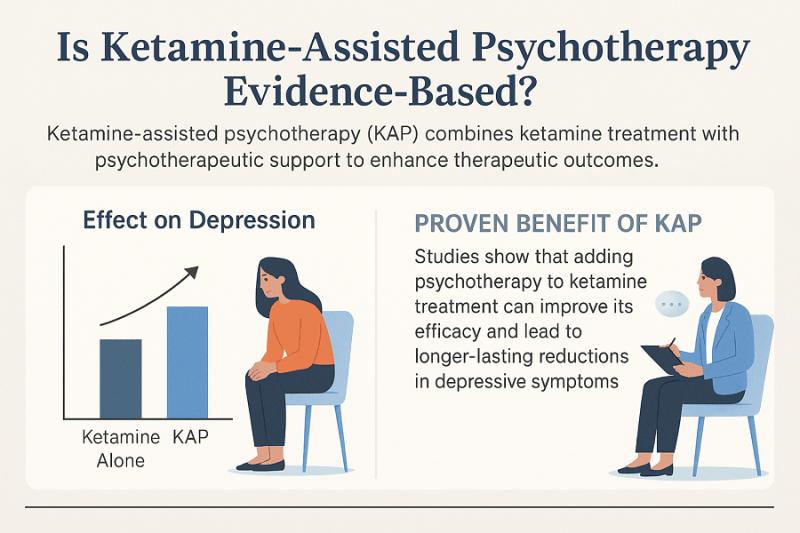
My name is Emma Mansour, and I'm a dedicated and compassionate therapist specializing in Acceptance and Commitment Therapy (ACT), as well as ADHD, differential diagnosis and learning disability testing at Life Matters Psych. Ketamine-assisted psychotherapy (KAP) is an evidence-based treatment combining the administration of ketamine—a dissociative anesthetic with rapid-acting antidepressant effects—with psychotherapy to enhance psychological processing and integration. It is not the same as simply receiving ketamine alone. The psychotherapy component is crucial in helping patients make sense of the dissociative and often emotionally intense experiences ketamine induces, often unlocking trauma or repressed emotion in a therapeutic context.

Ketamine on its own especially via IV or intranasal routes, can rapidly reduce depressive symptoms, including in treatment-resistant depression. However, these effects are typically short-lived (lasting days to weeks), and relapse rates are high without further support.
Research increasingly shows that combining
ketamine with psychotherapy may lead to more durable improvements by addressing
underlying psychological patterns, not just symptoms.
So yes, someone advertising ketamine treatment as “the same” without psychotherapy, then they are only offering a partial solution. While stand-alone ketamine is not “BS,” it is incomplete for many, and KAP reflects the more comprehensive, evolving standard in psychedelic-assisted care. Always ensure treatments are guided by trained or licensed professionals using evidence-based protocols.
Post Your Ad Here
Comments