Why Dental Implants Retain Jaw Integrity, Promote Bone Growth, and Outperform Dental Bridges
Tooth loss is more than a cosmetic concern—it has profound effects on oral health, bone structure, and long-term dental stability. While dental bridges have traditionally been used to replace missing teeth, dental implants have rapidly become the gold standard. This is largely due to their unique ability to preserve jawbone integrity, stimulate bone growth, and function more naturally and effectively over time.
In this article, we’ll explore why dental implants are superior to bridges, particularly in terms of supporting jaw health and ensuring long-term treatment success.
Understanding the Role of the Jawbone in Tooth Support
When a tooth is lost, the jawbone beneath it begins to deteriorate. This happens because the bone is no longer being stimulated by the pressure and movement created by chewing forces through the natural tooth root. The body interprets this area as no longer needed and begins to reabsorb the bone, leading to a process called bone resorption.
This bone loss can cause significant consequences over time: facial collapse, premature aging, shifting of neighboring teeth, and an increased risk of losing more teeth. Replacing a missing tooth isn’t just about restoring appearance—it's also about maintaining the health and shape of the jawbone itself.
Dental Implants: A Root-Level Solution
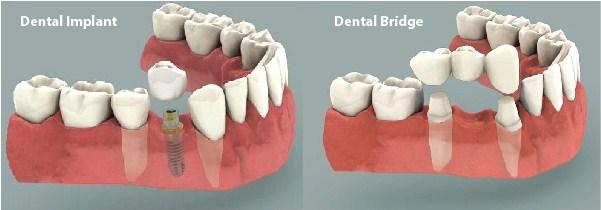
Dental implants are the only tooth replacement method that addresses the root of the tooth. A dental implant is a small titanium post surgically embedded into the jawbone, acting as an artificial tooth root. Over the course of several months, the implant fuses with the surrounding bone through a process called osseointegration.
This fusion mimics the function of a natural root, stimulating the jawbone each time you bite or chew. This constant pressure keeps the bone healthy, dense, and stable. In essence, a dental implant tells the body that the bone is still needed, which halts resorption and maintains the structural integrity of the jaw.
In contrast, a dental bridge rests on the surface of the gums and is anchored by the adjacent natural teeth. It does not interact with the bone beneath the missing tooth, offering no stimulation to prevent bone loss. As a result, bone in the gap area continues to shrink, leading to changes in bite alignment and aesthetics over time.
Promoting Bone Growth and Stability
Implants not only prevent bone loss—they actively encourage bone growth. This is particularly important for patients who may have already experienced some bone resorption due to prolonged tooth loss. In some cases, bone grafting may be required before implant placement to restore the necessary bone volume. Once the implant is in place, it helps maintain that new bone and prevents further deterioration.
Bridges, on the other hand, provide no biological benefit to the underlying bone. Even though they restore function and appearance, they’re a surface-level solution that doesn’t address the core problem of root and bone loss.
Longevity, Function, and Oral Health
In addition to promoting jaw integrity, dental implants offer unmatched longevity. When properly cared for, implants can last 25 years or more, often a lifetime. Bridges typically last 10 to 15 years and may require replacement or repair due to wear or decay of the supporting teeth.
Implants also preserve the health of surrounding teeth. A bridge requires adjacent teeth to be filed down to support the crown structure, compromising their integrity. If these abutment teeth decay or fail, the entire bridge can collapse. Dental implants are independent—they don’t rely on other teeth for support, making them a more conservative and protective option in the long run.
Moreover, dental implants offer superior comfort and chewing efficiency. Patients often report that implants feel and function just like natural teeth. There’s no risk of slippage or difficulty speaking, and oral hygiene is straightforward—implants can be brushed and flossed like regular teeth.
Conclusion
When it comes to restoring missing teeth, dental implants provide a solution that not only restores your smile but also safeguards your health. By mimicking natural tooth roots, implants stimulate the jawbone, prevent bone loss, and help maintain facial structure and oral function over time. Unlike bridges, which sit above the gum and involve altering healthy teeth, implants offer a long-term, biologically sound, and highly effective alternative. For patients seeking a permanent solution that promotes both aesthetics and health, dental implants are clearly the superior choice.
Konstantine Malafis, DDS is a cosmetic dentist in Astoria offering all forms of cosmetic dentistry including dental implants. As a dental implant dentist in Astoria he has helped many patients restore their dentition and improve their smile. As a cosmetic dentist in Astoria Dr Malafis understands the desire for people to improve their smile and offers free consultations for patients looking for dental implants.
Post Your Ad Here
Comments