What Dental Issues Can Be Corrected with Smile Designing?
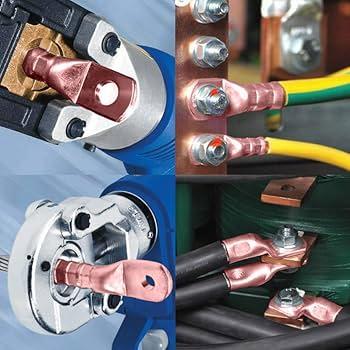
Bimetallic connectors are necessary components of modern electrical systems wherein it becomes essential to ensure the junction of different types of conductors such as aluminum and copper. These connectors are specifically designed to meet the technical demands of joining two dissimilar metals; the issues caused by galvanic corrosion and thermal expansion become major concerns. Use of bimetallic connectors ensures more reliable, durable, and efficient performance of electrical systems.
A bimetallic connector construction typically involves the joining of two metals-copper and aluminum, mostly-by friction welding, mechanical clamping, or molecular bonding. This combination guarantees that each conductor will connect to the surface of what can be characterized as its physiologically best material and will thus reduce the possibility of corrosion at the joint. Since aluminum and copper have different electrochemical properties, they will form some kind of galvanic cell if connected directly, resulting in accelerated corrosion. BIMETALLIC CONNECTORS produce a steady transition from both metals, allow electrical conductivity, and also defend the jubilee from degradation.
Apart from preventing corrosion, these connectors allow the different rates of thermal expansion that copper and aluminum exhibit to be accommodated. This happens since conductors will expand or contract during an increase or reduction in load and due to changes in environmental temperature. If it were to happen that such transition connectors don't exist, connecting two lines of different metals would directly lead to loose joints, overheating, and then failure. These are the conditions to which bimetallic connectors are designed to absorb those mechanical stresses associated with a particular joint and hold it tight and reliable for a very long time.
Another advantage is that bimetallic connectors reduce the electrical resistance at the joint, enhancing effective passage of current through it. Loose connections caused by high resistance are some of the causes of energy loss, overheating, and damage to the adjacent components. Bimetallic connectors have a special design and material compatibility that helps to maintain low-resistance, high-performance connections even under demanding conditions.
Bimetallic connectors are widely used in power distribution networks, switchgear, transformers, renewable energy systems (like solar plants), and of course, industrial installations where mixed metal conductors seem to be unavoidable. Thus, if they are applicable at project level, it will abide within the safety requirement, enhance the equipment lifespan, and thereby minimize maintenance expenditure.
Thus, BIMETALLIC CONNECTORS provide a smart and efficient solution for connecting dissimilar metals in electrical systems. Through effective corrosion control and management of thermal expansion differences and electrical resistance, these connectors contribute significantly to the long-term safety and efficiency of electrical networks.
Post Your Ad Here