Accurate Forex Indicator
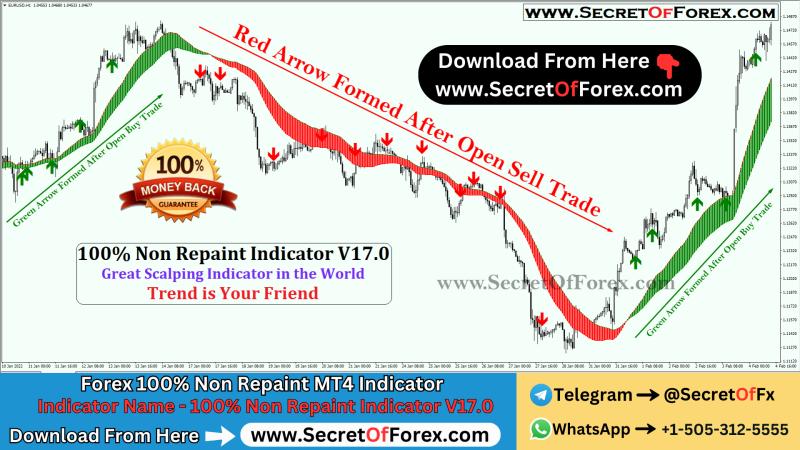
An accurate Forex indicator is a crucial tool for traders seeking to navigate the complex and volatile currency markets. These indicators are essential for analyzing price movements, identifying trends, and making informed trading decisions. Here’s a detailed overview of what makes an indicator accurate and some popular types used by traders:
Purchase this Powerful Indicator from here ??
Purchase Link - https://secretofforex.com/product/100-non-repaint-indicator-v17-0/
Contact Telegram - https://telegram.me/SecretOfFx
Contact WhatsApp - https://wa.me/+15053125555
Characteristics of an Accurate Forex Indicator
-
Reliability: An accurate indicator provides consistent signals that align with market movements over time. It minimizes false signals and errors in predicting price direction.
-
Compatibility: It should complement your trading strategy and timeframe. Some indicators work better in trending markets, while others excel in ranging markets.
-
Easy Interpretation: Traders should easily understand the signals generated by the indicator without complex calculations or interpretations.
-
Adaptability: Markets evolve, and an indicator should adapt to different market conditions and currency pairs.
Popular Types of Forex Indicators
-
Moving Averages (MA):
-
Simple Moving Average (SMA): Calculates the average price over a specified period. It smooths out price data to identify trends.
-
Exponential Moving Average (EMA): Gives more weight to recent prices, making it more responsive to current market conditions.
-
-
Relative Strength Index (RSI):
-
Measures the speed and change of price movements. RSI values above 70 indicate overbought conditions, while values below 30 suggest oversold conditions.
-
-
MACD (Moving Average Convergence Divergence):
-
Consists of two moving averages and a histogram representing the difference between them. It signals changes in trend momentum.
-
-
Bollinger Bands:
-
Consist of a moving average and two standard deviation bands above and below it. They indicate volatility and potential price reversals when bands contract or expand.
-
-
Fibonacci Retracement:
-
Based on Fibonacci ratios (typically 23.6%, 38.2%, 50%, 61.8%, and 100%). It identifies potential support and resistance levels based on historical price movements.
-
-
Ichimoku Kinko Hyo:
-
A comprehensive indicator that includes multiple lines to identify trends, support, and resistance levels. It also signals momentum and trading opportunities.
-
Using Indicators Effectively
-
Combine Indicators: Use different types of indicators to confirm signals and reduce false positives.
-
Backtesting: Test indicators on historical data to assess their accuracy and suitability for your trading style.
-
Consider Market Conditions: Some indicators perform better in specific market conditions (e.g., trending vs. ranging markets).
-
Risk Management: No indicator is infallible. Always use proper risk management techniques, such as setting stop-loss orders and managing position sizes.
Conclusion
An accurate Forex indicator enhances a trader's ability to interpret market dynamics and make informed decisions. However, selecting the right indicator(s) requires understanding their strengths, weaknesses, and how they align with your trading goals. Continuous learning, adaptation to market changes, and disciplined implementation are key to effectively using indicators in Forex trading. By integrating these tools into a coherent trading strategy, traders can navigate the complexities of the Forex market with greater confidence and success.
Post Your Ad Here
Comments