Precision in Construction: The Critical Role of Steel Detailing
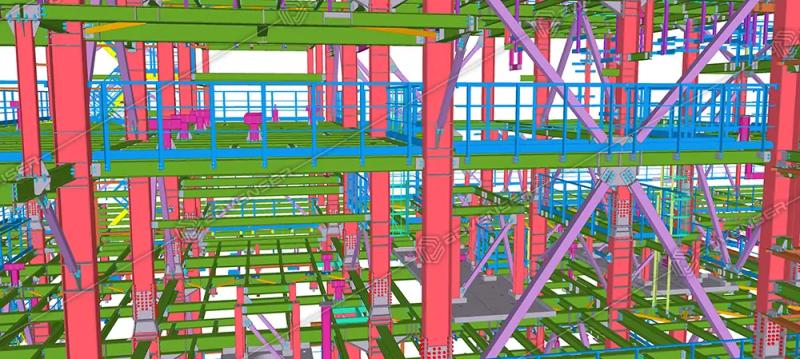
Introduction:
Since the
end of the 1980’s the construction and industrialization has shown significant
growth and boom, and with this growth comes the necessity of precision.
Precision
and accuracy has always been the pillars of construction. When stakeholders
talk about integrity and safety, Steel Detailing plays an important role. More
than just being drawings on paper or computer aided generation of the building
detailing, this so called “blueprint” has allowed the construction processes to
be considerably safe, efficient, and help in the making of durable structures. Steel
Detailing, now integrally supported by Building Information Modeling (BIM), is something
which has had a profound impact on the industry, and has helped streamline
workflow, reduce delays and costs, and ensure projects are delivered within the
established timeline. With precise structural drawings, every steel component
is accounted for ensuring a safe and efficient on-site assembly.
Steel
Detailing enables the creation of drawings, which serves as the roadmap for
steel contractors, fabricators and erectors, providing precise instructions for
each and every element of the structure. This process does not end with
planning or detailed drawings: stakeholders collaborate closely with architects
and engineers to translate conceptual designs into detailed plans.
The Traditional process of steel detailing
Historically,
detailing has been done with a hand drawn manual process, which consumed time
and caused delays in project executions and affected accuracy. Enter BIM, which
allowed for real-time collaboration, efficiency, reduced project delays and
better project management, and streamlined approach to completing complex
structural projects.
The shift
from pencil to pixels for steel
detailing wasn’t done in a day. Detailers used pencils, papers, and
drafting tools such as parallel bars and triangles to create detailed drawings
of steel structures. This was something which was immensely time consuming and
required precision. The adoption of BIM transformed detailing by introducing 3D
modeling capabilities; this shift started with the introduction of CAD Software
that streamlined drafting processes and enabled higher accuracy. By the end of
late 90’s BIM had started to be widely accepted due to its feature for accurate
and collaborative construction process.
The role of steel detailing in modern construction
Like we
said, precision matters in detailing, and here is why:
·
Prioritizing Safety: Steel Detailing reduces error, ensures
structural integrity and makes sure that there would be no mishaps or lapses in
the construction process. To speak in simple terms, modern steel detailing has
had a lot to do with reducing “human
errors”.
·
Construction efficiency: Modern construction detailing
avoids project delays and design flaws.
·
Enhanced Collaboration: Improvised communication between various
stakeholders such as architects, engineers, and fabricators facilitates better
communication and safety.
·
Real-time updates and clash
detection: Project
teams can make real-time adjustments to the design and ensure that the project
is accounted and updated for.
·
Sustainability: Steel itself is a highly recyclable
component; precise detailing can be used to better utilize steel and aid in
sustainability efforts.
BIM and Steel Detailing
BIM for
Steel Detailing has transitioned from being a requirement to a necessity, and
the mandated use of BIM by governments has enabled a speedier adoption.
BIM enables a model based communication, which means improved
collaboration which results in less friction between stakeholders and avoids
errors. Setting up a BIM model might take some extra effort initially, but it
brings significant benefits throughout a construction project. From the very
start, the 3D aspect helps clients visualize the design, making communication
smoother and enabling quicker decision-making. Clients can better understand
the final outcome early on, leading to a smoother project flow.
The model also becomes a valuable tool in later stages, whether for
internal teams or external contractors. It allows for easy data reuse, visual
checks, and early collision detection when different data is combined. Plus, it
lays a solid foundation for more accurate cost estimates, helping with pricing
and planning. With BIM, collaboration improves, reducing mistakes and the need
for revisions. Since errors are caught early, there are fewer changes down the
line. And with real-time access on tablets or laptops, any field issues can be
addressed instantly.
Components of Steel
Detailing
Structural integrity is something which is of paramount importance in
construction as it includes crucial links between design and construction.
Steel Detailing involves the creation of detailed drawings, plans, and models
that specify dimensions, materials, and the installation process for construction
components.
Shop
Drawings: Shop Drawings provide detailed plans and instructions on how each steel
component should be fabricated, specifying dimensions, material type, and other
requirements.
Erection
Drawings: Equally critical and important for the detailing process, Erection
Drawings offer on-site guidance for contractors and erectors during assembling.
They include the erection information which consists of bolting connection
details, welding instructions, and detailed schematics to ensure components
are installed accurately.
Bill-of-Materials
(BOM): Consists of the list of
materials which are required for the construction process, aiding in project
management, inventory management and cost estimation.
Conclusion
Steel Detailing has made a profound impact on the construction industry,
driving improvements in efficiency, accuracy, collaboration, and
sustainability. The integration of steel detailing has also enhanced
communication between teams, ensuring that architects, engineers, contractors,
and fabricators are all on the same page throughout the project. This level of
collaboration helps avoid costly mistakes and ensures smoother project
execution.
Post Your Ad Here
Comments