Future of Exosome Bioinformatics: Revolutionizing Skin Treatment
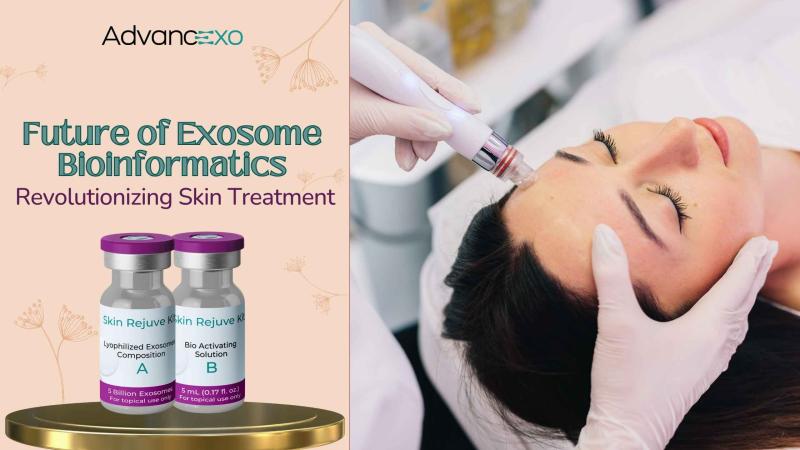
Exosome therapy has been heralded as the new generation anti-aging therapy to treat diverse skin issues. Cells secrete these tiny particles of size 30-150 nm to establish a cross-talk with the nearby cells.
The exosomes obtain the characteristic features of their parent cells. Therefore, stem cell-derived exosomes have become the focus of the dermatological field. These exosomes incorporate the regeneration potential of stem cells, and that too in a cell-free manner.
Benefits of Exosome Therapy
The exosome therapy has earned a great reputation in the aesthetic field due to its three-pronged approach. It repairs the existing damage, prevents further damage, and restores the healthy condition of the tissue. It doesn’t just reduce the disorder but also revitalizes the tissue in a holistic manner. This multidimensional impact results from its action on several cell signaling pathways.
· It modulates the immune response and switches it in favor of reparative mechanisms.
· The exosomes scavenge on the reactive oxygen species that damage cells and trigger cell-damaging immune response.
· The therapy reduces the pathways for cell death and upregulates the pathways for cell survival and proliferation.
· Exosomes also enhance the formation of blood vessels, thus increasing the supply of nutrients for cell growth.
· They also tightly regulate the pathways to avoid undesirable effects.
The Role of Bioinformatics
Exosome therapy has great therapeutic potential. Exosomes exert their effects through biomolecules such as proteins, RNAs, and lipids. A key benefit of exosomes has been the ability to pack them with additional biological entities to enhance their impact or confer new effect. Therefore, research has been pouring in to identify these molecules.
The identification requires the combination of state-of-the-art OMICS technology and bioinformatics.
OMICS Study: It details the biomolecules of exosomes via next-generation sequencing. It generates a huge amount of datasets to analyze.
Bioinformatics: It provides tools to analyze these large datasets and drive logical conclusions regarding the biomolecules and their role in exosomes.
Numerous research studies in this direction have led to the foundation of ExoCarta in 2009. It is an online database that catalogues the identified biological entities of exosomes. To date, the database has incorporated 1232 research studies, 13,472 proteins, 3,408 mRNAs, 10,755 miRNAs, and 3,946 lipids. In addition, the database has also included protein-protein interaction networks and biological pathways to outline the possible role of these biological entities. ExoCarta is a freely available, web-based tool that provides vital information for researchers on exosomes. Two more databases- Vesiclepedia and EVpedia, with similar bases, have curated the data for all kinds of vesicles, including exosomes.
Future Trends
The increasing amount of datasets has necessitated the development of new bioinformatics tools.
Software: Scientists have designed biomolecule-specific software to facilitate research. For example, ExoPred is a web-based tool to explore the protein molecules, and Lipidomics Informatics for Life-Science is a platform for analyzing data on lipids.
Algorithms: Moreover, researchers are also building different algorithms that can ease the extraction of useful information from large datasets. These algorithms are basically a series of steps aimed to find underlying patterns. These algorithms can automatically generate relevant results without much effort. LASSO is one such powerful feature extraction algorithm used for exosomes.
Machine Learning: With the advent of artificial intelligence, different machine learning algorithms like neural networks and random forests are also added to the analysis.
Lab Techniques: The consistent upgradation of lab-based identification techniques aids in the validation of results derived from the datasets.
The combination of these techniques can provide more accurate data on the biomolecular signature of exosomes.
Exosome Treatment for Face
Exosomes have been particularly beneficial for skin issues. In addition to the mentioned benefits, they influence other signaling mechanisms as well. Wharton jelly (umbilical cord) mesenchymal stem cells (UC-MSCs) are the best sources of exosomes, for they possess the regeneration potential of stem cells.
Extracellular matrix (ECM): Skin has an extracellular matrix containing collagen, elastin, hyaluronic acid, etc. These components provide strength and elasticity to the skin. Exosomes inhibit the enzymes that break down these components. Additionally, they also stimulate the proliferation of ECM-producing cells and reduce their apoptosis, thus restoring the skin barrier. A bioinformatics study revealed that UC-MSC exosomes contain proteins involved in ECM interaction.
Dark Spots: Exosomes also inhibit the tyrosinase enzyme required for melanin synthesis. The overproduction of melanin causes dark spots on skin and uneven skin tone. Exosomes reduce these dark spots by reducing melanin synthesis and increasing turnover of cells with pigment deposits to disperse melanin, resulting in a bright, glowing skin.
Scar Reduction: Exosomes remodel the skin to reduce scar. They maintain the ratio of ECM-degrading enzymes and their inhibitors while increasing the finer reticular collagen.
Conclusion
Bioinformatics is useful in discovering the biomolecular cargo of exosomes, which can reveal in-depth knowledge about their functioning. The ExoCarta database has curated entries of proteins, lipids, and RNAs present in exosomes with different origins. In future, additional studies will be conducted and bioinformatics tools will integrate machine learning algorithms to study the complex datasets obtained from such studies. More technologies are entering the market, easing the validation of the inferences drawn from the data. These studies can aid in packing the exosomes with desirable entities for maximum impact. Advancexo has already enriched their exosomes with additional components that exhibit antioxidant, brightening, wound healing, anti-aging, and anti-inflammatory effects.
Post Your Ad Here
Comments