Holographic Displays in Museums: Making History More Accessible
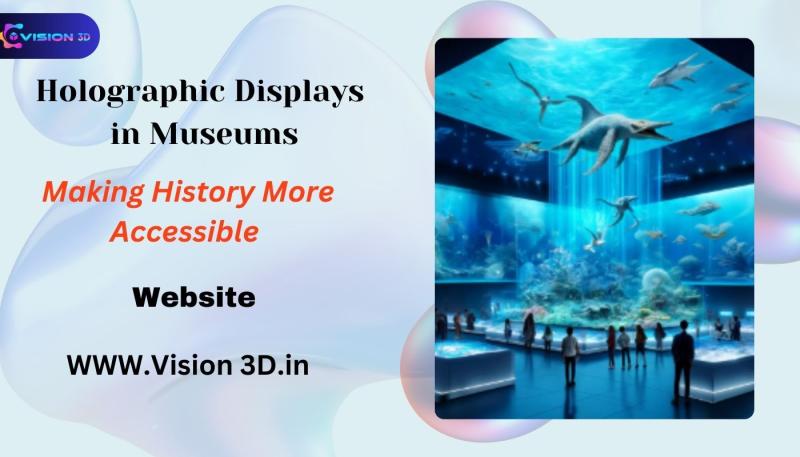
Holographic Displays in Museums are modernizing the art of history presentation. This technology is quite advanced as it allows incorporation of holographic content and lets one treat them as part of a story that is aimed at presenting figures and events effectively and efficiently to the visitors. New developments such as holograms for a desktop courtroom among others or 3D display screens that allow manipulation of materials are changing the manner in which education in museums is offered.
How Can Museums Present Holographic Displays In Their Settings?
The Holographic Displays in Museums are a form of virtual reality experience. It employs hologram technology enabling projection of three dimensional images of the relevant artifacts or events and creating a scope for interaction with close to real life holograms, something that cannot be achieved with static displays. There are even museums that are reconstructing cities from ancient times or a fragile artifact that is not on display.
The exhibition space technologists are applying the knowledge of hologram science project methodologies and other more complex constructions including interactive displays and games developed for these uses. They are able to reproduce historical imagery with a touch of surrealism to the story. If holograms in museums of history are created using ancient war figures and looking at the archaeological sites or micro views of historical events unfolding interactively.
Features Of Holographic Displays
1. Purposeful Virtual Worlds for Museum Users
The three-dimension holograms allow the museums to provide the most realistic looking and feeling of historical and any other artifacts. The battles of the past are being returned with all their drama and there is even a possibility of showing the interior of a historical building with its material aspects simulated. They allow visitors to be part of the history by enabling them to see the past through beautiful valley hologram explanation of incidents that took place in the past.
2. Enhancements in Intra-Action
While producing holographic systems, the content is produced, in such a manner as to enable the visitors to interact with it. For instance, users will be able to turn around 3d artifacts, examine the most confidential details of objects or even interact with some elements on the screen without using any physical input device. Such kind of interactivity enhances learning and makes it enjoyable even.
3. Extension To A Wider Audience
Holographic displays are widely used in museums to make history come alive for those who aren’t able to visit such places. And people with mobility impairment can enjoy activities in virtual museums without any obstacles. More so, some museums are able to upload their collection libraries in form of desktop AR holograms for the convenience of students and other interested parties who may reside continents away from the location of such museums.
4. Conservation Of Objects
There are several objects in history that cannot be exposed to the ground because of their fragility. Public display is not possible due to the delicate nature of many historical artifacts. Holographic displays solve this issue by having the exact piece recreated digitally so that the visitors can appreciate it and its importance unlike the real piece which cannot be touched.
Holographic Displays in Museums And Its Applications
1. Enriching Educational Activities
Most of the selected museums have holoded displays and manipulation holograms for the purpose of informal learning. For example, British museums like the Science Group and Imperial war museums in (Country) are exploring commercial avenues with other technology providers to provide desk-top AR holograms in class rooms across the world. In this manner, the help of such holograms, the artifacts of the museum are being supplied to schools.
2. Graphics Plus
Holograms are also being used in some museums to recreate the most significant places and activities have physically disappeared. For instance, museums are allowing visitors to walk inside the model of the Colosseum or immerse themselves in the enactment of events in history such as the signing of key pacts.
3. Transportable Shows
Hologram portable workshops make it possible for museums to display portions of their collections in other locations and other countries. Indeed with nearly weightless hologram systems, traveling exhibitions are including artifacts with no worries of harming them within the travels.
4. Unlimited Outreach
Through the use of strong desktop-based AR systems, museums have eliminated geographical boundaries and reached people in other continents. Even students in far flung areas can have access to some of the best exhibits without having to leave their places thanks to the wonders of technology and education.
Importance of Holographic Displays in Museums
Engagement: Using holograms within museums attracts visitors’ attention by showing vivid images and engaging their senses.
Inclusion: Exhibitions in virtual spaces open up accessibility for those who are disabled or unable to come at all.
Preservation: Look-alike artifacts are used for the protection of the replicas.
Innovation: Museums become cultural transformation centers by using the most advanced technology.
Global Reach: Desktop AR holograms expand audience beyond the walls of the museum or institution providing educational content.
Conclusion
The technology of holographic displays in Museums change the ways historical narratives are constructed. They morph storytelling history with spaceal and digital technology in a manner that makes it more reachable, exciting, and different than it ever was. Whether it is through vivid animations, interacting within with artifacts, or desktop augmented reality’s capability to reach out to the world, museums of today are changing the manner in which their works are introduced to the general population.
Post Your Ad Here
Comments