Best Forex Indicators For Beginners
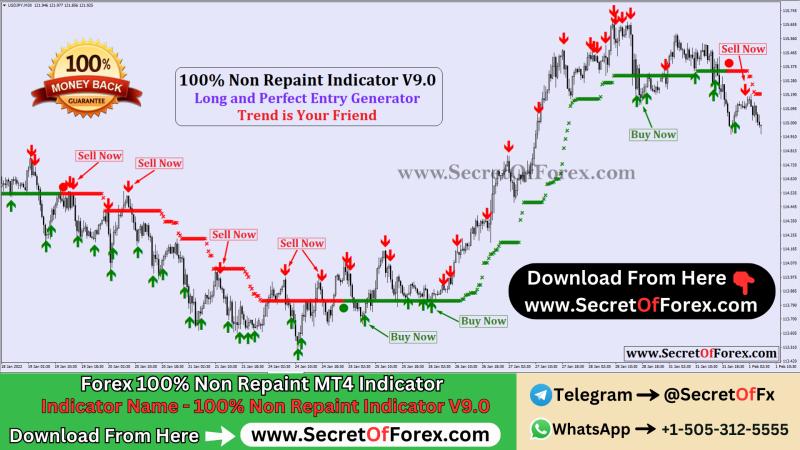
Choosing the best forex indicators for beginners is crucial for building a solid trading foundation. Here's a comprehensive guide in 1000 words:
Forex trading relies heavily on technical analysis, where indicators play a vital role in analyzing price movements and making informed trading decisions. For beginners, selecting the right indicators can simplify complex market data into clear signals, aiding in entry and exit strategies. Here are some essential forex indicators suitable for beginners:
Purchase this Powerful Indicator from here ??
Purchase Link - https://forexprostore.com/product/100-non-repaint-indicator-v9-0/
Contact Telegram - https://telegram.me/SecretOfFx
Contact WhatsApp - https://wa.me/+15053125555
-
Moving Averages (MA): Moving averages smooth out price data, providing a clearer view of the trend direction. Simple Moving Average (SMA) and Exponential Moving Average (EMA) are popular choices. SMA gives equal weight to all data points, while EMA prioritizes recent prices, reacting faster to changes. Beginners often start with SMAs for simplicity in identifying trends.
-
Relative Strength Index (RSI): RSI measures the speed and change of price movements, indicating overbought or oversold conditions. It oscillates between 0 and 100, with readings above 70 suggesting overbought and below 30 indicating oversold conditions. It helps traders anticipate potential reversals.
-
Bollinger Bands: Bollinger Bands consist of a simple moving average (typically 20 periods) and upper and lower bands based on standard deviations of price movements. They visualize volatility and price range, contracting during stable periods and expanding during volatile times. Breakouts from the bands signal potential trading opportunities.
-
MACD (Moving Average Convergence Divergence): MACD combines moving averages to reveal changes in the strength, direction, momentum, and duration of a trend. It consists of two lines: MACD line (the difference between two EMAs) and Signal line (EMA of MACD line). Crossovers between these lines indicate potential buy or sell signals.
-
Stochastic Oscillator: The Stochastic Oscillator compares a closing price to its price range over a period, indicating momentum changes. It consists of two lines (%K and %D), with readings above 80 indicating overbought and below 20 indicating oversold conditions. Crosses between these lines suggest potential entry points.
-
Fibonacci Retracement: Fibonacci retracement levels (23.6%, 38.2%, 50%, 61.8%, etc.) identify potential support and resistance levels based on Fibonacci ratios. Traders use these levels to predict potential price reversals or continuation points during trends.
-
Average Directional Index (ADX): ADX quantifies trend strength, regardless of its direction. It ranges from 0 to 100, with readings above 25 indicating a strong trend. ADX helps traders assess whether a market is trending or consolidating, complementing other indicators for trend confirmation.
-
Ichimoku Cloud: The Ichimoku Cloud comprises multiple lines that provide dynamic support and resistance levels, trend direction, and momentum signals. It helps traders identify trend reversals and assess market sentiment through its cloud formation.
-
Volume Indicator: Volume indicators (e.g., Volume Price Trend (VPT), On-Balance Volume (OBV)) analyze trading volume to confirm price trends. Increasing volume during price movements suggests strong market participation, validating trend directions or signaling potential reversals.
-
Parabolic SAR (Stop and Reverse): Parabolic SAR dots appear above or below price candles, indicating potential trend reversals. It trails price movements, flipping its position when trends reverse. Beginners use SAR dots to set trailing stops and manage risk.
When choosing indicators, beginners should prioritize simplicity and effectiveness. Avoid overloading charts with numerous indicators, which can lead to confusion and conflicting signals. Instead, focus on understanding each indicator's purpose, strengths, and limitations. Combine complementary indicators to confirm signals and enhance decision-making.
Lastly, practice using indicators on demo accounts to gain confidence and refine trading strategies before applying them in live markets. Continuous learning and adaptation to market conditions are essential for mastering forex trading with indicators.
Post Your Ad Here
Comments