Most Accurate Buy Sell Signal Indicator
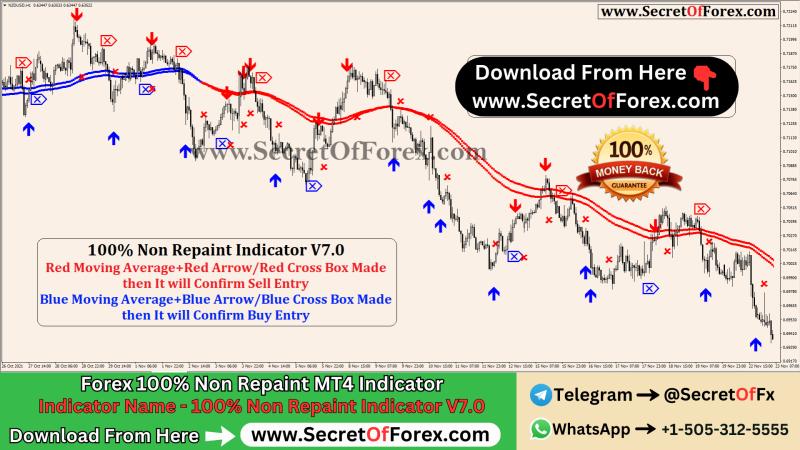
Choosing the most accurate buy-sell signal indicator in trading is a nuanced endeavor, influenced by various factors including market conditions, trading style, and personal preferences. Here's a detailed overview in 1000 words:
Purchase this Powerful Indicator from here ??
Purchase Link - https://forexprostore.com/product/100-non-repaint-indicator-v7-0/
Contact Telegram - https://telegram.me/SecretOfFx
Contact WhatsApp - https://wa.me/+15053125555
Understanding Buy-Sell Signal Indicators
Buy-sell signal indicators are tools used in technical analysis to identify potential entry and exit points in trading. They rely on mathematical calculations applied to historical price and volume data to generate signals. These indicators can be categorized into several types:
-
Trend-following Indicators: These indicators identify trends in the market and signal entry or exit points based on the direction of the trend. Examples include Moving Averages (MA), Moving Average Convergence Divergence (MACD), and Ichimoku Cloud.
-
Oscillators: Oscillators operate within a bounded range and are used to identify overbought or oversold conditions in the market. Popular oscillators include Relative Strength Index (RSI), Stochastic Oscillator, and Commodity Channel Index (CCI).
-
Volume-based Indicators: These indicators analyze trading volume alongside price movements to validate trends or signal potential reversals. On-Balance Volume (OBV) and Volume Price Trend (VPT) are common volume-based indicators.
Factors Influencing Accuracy
The accuracy of buy-sell signal indicators can vary due to several factors:
-
Market Conditions: Different indicators perform better in specific market conditions (trending, ranging, volatile). For instance, trend-following indicators excel in trending markets, while oscillators are more effective in ranging markets.
-
Timeframes: The timeframe used for analysis (e.g., daily, hourly) affects indicator performance. Shorter timeframes may generate more frequent but less reliable signals, while longer timeframes offer more reliable signals but fewer trading opportunities.
-
Parameters: Adjusting indicator parameters (e.g., period length for moving averages, overbought/oversold levels for oscillators) can impact signal accuracy. Optimization through backtesting helps determine optimal parameters for specific assets.
-
Confirmation: Combining signals from multiple indicators or using additional technical analysis tools (e.g., support/resistance levels, candlestick patterns) can confirm signals and enhance accuracy.
Popular Buy-Sell Signal Indicators
Moving Averages (MA)
- Description: MAs smooth price data by averaging closing prices over a specified period, indicating trend direction.
- Application: Crosses between short-term (e.g., 20-day) and long-term (e.g., 50-day) MAs signal buy/sell opportunities.
Relative Strength Index (RSI)
- Description: Measures the speed and change of price movements, indicating overbought (above 70) or oversold (below 30) conditions.
- Application: Divergence from price trends can signal potential reversals.
Moving Average Convergence Divergence (MACD)
- Description: Compares two MAs to signal changes in trend momentum.
- Application: Signal line crossovers and histogram patterns highlight buy/sell opportunities.
Ichimoku Cloud
- Description: Displays support/resistance levels, trend direction, and momentum.
- Application: Cloud thickness and twists provide signals on trend continuation or reversal.
Stochastic Oscillator
- Description: Measures the location of the close relative to the high-low range over a set number of periods.
- Application: %K and %D lines crossing overbought/oversold levels (e.g., 80/20) indicate potential entry/exit points.
Evaluating Accuracy
Backtesting
- Process: Historical data is used to simulate trades based on indicator signals.
- Purpose: Assess profitability, win rate, and drawdown to gauge indicator effectiveness.
Real-time Testing
- Implementation: Apply indicators to current market data to validate signal accuracy.
- Considerations: Monitor false signals and adapt strategies based on market dynamics.
Conclusion
Selecting the most accurate buy-sell signal indicator involves understanding indicator types, their applications, and the nuances affecting their performance. Traders should consider market conditions, timeframe preferences, and confirmation techniques to optimize indicator usage. Continuous evaluation through backtesting and real-time testing enhances reliability and supports informed trading decisions. Ultimately, combining multiple indicators and integrating fundamental analysis can further refine trading strategies, aligning with individual trading goals and risk tolerance.
In conclusion, while no single indicator guarantees success, a thorough understanding of buy-sell signal indicators and their contextual application is crucial for achieving consistency and accuracy in trading decisions.
Post Your Ad Here
Comments