High Probability Scalping Strategy Free Download 100% Forex Non Repaint Indicator
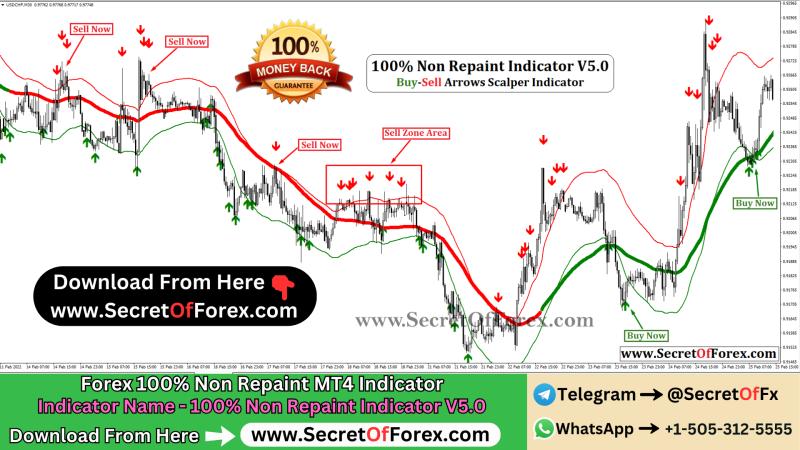
High-Probability Scalping Strategy for Forex Trading
Scalping is a popular forex trading strategy that involves making multiple quick trades to capture small price movements. A high-probability scalping strategy uses reliable technical indicators, tight risk management, and precise trade execution to maximize profits while minimizing losses.
Purchase this Powerful Indicator from here ??
Purchase Link - https://forexprostore.com/product/100-non-repaint-indicator-v5-0/
Contact Telegram - https://telegram.me/SecretOfFx
Contact WhatsApp - https://wa.me/+15053125555
Understanding Scalping in Forex
Scalping is a short-term trading style where traders hold positions for seconds to minutes, aiming to capture small price movements. Unlike swing or day trading, scalpers rely on fast execution, low spreads, and high liquidity.
Key Features of a Good Scalping Strategy
- Non-Repainting Indicator – A non-repainting indicator provides real-time signals that do not change after price movement.
- Tight Stop Loss & Take Profit – Stops are usually placed 5-10 pips away, with a 1:2 or higher risk-to-reward ratio.
- Low Spreads & Fast Execution – ECN brokers with tight spreads (below 1 pip) are ideal for scalping.
- High Trade Frequency – Scalpers execute multiple trades per session to accumulate small profits.
Essential Indicators for a High-Probability Scalping Strategy
1. Non-Repainting Trend Indicator
- A trend indicator helps determine the overall market direction.
- Example: Moving Averages (EMA 50 & EMA 200)
- Buy Signal: Price is above both EMAs, confirming an uptrend.
- Sell Signal: Price is below both EMAs, confirming a downtrend.
2. Momentum Indicator
- Identifies the strength of price movements.
- Example: Relative Strength Index (RSI 14)
- Buy Signal: RSI above 50 confirms strong bullish momentum.
- Sell Signal: RSI below 50 confirms strong bearish momentum.
3. Entry & Exit Signal Indicator
- Non-repainting indicators like the Stochastic Oscillator can help time entries.
- Buy Signal: Stochastic crosses upward from the oversold zone (below 20).
- Sell Signal: Stochastic crosses downward from the overbought zone (above 80).
4. Support & Resistance Levels
- Identifying key price levels helps with trade confirmation.
- Example: Pivot Points or Price Action Zones.
- Buy Signal: Price bounces off a support level with bullish confirmation.
- Sell Signal: Price rejects a resistance level with bearish confirmation.
Step-by-Step Guide to Scalping with a High-Probability Strategy
Step 1: Set Up Your Chart
- Use a 1-minute or 5-minute timeframe for quick trades.
- Add EMA 50 & EMA 200 for trend direction.
- Apply RSI 14 & Stochastic Oscillator for trade confirmation.
Step 2: Identify Trade Signals
- Look for price movement above EMAs for buy trades and below EMAs for sell trades.
- RSI should confirm trend strength (above 50 for buys, below 50 for sells).
- Stochastic Oscillator should indicate overbought/oversold conditions for entry.
Step 3: Execute the Trade
- Buy Entry: When price is above EMA 50 & EMA 200, RSI > 50, and Stochastic crosses upward from oversold.
- Sell Entry: When price is below EMA 50 & EMA 200, RSI < 50, and Stochastic crosses downward from overbought.
Step 4: Set Stop Loss & Take Profit
- Stop Loss: 5-10 pips below recent swing low for buys, above swing high for sells.
- Take Profit: 10-20 pips or exit at the next resistance/support level.
- Risk-to-Reward Ratio: At least 1:2 (e.g., risking 5 pips to gain 10 pips).
Step 5: Manage Your Trades
- Trail your stop loss to lock in profits.
- Avoid trading during high-impact news to prevent volatility spikes.
Best Market Conditions for Scalping
- High Liquidity Pairs: EUR/USD, GBP/USD, USD/JPY
- Best Trading Sessions: London & New York session overlap (8 AM - 12 PM EST)
- Avoid Low Volatility Periods: Asian session for most pairs (except JPY pairs)
Common Mistakes to Avoid in Scalping
- Overtrading – Taking too many trades leads to unnecessary losses.
- Ignoring Spread Costs – High spreads reduce profit margins in scalping.
- Trading During News Releases – Volatility can trigger stop losses unexpectedly.
- Lack of Risk Management – Always use stop-loss orders to protect capital.
Conclusion
A high-probability scalping strategy combines non-repainting indicators, momentum confirmation, and strong risk management. By following a structured approach with precise trade execution, traders can achieve consistent profits in the forex market.
Would you like a list of recommended free indicators for scalping? ?
Post Your Ad Here
Comments