Stock Market Buy Sell Auto Signal Software
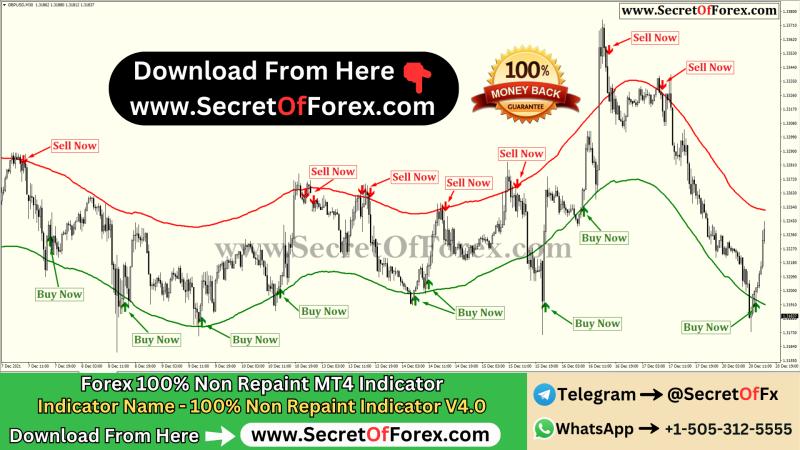
Creating a stock market buy-sell auto signal software involves several key components to ensure accuracy, reliability, and effectiveness. Here’s a breakdown in approximately 1000 words:
Purchase this Powerful Indicator from here ??
Purchase Link - https://forexprostore.com/product/100-non-repaint-indicator-v4-0/
Contact Telegram - https://telegram.me/SecretOfFx
Contact WhatsApp - https://wa.me/+15053125555
Introduction
In today's fast-paced stock market environment, traders and investors rely heavily on technology to make informed decisions quickly. Buy-sell auto signal software aims to automate trading decisions by analyzing market data and generating signals that suggest when to buy or sell a particular stock or security.
Key Components of Buy-Sell Auto Signal Software
1. Data Collection and Integration
The software begins by collecting real-time and historical market data from various sources such as stock exchanges, financial news outlets, and market APIs. This data includes price movements, trading volumes, technical indicators (e.g., moving averages, RSI), and fundamental metrics (e.g., earnings reports, P/E ratios).
2. Technical Analysis Algorithms
Technical analysis forms the core of buy-sell signals. Algorithms are programmed to analyze historical price patterns and indicators to identify trends, support and resistance levels, and potential entry or exit points. Common technical indicators used include:
- Moving Averages: Simple Moving Average (SMA), Exponential Moving Average (EMA)
- Relative Strength Index (RSI): Indicates overbought or oversold conditions
- MACD (Moving Average Convergence Divergence): Identifies changes in momentum
- Bollinger Bands: Measures volatility and price range
These indicators are computed in real-time to generate buy or sell signals based on predefined criteria and user settings.
3. Machine Learning and AI Integration
Advanced systems may incorporate machine learning models to improve signal accuracy over time. These models adapt to changing market conditions and optimize signal generation based on historical data patterns and market sentiment analysis from news feeds and social media.
4. Signal Generation and Filtering
The software generates buy or sell signals based on the combined analysis of technical indicators and machine learning insights. Signals are filtered to reduce false positives and improve reliability. Parameters for signal generation include:
- Confirmation across multiple indicators
- Volume and liquidity considerations
- Risk management parameters (e.g., stop-loss levels, position sizing)
5. Backtesting and Optimization
Before deployment, the software undergoes rigorous backtesting using historical data to assess performance. Backtesting validates signal accuracy and effectiveness under various market conditions and helps refine algorithm parameters for optimal performance.
6. User Interface and Accessibility
The software provides a user-friendly interface where traders can monitor signals, adjust settings, and execute trades manually or automatically. Accessibility across devices (desktop, mobile) and integration with trading platforms (e.g., MetaTrader, Interactive Brokers) enhance usability.
7. Risk Management Features
Effective risk management is crucial in automated trading. The software includes features such as:
- Stop-loss orders to limit losses
- Trailing stops to lock in profits
- Position size calculations based on risk tolerance and account size
8. Performance Monitoring and Reporting
Traders can monitor the performance of signals through detailed analytics and reporting features. Key metrics include:
- Win rate and profitability
- Drawdown analysis (peak-to-trough decline)
- Sharpe ratio and other risk-adjusted measures
9. Security and Reliability
Robust security protocols protect sensitive user data and trading activities. Software reliability ensures continuous operation without downtime, especially during high-volume trading periods.
10. Regulatory Compliance
Compliance with financial regulations and trading rules (e.g., SEC guidelines in the U.S.) ensures legality and transparency in automated trading activities.
Conclusion
In conclusion, stock market buy-sell auto signal software leverages advanced technologies to provide traders with timely and data-driven trading signals. By integrating technical analysis, machine learning, and robust risk management features, this software aims to enhance trading efficiency and profitability while mitigating risks. Continuous monitoring, optimization through backtesting, and user-friendly interfaces are key to maintaining competitiveness in the dynamic stock market environment.
Developing such software requires expertise in financial markets, algorithmic trading, and software engineering to deliver reliable performance and user satisfaction in automated trading operations.
Post Your Ad Here
Comments