most accurate trend reversal indicator
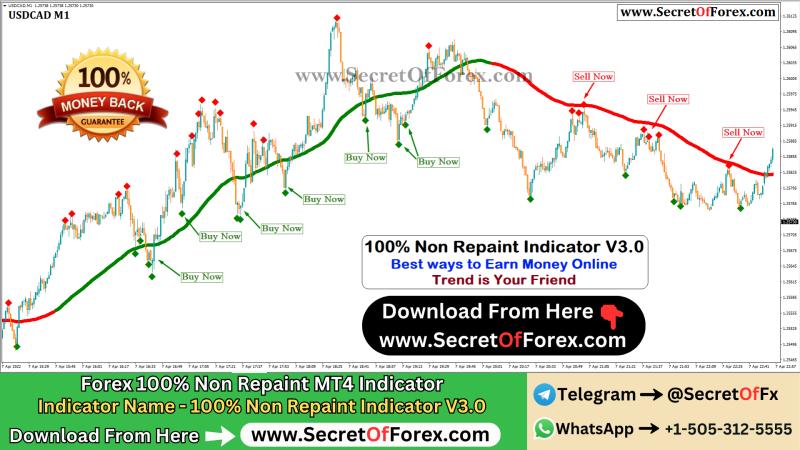
The Most Accurate Trend Reversal Indicators in Forex Trading
Identifying trend reversals accurately is one of the most critical skills in forex trading. A well-timed entry at the beginning of a new trend can maximize profits while avoiding unnecessary drawdowns. However, no single indicator guarantees 100% accuracy in predicting reversals. Instead, traders often use a combination of indicators, price action patterns, and market context for the best results.
This article explores the most accurate trend reversal indicators, explaining their mechanics, advantages, and best practices for using them effectively.
Purchase this Powerful Indicator from here ??
Purchase Link - https://forexprostore.com/product/100-non-repaint-indicator-v2-0/
Contact Telegram - https://telegram.me/SecretOfFx
Contact WhatsApp - https://wa.me/+15053125555
1. Relative Strength Index (RSI) with Divergence
The Relative Strength Index (RSI) is a momentum oscillator that measures the speed and change of price movements. It ranges from 0 to 100, with values above 70 indicating overbought conditions and values below 30 indicating oversold conditions.
However, the RSI alone is not a strong reversal indicator unless combined with divergence. Divergence occurs when price makes a new high or low, but the RSI does not confirm it.
How to Use RSI for Trend Reversals
- Bullish Divergence: Price makes a lower low, but RSI forms a higher low. This signals potential upward reversal.
- Bearish Divergence: Price makes a higher high, but RSI forms a lower high. This signals potential downward reversal.
Best Practices
- Look for divergences near support and resistance levels.
- Use RSI with other indicators like Moving Averages or MACD for confirmation.
2. Moving Average Convergence Divergence (MACD)
The MACD is a trend-following momentum indicator that shows the relationship between two moving averages. The MACD consists of:
- MACD Line: Difference between the 12-period and 26-period Exponential Moving Averages (EMAs).
- Signal Line: A 9-period EMA of the MACD line.
- Histogram: The difference between the MACD and Signal Line.
How to Use MACD for Reversals
- MACD Crossover: When the MACD line crosses above the signal line, it signals a bullish reversal. When it crosses below, it signals a bearish reversal.
- Divergence: If price makes a new high but MACD fails to do the same, it suggests weakening momentum and a potential reversal.
Best Practices
- Use MACD with trendlines and support/resistance levels.
- Look for crossovers in higher timeframes (H4, Daily) for better accuracy.
3. Bollinger Bands
Bollinger Bands consist of a middle band (20-period moving average) and two outer bands (standard deviations above and below the middle band). Prices tend to move within these bands, expanding during volatility and contracting in calm markets.
How to Use Bollinger Bands for Reversals
- Price Touches Outer Band: If price reaches the upper band and starts reversing, it signals a potential downward reversal. Similarly, if price touches the lower band and moves up, a bullish reversal is likely.
- Bollinger Squeeze: A tight squeeze in the bands signals that a breakout (trend reversal) may occur soon.
Best Practices
- Use Bollinger Bands with RSI or MACD to confirm reversals.
- Look for candlestick patterns (Pin Bar, Doji) near the bands for stronger confirmation.
4. Fibonacci Retracement Levels
The Fibonacci retracement tool helps identify potential reversal zones based on key levels (23.6%, 38.2%, 50%, 61.8%, 78.6%). These levels act as support and resistance, where price often reverses.
How to Use Fibonacci for Reversals
- Identify the Trend: Draw Fibonacci from swing high to swing low in a downtrend, or from swing low to swing high in an uptrend.
- Watch for Reversals at Key Levels: The 50% and 61.8% levels are the most critical reversal points.
Best Practices
- Combine Fibonacci levels with candlestick patterns for stronger reversal signals.
- Confirm reversals with RSI or MACD divergence.
5. Parabolic SAR (Stop and Reverse)
The Parabolic SAR is a trend-following indicator that places dots above or below the price chart.
How to Use Parabolic SAR for Reversals
- When the dots flip from above to below the price, it signals a bullish reversal.
- When the dots flip from below to above, it signals a bearish reversal.
Best Practices
- Use Parabolic SAR in trending markets (not in ranging conditions).
- Combine it with moving averages or RSI for confirmation.
6. Candlestick Patterns for Reversals
Candlestick patterns provide visual clues for trend reversals. Some of the most reliable reversal patterns include:
Bullish Reversal Patterns
- Hammer: A small body with a long lower wick, indicating rejection of lower prices.
- Engulfing: A large bullish candle completely engulfs the previous bearish candle.
- Morning Star: A three-candle pattern showing selling exhaustion followed by a strong bullish move.
Bearish Reversal Patterns
- Shooting Star: A small body with a long upper wick, showing rejection of higher prices.
- Engulfing: A large bearish candle engulfs the previous bullish candle.
- Evening Star: A three-candle pattern showing buying exhaustion followed by a strong bearish move.
Best Practices
- Look for these patterns near key support and resistance levels.
- Confirm with RSI divergence or MACD crossovers.
7. Volume Analysis for Reversals
Volume plays a crucial role in identifying trend reversals. High volume during a reversal signal indicates strong commitment from market participants.
How to Use Volume for Reversals
- Increasing Volume: A rising trend with decreasing volume signals a potential reversal.
- Volume Spikes: Sudden volume spikes often indicate the end of a trend.
Best Practices
- Use volume in combination with price action and indicators like RSI or MACD.
- Look for Volume Divergence: If price makes a new high but volume declines, a reversal is likely.
Conclusion
No single indicator guarantees an accurate trend reversal prediction, but a combination of RSI divergence, MACD crossovers, Bollinger Bands, Fibonacci retracements, Parabolic SAR, candlestick patterns, and volume analysis provides high-probability reversal signals.
To maximize accuracy, traders should:
- Use multiple indicators for confirmation.
- Consider market structure and key levels.
- Analyze different timeframes for a bigger picture.
By applying these techniques consistently, traders can improve their ability to spot trend reversals and make informed trading decisions.
Post Your Ad Here
Comments