What You Need to Know About Cleanroom Certification
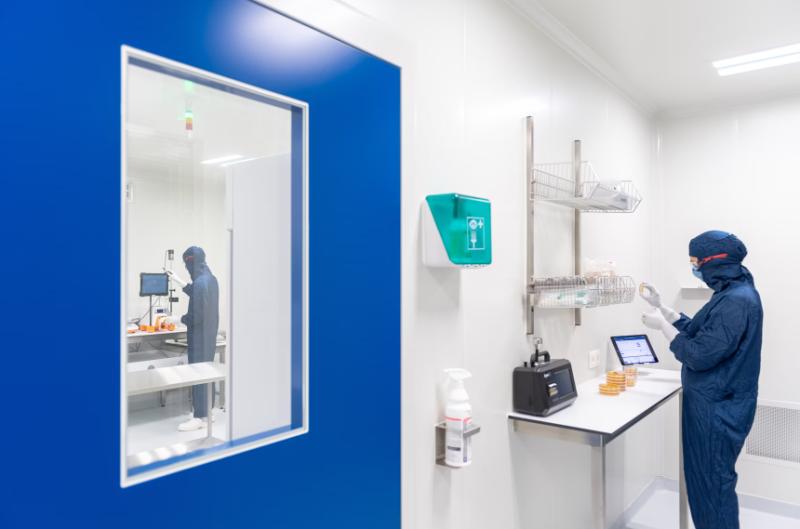
Cleanrooms are critical in industries where even the tiniest contaminants can compromise the quality, safety, or performance of products and processes. From pharmaceuticals to semiconductor manufacturing, cleanrooms play a significant role in maintaining stringent environmental conditions. However, ensuring and maintaining these controlled environments requires proper certification.
What Is Cleanroom Certification?
Cleanroom certification refers to a validation process that ensures a cleanroom meets the required standards for cleanliness, air quality, and contamination control. It involves rigorous testing to verify that the cleanroom operates within its specified class, as defined by international and local cleanroom standards.
For example, standards like ISO 14644-1 classify cleanrooms based on the allowable number of particles per cubic meter of air. Certification ensures that a facility adheres to these stringent guidelines and demonstrates its ability to consistently maintain its intended controlled environment.
Certifications are typically conducted by independent third-party auditors who perform meticulous inspections and testing procedures. The process results in a formal certification that confirms the cleanroom’s compliance with regulatory and operational criteria.
Why Is Cleanroom Certification Important?
Achieving cleanroom certification is not just a formality; it is a crucial step for industries to ensure product quality, regulatory compliance, and operational efficiency.
Protecting Product Integrity
Many industries—such as pharmaceuticals, biotechnology, and electronics manufacturing—deal with sensitive products that are highly susceptible to contamination. Certification ensures that environmental conditions, like air particulate levels, temperature, and humidity, are optimal and controlled, safeguarding product integrity and performance.
Regulatory Compliance
The absence of proper cleanroom certification can lead to noncompliance with industry regulations, resulting in costly fines, recalls, or lost credibility. Certified cleanrooms demonstrate adherence to local, national, and international standards, which is particularly vital in industries like healthcare, where patient safety is a primary concern.
Supporting Long-term Operational Efficiency
Through the initial certification process, businesses often uncover potential inefficiencies or weaknesses in their cleanroom setup. Addressing these issues enhances the overall performance of the facility, improving operations in the long run.
Key Standards for Cleanroom Certification
The following standards are most commonly referenced during the certification process:
ISO 14644-1
Perhaps the most widely recognized cleanroom standard, ISO 14644-1 outlines classes of air cleanliness in terms of particle concentration. Each class specifies the maximum allowable particle count for various particle sizes. Certification confirms compliance with the desired cleanliness class.
EC GMP Annex 1
For pharmaceutical manufacturing, Annex 1 of the EU Good Manufacturing Practice (GMP) regulations outlines cleanroom requirements for the production of sterile medicines. Certification under this framework is critical in ensuring safe pharmaceutical products.
Federal Standard 209E
Though it has been replaced by ISO 14644-1, Federal Standard 209E is still used in some older facilities. It classifies cleanrooms by the number of particles per cubic foot of air.
ASTM and IEST Standards
The Institute of Environmental Sciences and Technology (IEST) and the American Society for Testing and Materials (ASTM) also set standards for cleanroom validation, including testing procedures for airflow, filters, and particle count levels.
The Certification Process
Cleanroom certification involves a series of detailed steps to verify the room’s compliance with required standards. Below is an overview of what to expect during the certification process.
Site Assessment and Preparation
Before certification testing can begin, ensure the cleanroom is fully operational and configured according to the design specifications. This includes verifying the performance of systems such as HVAC, HEPA, or ULPA filters, and airflow patterns. Regular maintenance and cleaning schedules should already be in place to maintain a controlled environment.
Baseline Testing
Baseline testing is performed to assess the cleanroom’s initial operating conditions. Tests may include measurements of airflow, pressure differentials, temperature, humidity, and particle counts.
Airflow and Velocity Testing
Cleanroom airflow patterns and velocity are critical for preventing contamination. Certification auditors will evaluate whether air passes through the cleanroom in a manner consistent with its desired classification. This ensures proper dilution of contaminants and effective removal of particles.
Filter Integrity Testing
The performance of HEPA or ULPA filters is a key focus in cleanroom certification. Auditors check for leaks or inefficiencies in the filters to ensure they are functioning optimally.
Particle Count Testing
Particle count testing determines whether the concentration of airborne particles stays within the limits of the cleanroom’s classification. Auditors measure particle size and count at various locations and heights within the room.
Documentation Review
Clear documentation of all cleanroom processes, such as cleaning logs, maintenance schedules, and standard operating procedures, is a vital component of certification. Proper records ensure that the facility consistently meets compliance criteria.
Corrective Actions and Retesting
If any deficiencies are identified during the certification process, corrective actions must be taken. The cleanroom will then undergo retesting to confirm that these issues have been resolved.
Final Certification
Once all compliance measures have been met, the cleanroom receives its formal certification, which specifies the applicable standard and classification.
Cleanroom certification is critical for any organization that relies on controlled environments for production or research. Whether your business is preparing for its first certification or undergoing recertification, understanding the process and adhering to best practices can ensure success. By ensuring compliance with certification standards, you’ll not only protect your products and business but also bolster your reputation as a serious competitor in your industry.
Post Your Ad Here
Comments