What Are The Different Types Of Wind Turbine Towers?
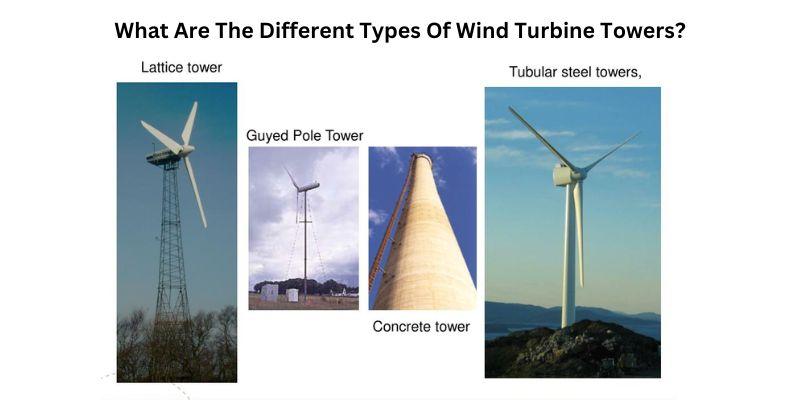
Wind turbine towers are essential for harnessing wind energy, as they hold the nacelle and blades at an ideal height to capture wind efficiently. The type of tower used plays a major role in the performance, cost, and longevity of a wind energy project. There are several types of wind turbine towers, each designed for different environments and applications. In this blog, we’ll explore the various types and their unique benefits.
(1): Wind Lattice Towers
Wind lattice towers are a structural solution for supporting wind turbines, featuring an open-framework design composed of interlaced metal sections forming a lattice of squares or triangles. This configuration offers a balance between reduced material usage and structural integrity, making them lighter than solid-shaft tubular steel towers while still providing the necessary strength and stability for large wind turbines. Moreover, Wind Lattice Towers Empower Wind Farms and provide lots of benefits to harness the power of wind energy.
Pros of Wind Lattice Towers:
(1): Lightweight Design: They are lighter than tubular towers, which can reduce transportation costs.
(2): Cost-Effective: Less steel is needed, making them more affordable than tubular steel towers.
(3): Easier Maintenance: The open framework allows better access for inspections and repairs.
Cons of Wind Lattice Towers:
(1): Difficult to Build: The design is complex and requires more labor to assemble.
(2): More Noise: The open structure can create additional noise as wind flows through it.
(2): Tubular Steel Towers
Tubular steel towers are the most common type of wind turbine towers. They have a conical shape—wider at the base and narrower at the top—and are made by welding rolled steel sections together.
Pros of Tubular Towers:
(1): Strong and reliable: Their shape gives them the strength to handle high winds and the weight of the turbine’s components.
(2): Easier to install: The tower is transported in sections and assembled on-site.
(3): Adaptable: These towers can be built to support different turbine sizes.
Cons of Tubular Towers:
(1): Heavy to transport: Moving large steel sections can be expensive, especially in remote areas.
(2): Prone to rust: Towers in coastal areas need extra protective coatings to prevent corrosion.
(3): Concrete Towers
Concrete wind turbine towers are built using giant concrete blocks that are stacked together to form a tall, sturdy structure. They are mainly used for really big wind turbines where steel towers would be too heavy or hard to transport.
Pros of Concrete Towers:
(1): Stronger Support: Can handle the weight of massive turbines and withstand strong winds.
(2): Resistant to Rust: Unlike steel, concrete does not corrode, making it great for coastal wind farms.
(3): Locally Made: Concrete is usually produced nearby, cutting down on transport costs and boosting local economies.
Cons of Concrete Towers:
(1): Takes Longer to Build: Assembly is more time-consuming compared to steel towers.
(2): Costs Vary: The price of concrete depends on location, which affects project expenses.
(4): Hybrid Towers
Hybrid wind turbine towers use both concrete and steel to create a strong and efficient structure. The bottom part is made of concrete for a solid base, while the top is made of steel to keep it lightweight and stable.
Pros of Hybrid Towers:
(1): Strong and Stable: The concrete base ensures durability, while the steel upper section keeps the structure balanced.
(2): Cost-Effective: Using a mix of materials helps lower costs, especially for larger turbines.
(3): Perfect for Tall Turbines: Hybrid towers work well for very tall wind turbines, as the concrete base provides a sturdy foundation.
Cons of Hybrid Towers:
(1): Difficult to Transport: While the steel section is lightweight, the concrete base can still be heavy and challenging to move.


Comments