Fiber Optic vs. Copper Cable: The Advantages of MPO Fiber Optic Cables
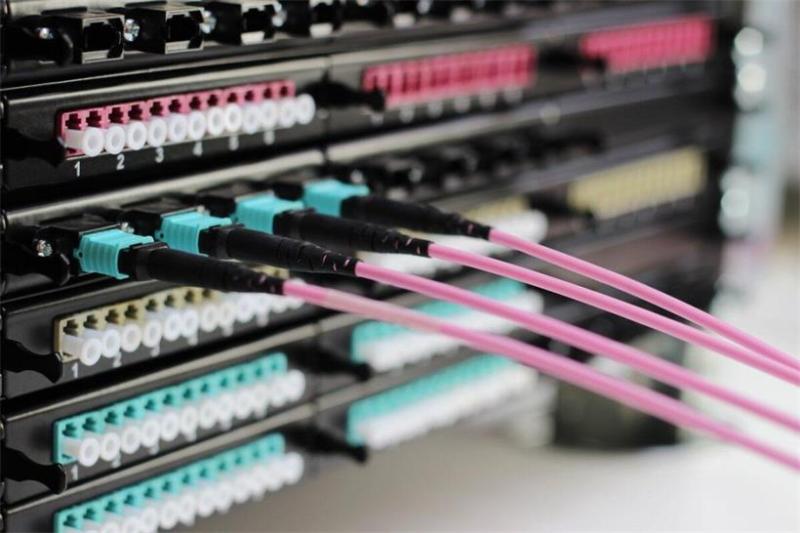
In today’s rapidly advancing network world, the choice of transmission medium determines network performance, stability, and future scalability. As a manufacturer of MPO fiber optic cables, we understand the confusion consumers face: should they choose traditional copper cables or opt for the more powerful fiber optics? Today, Fibermart will focus on MPO fiber optic cables, analyzing the differences between fiber and copper cables and highlighting the irreplaceable role MPO fiber optic cables play in network infrastructure.
1. Copper Cable vs. Fiber Optic: A Brief Overview of Technology

1.1 Copper Cable Transmission Method
Copper cables are a traditional transmission medium that relies on electrical signals to transmit data. Due to their mature technology and long history, copper cables were once the backbone of most network infrastructures. However, with the increasing demands for bandwidth and speed, copper cables have started to show significant limitations, such as short distance capabilities and insufficient resistance to interference.
1.2 Fiber Optic Transmission Method
Unlike copper cables, fiber optics transmit data using light signals, which are incredibly fast and immune to electromagnetic interference. The MPO fiber optic cable, a multi-core fiber optic solution, optimizes fiber transmission technology by integrating multiple fibers to provide higher efficiency and greater bandwidth.
2. The Unique Advantages of MPO Fiber Optic Cables
The advent of MPO fiber optic cables not only overcomes many of the limitations of copper cables but also enhances fiber technology. Let’s explore the advantages of MPO fiber optic cables in detail.
2.1 Ultra-High Bandwidth to Meet Future Demands
Copper cables have limited bandwidth capacity, and data transmission speed drops significantly beyond 100 meters. In contrast, MPO fiber optic cables can easily support transmission rates ranging from 10Gbps to 400Gbps or even higher, without any distance attenuation. For modern data centers and 5G base stations, this high bandwidth is crucial.

For example, in cloud computing and big data applications, network transmission volumes are growing explosively. With its high-density design, MPO fiber optic cables can transmit multiple signal streams simultaneously, significantly improving data center processing efficiency.
2.2 Longer Transmission Distance and Low Signal Loss
Copper cables typically have a transmission distance limit of 100 meters, and beyond that, signal amplifiers are needed, which increases costs and affects network stability. However, MPO fiber optic cables can easily transmit data over several kilometers with minimal signal loss. This advantage makes them the best choice for long-distance data transmission.
For instance, a multinational corporation’s data center significantly reduced the need for additional signal amplifiers and simplified its network structure after adopting MPO fiber optic cables, improving overall system efficiency.
2.3 Immunity to Electromagnetic Interference, Stable Transmission
Copper cables are susceptible to electromagnetic interference, especially in environments with high-power devices or wireless signals. However, MPO fiber optic cables use light signals for transmission, which are completely immune to electromagnetic interference. Even in high-interference environments, data transmission remains stable. This feature is especially critical in industrial automation and medical equipment.
2.4 Smaller Size and Lighter Weight
Traditional copper cables are often bulky and heavy, while MPO fiber optic cables are made from lightweight materials, making them smaller and lighter. This design advantage reduces the space occupied in server racks and simplifies cable installation, making MPO fiber optic cables ideal for high-density data center wiring needs.
2.5 Energy-Efficient and Environmentally Friendly
Fiber optic transmission requires far less power than copper cables. For the same network performance, MPO fiber optic cables typically consume only half the energy of copper cables. This energy-saving feature not only reduces operating costs but also aligns with today’s green and energy-efficient trends.
3. Practical Applications of MPO Fiber Optic Cables
3.1 Data Centers
In data centers, high density, low latency, and high bandwidth are essential. MPO fiber optic cables, with their multi-core design, allow for the transmission of large amounts of data in a limited space, significantly enhancing data center capacity and performance.

3.2 5G Networks
5G networks require high-speed and low-latency support. MPO fiber optic cables are ideal for interconnecting 5G base stations due to their ultra-high bandwidth and long-distance transmission capabilities.
3.3 Cloud Computing and Big Data
With the exponential growth of data in cloud computing and big data, MPO fiber optic cables offer efficient multi-channel transmission, significantly boosting data processing and storage efficiency.
4. How to Choose the Right MPO Fiber Optic Cable
When selecting MPO fiber optic cables, there are several factors to consider:
4.1 Transmission Rate Requirements:
Choose the appropriate specifications based on network bandwidth needs (e.g., 40G, 100G, or 400G).
4.2 Application Scenarios:
Identify the usage environment of the MPO fiber optic cable (e.g., data centers, 5G base stations).
4.3 Connector Quality:
High-quality MPO connectors can reduce insertion loss and improve transmission efficiency.
4.4 Supplier Expertise:
Choose a supplier with extensive experience and advanced manufacturing processes to ensure product quality and stability. Consider selecting an experienced MPO fiber optic cable supplier to meet your project’s requirements.

Conclusion from Fibermart
In conclusion, MPO fiber optic cables clearly outperform traditional copper cables in critical areas such as bandwidth, transmission distance, immunity to electromagnetic interference, energy efficiency, and environmental sustainability. They are the ideal solution for modern network infrastructure upgrades.
As a professional MPO fiber optic cables manufacturer, we are committed to providing top-quality products that meet the evolving needs of today’s networks. For those looking to take their infrastructure to the next level, Fiber-Mart highly recommend the 144 Fibers OM4 Multimode 12 Strands MPO Trunk Cable 3.0mm LSZH/Riser. With low loss and high capacity, it ensures reliable, high-speed data transmission, while its LSZH (Low Smoke Zero Halogen) material makes it an eco-friendly choice, ideal for environments where safety and sustainability are a priority.
If you are looking for a reliable transmission medium to support your network construction or upgrade, the 144 Fibers OM4 Multimode MPO Trunk Cable is the perfect choice. Don’t miss out on this essential upgrade for your network’s future. Contact us today to learn more or to place your order!
Post Your Ad Here
Comments