Implementing Anti-Sway Technology in RTG Cranes for Safer Operation
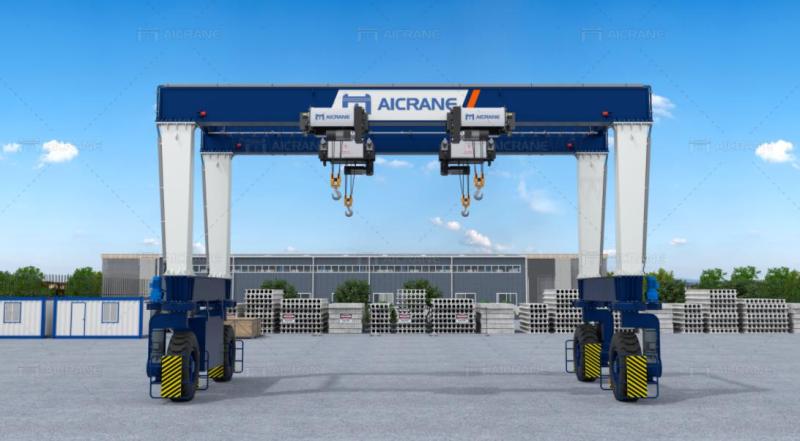
Rubber-tired gantry (RTG) cranes play a crucial role in container handling operations at ports, terminals, and logistics hubs. However, the safety and efficiency of these cranes can be compromised by the natural sway of the load during lifting and moving operations. Implementing anti-sway technology has become a game-changer in addressing this challenge, ensuring safer and more precise operations while improving overall productivity.
This article explores the concept of anti-sway technology, its benefits, the components involved, and how it can be implemented in RTG cranes to enhance operational safety and efficiency.
Understanding Anti-Sway Technology
Anti-sway technology is a sophisticated system designed to minimize the pendulum-like motion of loads suspended by crane hooks. This motion is a natural consequence of the crane's movement and can lead to:
Operational delays due to the need for precise load placement.
Safety hazards to personnel and equipment.
Increased wear and tear on the crane and its components.
The technology utilizes sensors, algorithms, and actuators to counteract the forces causing the sway, allowing the crane to move loads smoothly and precisely.
Components of Anti-Sway Systems
Anti-sway systems typically consist of the following key components:
Sensors
Load Position Sensors: Detect the load's position and movement in real-time.
Inclinometers: Measure the angle of the sway.
Speed Sensors: Monitor the crane’s travel speed to anticipate sway dynamics.
Control Unit
The control unit processes sensor data and calculates corrective actions using advanced algorithms.
Actuators
Actuators adjust the crane’s movements (e.g., trolley speed or direction) to counteract sway.
Software Interface
A user-friendly interface allows operators to monitor the anti-sway system and make adjustments if necessary.
Integration with Crane Controls
The system integrates seamlessly with the RTG crane’s existing control mechanisms to provide real-time sway correction.
Benefits of Anti-Sway Technology in RTG Cranes
The implementation of anti-sway technology offers several advantages that directly impact safety, efficiency, and cost-effectiveness:
Enhanced Safety
Minimized Risk of Accidents: By stabilizing the load, anti-sway systems reduce the chances of collisions with nearby equipment or structures.
Protection for Personnel: A steady load significantly lowers the risk of accidents involving workers near the crane.
Improved Operational Efficiency
Faster Load Handling: Reduced sway means operators can position loads more quickly and accurately.
Reduced Downtime: Fewer disruptions and delays caused by load instability.
Lower Maintenance Costs
Anti-sway technology minimizes wear and tear on crane components by reducing abrupt movements and impacts.
Enhanced Operator Confidence
Operators can focus on the task at hand without worrying about compensating for load sway manually.
Increased Lifespan of Equipment
Smooth operations result in less stress on mechanical and structural components, extending the crane's operational life.
Steps to Implement Anti-Sway Technology in RTG Cranes
Implementing anti-sway technology involves several key steps to ensure proper functionality and integration with existing systems:
Assessment of Current Crane Systems
Evaluate the RTG crane’s current control and mechanical setup to identify compatibility requirements.
Selection of Anti-Sway Solution
Choose a solution tailored to the gantry crane specifications, load capacities, and operational environment.
Installation of Sensors and Actuators
Install load position sensors, inclinometers, and actuators at appropriate points on the crane.
Ensure proper wiring and connectivity between components.
Integration with Control Systems
Integrate the anti-sway control unit with the crane’s existing control system.
Update or modify software interfaces as needed.
Calibration and Testing
Calibrate sensors and algorithms to match the crane’s operational parameters.
Conduct rigorous testing under various load and movement conditions to verify the system’s effectiveness.
Operator Training
Train operators on the use of the anti-sway system, including monitoring and manual overrides if necessary.
Ongoing Maintenance and Updates
Regularly inspect and maintain the anti-sway components to ensure consistent performance.
Implement software updates to enhance system capabilities over time.
Challenges and Solutions in Implementation
While the benefits of anti-sway technology are clear, its implementation can present certain challenges:
Integration with Older Cranes
Challenge: Older RTG cranes may lack the necessary control infrastructure for seamless integration.
Solution: Retrofit kits can bridge the gap, allowing anti-sway systems to function effectively on legacy equipment.
Initial Costs
Challenge: The upfront cost of installation may be a concern for some operators.
Solution: Highlight the long-term cost savings from reduced maintenance, increased efficiency, and improved safety.
Operator Resistance
Challenge: Operators accustomed to manual sway compensation may be hesitant to trust automated systems.
Solution: Comprehensive training and demonstrations of the system’s effectiveness can build confidence.
Environmental Factors
Challenge: Wind, uneven terrain, and varying load weights can impact system performance.
Solution: Advanced algorithms and adaptive calibration can address dynamic environmental conditions.
Future Trends in Anti-Sway Technology
The evolution of anti-sway technology continues to enhance its capabilities. Future advancements may include:
AI-Powered Systems
Incorporating artificial intelligence to predict sway patterns and optimize corrective actions.
Integration with Fully Automated Cranes
Anti-sway technology will play a key role in enabling fully autonomous crane operations.
Enhanced Data Analytics
Real-time data analysis and reporting to further improve operational efficiency and maintenance planning.
Conclusion
Anti-sway technology represents a significant advancement in the safe and efficient operation of RTG cranes. By minimizing load sway, it not only enhances safety and precision but also boosts productivity and reduces operational costs. With proper implementation, training, and maintenance, anti-sway systems can become an indispensable feature in modern RTG cranes, setting new standards for performance and reliability in the industry.
Post Your Ad Here
Comments