How Holographic Walls Are Enhancing Customer Experiences in Retail?
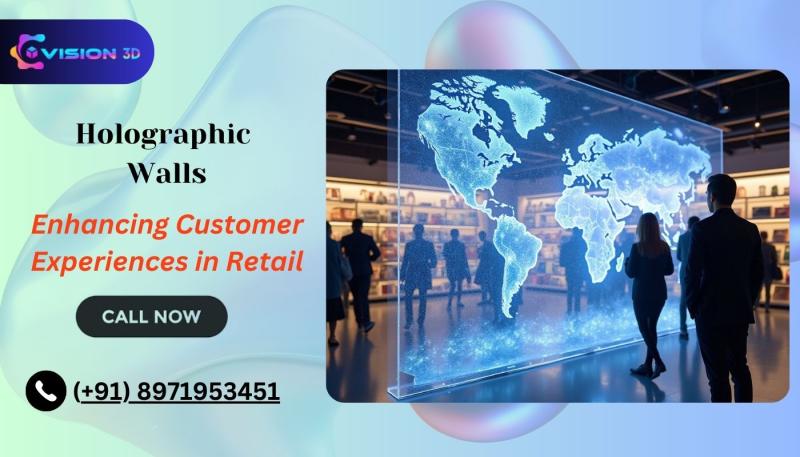
Enhanced customer connectivity and easier shopping with new-age tools comprise the latest introduction of holographic walls. The lens capture attached outdoor holographic wall would draw attention more effectively. So, interaction with the product will be even more enjoyable. This article will focus on how such holographic walls are revolutionizing the shopping experience. Their interactive features and personalization options, as well as their influence on sales and brand loyalty, will be discussed here.
What is a Holographic Wall?
A 3D hologram wall depicts 3D pictures virtually and creates an engaging visual experience without the requirement for specific glasses. Such walls use integrated software and hardware to produce life-sized holograms that improve interaction in systems such as business events and museums. They enable watchers to watch pictures from different projections that convert atmospheres into variable interfaces.
The Rise of Holographic Technology in Retail
Having transformed a vision from science fiction to reality, holographic technology is being seen today in stores. These holographic displays have begun to create interesting experiences for customers. Customers can see the products from different angles without requiring any special glasses. This gives them an idea of the features and size of the items better. Such interaction makes customers attached to the product and makes them feel engaged with it instead of browsing through what they want to buy.
Interactive Customer Experience
A 3D wall projector brings jaw-dropping interactive experiences into play. Unlike most regular screens that only show information, these walls can have customers interact with the content. For example, a user can touch and drag a hologram and watch it transform into a different colour or feature.
Such technology makes virtual fitting rooms in the fashion world. That lets a shopper see how clothes would look on him or her without having to try them on. Thus, this makes shopping an ever-more enjoyable activity, and it also gives accuracy to the possible purchase.
Customization and Real-Time Updates
A holographic wall is interactive and customizable. Retailers may change what they display from time to time according to their marketing plans or seasonal sales. Flexibility is very important for any business to stay in line with today's fast-moving retail environment.
For example, the store could easily refresh holographic features to show new products or exciting offers. This way, customers are constantly updated about new items in the store, encouraging impulse buying, as some are attracted to such interesting content.
Enhancing Brand Storytelling
A 3D hologram wall is more than just space for products. They build narratives on the identity of a brand. With these walls, even moving images and live demonstrations can be shot to embellish the look of a product. For example, during the launch of a product or a special event, brands could actually project live holograms of experts talking about or demonstrating how the products are improved or made. This form of storytelling will help the customer memorize the brand and make the customer feel part of the loyalty system.
Increasing Foot Traffic and Dwell Time
Holographic wall installations in stores could help such places increase their foot traffic. Very likely, even unplanned visits would be made by people to see the holograms. Within the 'theatre', these fun displays keep visitors looking around for a more extended period. According to research, stores that had this technology showed sales increases of 20% during special events with hologram advertising. That is because people shop more, and the customers get a better shopping experience.
Bridging Online and Offline Shopping Experiences
Various advancements in the field of e-commerce have linked consumers to both online and offline buying channels. One of these is a technology called holographic walls. Such creations would give an exciting experience of online shopping while sitting in the store. With that, consumers can try out the products digitally or see how the products would look in their space before purchasing. Thus, this will build customer confidence in their choices and probably lower the number of returns to the customers who shop online.
Practical Applications Across Various Retail Sectors
A 3D wall projector could serve a variety of retail businesses such as fashion, electronics, cars, and home goods. Holograms for example in a car showroom could show features of car models or even virtual test drives. Holograms will display more beautiful designs in jewellery stores than a regular display will ever do. Its flexibility will prove most worthwhile for retailers wishing to be different among peers in the industry's market.
Future Prospects for Holographic Technology in Retail
More retail stores would be apt to adopt holographic displays as technology now improves and becomes cheaper. More retail spends on this technology as customer experience and therefore the resultant sales are improved. It will also be used for shoppers to create more personalized and truly engaging experiences in the future.
Conclusion
A holographic wall approaches a milestone in the shopping experience. The interaction with these displays can really draw customers in, opening up new avenues for customer engagement that can have an immediate impact on sales and retention. Like everything else, when it becomes widespread the way of human interactions with physical products and brands will be changed. It is more than a fashion; holographic technology is driving the revolution in retailing into the future, where the consumer experience itself is the key. To know more about holographic displays, get in touch with Vision3D customer care number - +91-8971953451.
Post Your Ad Here
Comments (1)
Priya Rathi7
Radiologic technologist
Very Good ! Too much informative and helpfull.