Advancements in Airport Design and Construction Through BIM
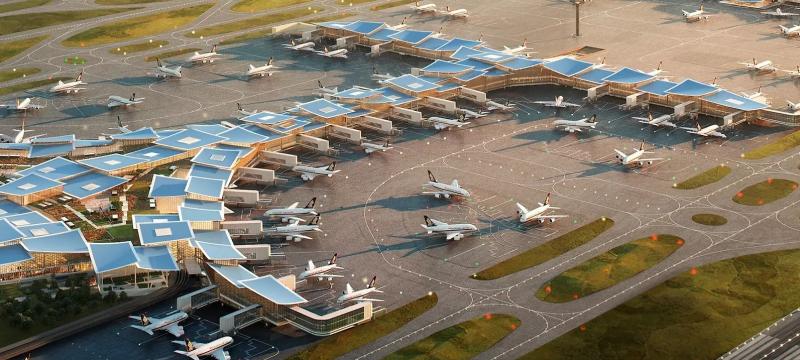
Building and expanding airports are some of the most complex and intricate construction projects in the world. These large-scale facilities require a high degree of precision, coordination, and forward-thinking, as they must operate efficiently while accommodating millions of passengers each year. In recent years, BIM has revolutionized the way airports are designed, constructed, and maintained. This digital tool has transformed not only the planning and construction phases but also long-term operations, bringing immense benefits to airport developers, designers, and operators.
In this blog, we explore how BIM is shaping the future of airport design and construction, providing an in-depth look at its impact across various stages of airport development. to know more details about this blog-related The Impact of BIM on Airport Design and Construction
The Role of BIM in Airport Design
BIM plays a pivotal role during the early stages of airport design. With its ability to create detailed 3D models, architects and engineers can visualize the entire airport or terminal in virtual space. This visualization enables better planning and decision-making, allowing all stakeholders to understand the proposed structure.
One key advantage of using BIM in airport design is its ability to foster collaboration. Different teams, whether architectural, structural, or MEP, can work on the same digital model, ensuring that all aspects of the design are cohesive and aligned. This integration reduces the likelihood of errors, as teams can detect potential issues in real time and address them before construction begins.
Moreover, BIM supports iterative design. As changes are made to the model, they are automatically updated across all disciplines, ensuring everyone is working with the most current version. This reduces costly redesigns and delays during the project.
BIM in Airport Construction
Once the design phase is complete, BIM continues to play a vital role in the construction phase. One of the most significant benefits is its ability to assist with accurate construction planning. Contractors can use detailed BIM models to determine exact material quantities, assess construction sequences, and optimize the workflow on-site.
BIM-based takeoff tools allow contractors to create more precise cost estimates and ensure that there are no discrepancies in material usage. This improves budgeting accuracy and helps prevent overruns during the construction phase.
In addition, The use of 4D BIM, integrating the element of time, along with 4D Scheduling Services, enables airport construction teams to simulate the construction schedule. By visualizing the project’s timeline in the 3D environment, stakeholders can spot potential delays and adjust plans accordingly, ensuring a smoother construction process.
Moreover, BIM can be used to track progress on-site. Using real-time updates, contractors can match the physical progress with the digital model, ensuring that the construction is proceeding as planned.
Collaboration and Communication Benefits
The collaborative nature of BIM provides a substantial advantage in airport design and construction. With multiple teams working together on the same platform, communication between architects, engineers, contractors, and airport operators becomes more transparent. The centralized digital model acts as a single source of truth, where all project-related data is stored and updated, providing real-time insights into every aspect of the project.
This streamlined communication also aids decision-making, as stakeholders can easily access the latest project data, such as cost estimates, schedules, and construction milestones. BIM makes it easier for decision-makers to respond quickly to changes or issues that may arise during design or construction, ensuring that the project stays on track.
Operational Efficiency Post-Construction
BIM doesn’t just improve the design and construction of airports; it also enhances long-term operations. One of the most exciting advancements in airport management is the use of digital twins virtual replicas of physical assets created from BIM models. These digital twins allow operators to monitor the health of airport infrastructure in real-time, making it easier to schedule maintenance and track the condition of critical components such as runways, terminals, and HVAC systems.
Furthermore, BIM models serve as a valuable resource for facility management teams, helping them access detailed information about the building’s systems, components, and performance. This data makes it easier to plan maintenance, anticipate repair needs, and ensure that the airport continues to function at its best long after construction is completed.
Sustainability and Environmental Impact
Sustainability is a growing concern for airport projects, and BIM is playing an important role in addressing these challenges. By utilizing BIM and integrating Building Energy Modeling, architects and engineers can optimize building designs to enhance energy efficiency and reduce environmental impact. For example, BIM can simulate how natural light flows through an airport terminal, allowing designers to make adjustments to maximize daylight and reduce energy consumption.
BIM can also be used to incorporate sustainable technologies, such as green roofs, solar panels, and energy-efficient HVAC systems, into the airport design. By modeling these systems before construction begins, stakeholders can assess their performance and make improvements to enhance sustainability.
Additionally, BIM enables better tracking of resource consumption throughout the project lifecycle, helping to reduce waste and ensure that materials are used efficiently.
Case Studies
Several airports around the world have already reaped the benefits of BIM technology. For example, the Changi Airport expansion in Singapore used BIM to integrate design, construction, and maintenance. BIM enabled better communication between contractors and airport authorities, helping the project team complete the terminal expansion on time and within budget.
Another example is the Hamad International Airport in Qatar, which utilized BIM for its new terminal building. The detailed 3D model helped address challenges related to complex geometry and large-scale construction, improving coordination and preventing costly delays.
These successful case studies demonstrate how BIM can help reduce errors, save time, and cut costs, all while delivering high-quality airport infrastructure.
The Future of BIM in Airport Design and Construction
Looking ahead, BIM’s role in airport design and construction will continue to evolve. Innovations such as artificial intelligence (AI), augmented reality (AR), and the Internet of Things (IoT) are set to further enhance the capabilities of BIM in the AEC industry.
AI can be integrated with BIM to automate tasks like clash detection, scheduling, and optimization, reducing the need for manual intervention. AR and virtual reality (VR) will provide immersive experiences that allow stakeholders to “walk through” airport designs and explore every detail before construction begins. Additionally, IoT devices will allow for real-time data collection on the airport’s performance, feeding back into BIM models for improved decision-making and maintenance planning.
However, challenges remain. Overcoming data security concerns, managing large datasets, and ensuring interoperability across different software platforms will be critical to the future success of BIM in the airport sector.
Conclusion
BIM has fundamentally changed the way airports are designed, constructed, and operated. From streamlining the design process to improving collaboration, reducing costs, and enhancing sustainability, BIM is at the forefront of airport development. With continued advancements in technology, BIM will undoubtedly continue to shape the future of airport design and construction, making airports safer, more efficient, and more sustainable for passengers and operators alike.
For airports looking to stay ahead of the curve, adopting BIM is not just an option—it’s an essential step towards a smarter, more efficient future.
Post Your Ad Here
Comments