When Bio-Art Marries Gene Editing, and the Offspring is Basically a Glow-in-the-Dark Pikachu
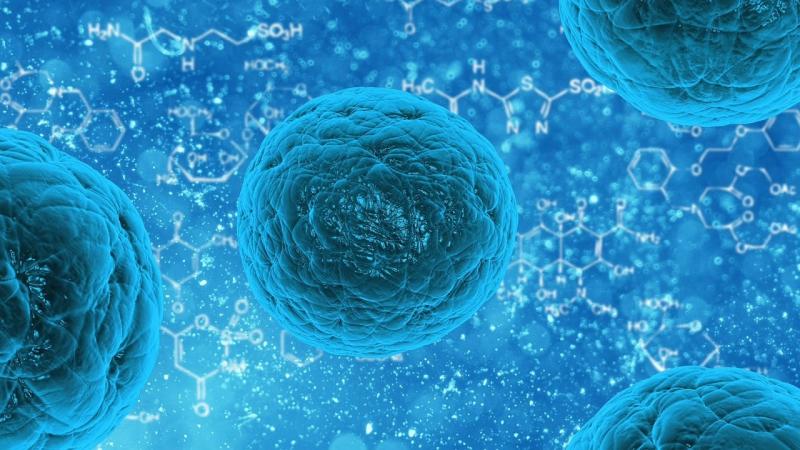
Bio-art, in all its bizarre and occasionally spine-tingling glory, is not exactly the kind of thing your grandma would talk about over tea unless your grandma is more of a mad scientist than a doily collector. This stuff is where modern creatives arm themselves with petri dishes, gene-editing gizmos, and a slightly concerning sense of humor to transform living organisms into art installations that might make even Dr. Frankenstein raise an eyebrow. Picture a banana that glows like a failed nightclub fluorescent sign or a bonsai tree sprouting neon pink tomatoes that taste suspiciously like bubblegum. Bio-art sits at the intersection of scientific experimentation and expressive chaos, transforming life into a medium for aesthetic and philosophical pondering. It's as if, after centuries of painting on boring old canvas, someone finally yelled, "Yo, what if we paint on DNA?" and everyone just went with it.
The wackiness stems largely from the behind-the-scenes technological wizardry. Today's bio-artists have access to fancy lab equipment that would make Walter White cry himself to sleep out of sheer envy. Gene editing tools, such as CRISPR, offer the ability to tweak genetic codes as easily as a TikTok influencer slaps on yet another filter. CRISPR, basically the genetic world's autocorrect, allows artists to chop and rearrange DNA sequences to achieve their desired look, color, or bioluminescence factor. Throw in other biotech paraphernalia-PCR machines, cloning vectors, and all sorts of freakish reagents-and you've got yourself a kind of modern art studio where paintbrushes are replaced by pipettes and the palettes are full of squishy cell cultures.
The process of bringing bio-art to life often looks something like a sorority science fair on steroids. First, you've got the cultivation of living materials: bacteria colonies that might be genetically tweaked to resemble Andy Warhol portraits, or plant cells engineered to produce patterns that look suspiciously like Pikachu's face. Scientists-turned-artists then zap, slice, and rearrange DNA to create bizarre forms. And yes, sometimes these creations grow, breathe, and reproduce. Imagine a plant sculpture that sprouts luminous fungus each full moon, like it's throwing a secret rave with tiny smirking spores. These techniques, previously confined to medical labs or supervillain hideouts, are now accessible to those who want to push what we call "art" straight into the Twilight Zone.
As if the technology wasn't weird enough, the aesthetic angle of bio-art is even more delightful and disturbing. Traditional art might rely on paint, clay, or digital pixels, but bio-art says, "Nah, let's go with glowing bacteria, mutant cacti, and possibly some engineered crickets that chirp in the tune of a Katy Perry anthem." Instead of shaped marble, you might have a colony of microorganisms arranged in a pattern that recalls a Jackson Pollock painting but with way more squirming. Artists exploit the natural forms-think succulent leaves, brain coral shapes, or cell structures-and give them a twist through genetics. The resulting aesthetic can be simultaneously beautiful, revolting, mesmerizing, and downright hilarious. Ever considered a sculpture made from your own modified skin cells, dyed lime green, and patterned to mimic the K-pop band BTS's latest album cover? Someone out there probably has. It's art that genuinely has a mind of its own-quite literally in some cases-since living materials can mutate and grow unpredictably.
This weird frontier where biology meets art wouldn't be complete without touching on ethics. Of course, some folks are going to look at a genetically modified tulip that hums the Baby Shark theme song and ask, "Do we have, like, any moral responsibility here?" The ethical conundrums pile up faster than expired lab samples. Are we violating nature's rights by treating life forms as art supplies? Should we feel guilty about making a colony of engineered microbes glow bright blue just because it looks cool, or is that no more offensive than painting a mural on a building wall? Public perception vacillates between excitement, horror, and an insatiable desire to take selfies next to genetically modified orchids. Safety concerns also come into play. We've all seen enough low-budget horror flicks to know that messing with DNA could potentially backfire, producing, let's say, a legion of chameleons that can recite entire Shakespearean sonnets before overrunning a city park. And what about patenting life forms as art objects? The legality can get crazier than a Marvel multiverse storyline. Artists must navigate this minefield carefully, balancing creative ambition with the knowledge that their living artworks might have bigger implications than just looking rad on Instagram.
But theory is boring without some cringe-worthy real-world examples. Let's chat about a few notable projects that have popped up in recent years. There's Eduardo Kac, often hailed as one of the OG bio-artists, who famously engineered a bunny named Alba that glowed green under specific lighting conditions. It's like a nightlight that can hop around your living room, possibly spooking your cat into therapy. Then consider Joe Davis, who once encoded poetry into the genetic structure of living organisms-yes, he made microcritters that store your mom's haikus. On a weirder note, there have been installations involving living tissue sculptures kept alive in bioreactors, organs grown outside the body and shaped into...who knows, maybe a tribute to Star Wars characters. Some artists collaborate with geneticists to create living portraits of celebrities-imagine a small garden of cells arranged so that, under a microscope, you see Beyonce's face. It's oddly flattering and freakishly futuristic.
Then there are those who plant genetically edited seeds in abandoned lots, sprouting bizarre botanical installations in places where nature and culture collide like a game of bumper cars. One bio-artist might engineer glowing mushrooms that flicker in patterns reminiscent of LED disco floors and plant them around old factories. At night, these fungi spectacles might look like a rave orchestrated by Shrek and Tinkerbell. The city's residents might love it, hate it, or just wonder if the local water supply got spiked with something funky. That's the beauty of it: public reactions range from "This is the coolest thing since Netflix gave us binge-watching" to "Burn it with fire."
As these projects multiply like overenthusiastic bacteria in a warm agar dish, the implications of bio-art keep piling up. If our technologies continue to advance, future generations of artists might produce living artworks that are more interactive, more responsive, or more capable of ordering their own pizza. We might witness experiments that produce, say, talking plants that recite poetry at sunset or shrimp that produce pigments for a pop-up gallery installation. The boundary between curator and caretaker blurs as the art demands feeding, watering, or a nice dosage of sunlight. And then there's the philosophical chaos: is the artist making the art, or is the artist partnering with nature's own creative might? In twisting and editing the genetic code, bio-artists aren't just painting with brushes; they're rewriting the underlying script that life itself follows. It's like hacking a video game's code to give all the NPCs top hats and monocles. Sure, it looks hilarious, but now you're playing God on a molecular level.
Eventually, as we stagger forward into this genetic Mardi Gras, we have to consider what it all means. Bio-art stands at the threshold where biology and imagination arm-wrestle each other to see who gets to shape the future of creativity. As the field grows, we'll see more outrageous collaborations between scientists and artists, leading to an explosion of living installations that challenge our notions of taste, ethics, and what it means to appreciate beauty that wriggles and evolves. Perhaps one day, parents might bring their kids to a museum where the exhibits must be fed kale and crunchy beetles at noon. Visitors could watch as sculptures change color over weeks, shedding cells like a lizard tossing off old skin. Critics might debate whether that squishy blob in the gallery's corner is a metaphor for societal decay or just a funky fungus the artist found after a rough night out.
All this insanity culminates in a conclusion that's as offbeat as the premise. Bio-art encourages us to look at life forms not just as passive scenery but as dynamic brushes and canvases. It reframes nature's patterns and possibilities, letting us question assumptions about what can be molded, shaped, or manipulated. By applying gene-editing techniques and biotechnological processes, artists toss biological boundaries into the blender, pushing aesthetics into places as wild as a glitchy VR simulation. With each new experiment, they toy with life's building blocks, forging artworks that blur lines between sculpture, organism, painting, and pet. Sure, it's weird. Yes, it's unnerving. But hey, it's never dull. And so we step forward into a world where your next museum tour might include dodging a vine that's trying to latch onto your jacket, or marveling at a microbe-based mosaic that rearranges itself daily like a hormonal Rubik's Cube. Bio-art is here, rewriting nature's script, and no amount of shocked gasps can put that genie back in the CRISPR-edited bottle. The future of art might just be an exhibit that sneezes.
Post Your Ad Here
Comments