How to Use Indoor Navigation Solutions Across Industries?
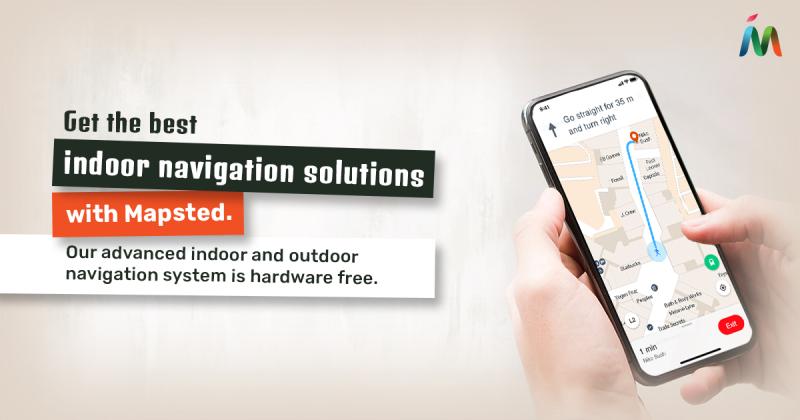
If you have ever found yourself lost in a large hospital, overwhelmed in a sprawling mall, or rushing to catch a flight in a labyrinthine airport, you’re not alone. Navigating complex indoor spaces can be daunting, no matter the industry. This is where indoor navigation solutions come in; they make it easy to get around these places quickly. These technologies are quietly changing how industries work by making things easier for visitors and bettering the way work gets done.
In this article, we will explore the various use cases of indoor navigation solutions, highlighting their impact across key industries.
Healthcare Facilities
Hospitals are among the most intimidating places to navigate. Visitors often get lost in these buildings because the hallways are like mazes and there are many departments. Not only does this make people angry, but it also affects the care of patients and the efficiency of operations. This problem can be fixed with indoor navigation solutions that show you the way to clinics, wards, and emergency rooms step by step.
Why it works: It reduces the stress of finding your way in critical moments, helps staff locate medical assets faster, and ensures smoother workflows during emergencies.
Fun fact: Studies show that more than 30% of hospital visitors struggle to find their destinations, leading to increased operational costs.
Retail Spaces
Have you ever wandered around a mall without a plan, looking for that one store or the closest bathroom? Retail spaces are known for having big layouts and not having many signs. Indoor navigation technologies make shopping more fun by showing you how to get to stores, restaurants, and other amenities in real time.
Why it works: Shoppers enjoy a smooth experience and stores learn more about how to best layout their spaces based on customer traffic.
What it means for you: You’ll never miss out on your favorite sale or waste time trying to find the food court again.
Transportation Hubs
It can be hard for travellers to get around in airports, train stations, and other major transportation hubs. Lack of time, sudden changes to gates, and big layouts make it hard to get around. Indoor navigation solutions for different industries make these trips much easier. These systems show you how to get to gates, baggage claim, lounges, and other services in real time, which makes travelling easier.
Why it works: It saves time, reduces stress, and improves overall passenger satisfaction.
Bonus tip: Real-time updates will make sure you never rush to the wrong gate again.
Educational Campuses
For new students and visitors, getting around a college campus can feel like going into uncharted territory. It can be hard to make a good first impression in places like lecture halls, libraries, and event venues that are spread out over large areas. Indoor navigation systems make this process easier by giving clear directions and options for people with disabilities.
Why it works: It overall improves the campus experience for everyone, whether they’re students, parents, or faculty.
What’s cool: Tailored routes for mobility-challenged individuals ensure inclusivity.
Event Spaces and Stadiums
Big venues are hard to work with for any event, whether it's a concert, a sports game, or a trade show. It's easy for a fun day to turn into a stressful one when you have to fight crowds to find your seat, get food, or use the bathroom. Indoor navigation solutions step in to keep things smooth.
Why it works: It keeps people safe in case of an emergency, eases the flow of crowds, and improves the experience of visitors.
Pro tip: Stadiums can even offer personalized directions to specific amenities or attractions.
Cultural and Historical Venues
Museums and galleries are spaces of wonder—but they can also be overwhelming, especially when exhibits span multiple levels. Indoor navigation technologies help you get the most out of your trip and make sure you don't miss any important sights.
Why it works: They offer detailed maps, interactive content and personalized recommendations based on your interests.
What it means for you: An informative, more enriching and smooth cultural experience.
How It All Comes Together
Then how do these systems really work? Tools like Bluetooth beacons, Wi-Fi, and geomagnetic fields are used for indoor location tracking to give accurate directions and locations. Augmented reality (AR) is even used in some more advanced systems to make the experience more immersive. For example, "Turn right at the café" is used to guide users.
What’s Next for Indoor Navigation?
The future of indoor navigation technologies is bright. As AI and IoT get better, these systems will only get smarter, with predictive analytics, automatic route changes, and even more customized experiences for each user. The options are endless, from making things more accessible to making workflows more efficient.
It will be completely easy to get around inside, thanks to indoor navigation solutions that are definitely making it easier. Whether you’re rushing to a doctor’s appointment, indulging in retail therapy, or catching a flight, these technologies are quietly revolutionizing the way we move through the world.
Post Your Ad Here
Comments