7 Basics to Food and Wine Pairing
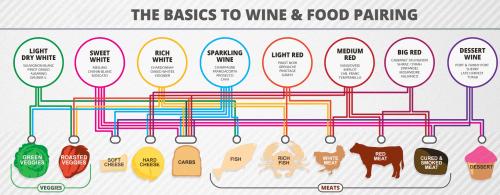
Food and wine can either complement each other perfectly, or one can ruin the other. Not everyone appreciates a glass of wine with a meal, but if you love nothing better than pouring a smooth red or crisp white with your dinner, here are a few basic rules you should take note of when pairing food and wine.
1. Intense Flavours need an Intense Wine
An intense wine will dominate whatever dish you serve it with, so you need to pair a robust wine with a rich dish. A good example of a successful pairing would be to serve a rich duck confit with a robust Cabernet Sauvignon. The Syrah grape is also on the brawny side, so it too is a good choice for a flavoursome beef bourguignon.
The challenge is when you serve different courses, so if you began with a light fish starter, for example, a rich Cabernet would swamp the flavour of the fish. A lighter red would be more appropriate, but it would be lost once you started your main course. For this reason, wines need to be matched to each dish separately.
2. Drink High Tannin Wines with Salty Food
Plenty of people add liberal amounts of salt to their food. Salt is also added to ready-made meals in abundance. Salt enhances flavour, but it can change the chemical content of food and wine, which causes subtle changes to your palate and how you perceive a wine’s flavour.
Your best bet if your dish is on the salty side (or you have a guest who loves to add extra salt to everything they eat) is to stick with a wine that’s high in natural tannins. Once again, Cabernet and Syrah grapes are a good choice, as they are naturally acidic. You may wish to try a Zinfandel, too. If you are looking for a cheaper wine, try a Malbec from South Africa.
3. Fatty Foods Need Acidic Wines
Fatty dishes are deliciously comforting, especially on a cold winter’s night, but you need the right wine to tone down the fat content. Acidic white wines complement fatty dishes such as roast lamb or potatoes au gratin. A nice sauvignon blanc is a good choice, but if you prefer a red wine with your roast lamb, look for a nice Chianti instead. Just make sure you aren’t watching Silence of the Lambs that evening.
An alternative to an acidic wine such as a Chianti or sauvignon blanc is to opt for a high tannin wine instead. The high tannin content of a Cabernet Sauvignon or a Syrah combines with the fat content of your meal. The wine retains its structure and you can still enjoy the juicy flavours of your food.
4. Serve a Dry Rose with Cheese Dishes
Cheese and wine is a heavenly combination, but it can be difficult to find a red or white wine that goes reliably with every cheese. Some white wines are a perfect match with some cheeses, and the same applies to red wines. But if you are not sure whether a red or white is a good choice for your cheese dish, your best bet is to go for a dry rose wine.
A dry rose is a perfect match for cheese. It has the fruity character of a red wine, but the high natural acidity of a white wine. You really can’t go wrong if you serve your guests with a dry rose during the cheese course. This was my major takeaway from the conversation I had with Abraham, the CEO and Founder of viniecapricci.com.
5. Drink Sweet Wines with Spicy Foods
If you love spicy food, you may be wondering how on earth to choose a wine that complements your chicken vindaloo. Spicy food often extinguishes all other flavours, especially wines, so it is hard to find a suitable wine that isn’t annihilated. You could try beer, but if you love your wine, don’t worry because we have some acceptable choices.
Firstly, make sure you avoid tannin rich wines, as they will overload your palate completely. Leave your Cabernet Sauvignon in the wine cellar and bring out a dry Chenin Blanc or Riesling instead. The higher alcohol content of other wines only serves to make a spicy dish taste even hotter. A slightly dry, low alcohol white wine that retains an element of sweetness is a nice counterpoint to a spicy dish, which is helpful if you are struggling to eat your vindaloo.
If your dish is a tasty combination of spice and sweetness, as is often the case in Thai food, an off-dry Riesling will work amazingly well.
6. Serve Sweet Dessert Wines with Sweet Food
It is traditional to pair a sweet dessert wine with a dessert, but if you are not careful, you will be overwhelmed by the sweet wine and your dessert will somehow be lost in translation. By the same token, a crisp dry white wine would mask the sweet flavour of a delicate dessert and both would be ruined. Too sweet is rarely a good choice, so look for a slightly less sweet wine such as an Asti Spumante or a Moscato d’Asti.
7. Serve Acidic Wines with Acidic Food
Acidic dishes such as tomato sauces and pasta, lemon chicken or similar require an acidic wine such as a Sauvignon Blanc or Chianti. The natural acidity of the wine helps to accentuate the flavours of acidic food, so they are the perfect combination. If your dish has a strong citrus flavour to it, look for an unoaked white wine such as a Vermentino, as the natural acidity heightens citrus flavours and gives the dish an extra zing. An unoaked white wine is a perfect partner to a citrusy fish dish. Go ahead, try it – you won’t be disappointed.
Always remember that old world wines were created to pair with traditional dishes, so if you serve caviar, crack open the Champagne, or with oysters, Chablis should be the wine of choice. Lastly, a rich Beef Bourgogne always tastes better with a rich Burgundy.
Post Your Ad Here
Comments (1)
dip foods6
Healthy Baked Foods
Our favourite tea time snack is now available in the baked version. So, give in to that craving and enjoy the real taste of bhakarwadi.
dipfoods.com/shop/healthy/baked-bhakarwadi/