5 Steps To Make Urban Transport Sustainable
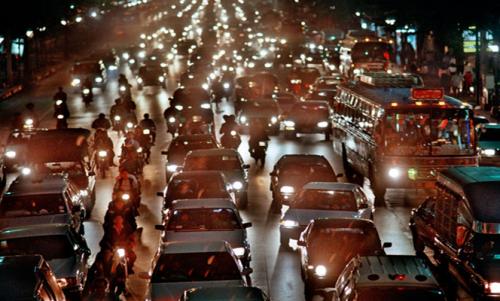
With the rising number of private vehicles on the road, ranging from the sedans to the SUVs or even the two-wheelers, one gets a fair idea of how the voluminous urban transport in India. But it is also true that in number of cities across the country, public transport has also been equally favoured. This can be understood as part of a trend which has risen out of the many steps taken already under the urban transport policy.
Policies are basically seeking to look at measures which will not only popularize urban transport thereby increasing profits but will potentially also make public transportation such as buses, metro rails, auto rickshaws etc. an oft preferred option.
Now, while some of these measures are useful and have made public transportation much viable for the general public, there is still much room left, in making such modes more sustainable option. The Indian government has introduced various options for public transport including cluster buses, e-rickshaws, and feeder buses etc. to encourage people to take opt for a comparatively environment friendly conveyance option.

In spite of this, traffic in India, especially in the metropolitans , is ever expanding. In such a scenario, urban planning or the lack of it, becomes instrumental in sustainable mobility. But, with the advent of newer forms of public transport and such initiatives by the government, it is becoming increasingly easier to make urban transport more sustainable.
Potential Steps
Under the National Urban Transport Policy, a lot of changes are needed in order to ensure that travelling in public transport seems so viable that people leave their cars behind. These steps can be seen becoming fruitful in foreign countries such as Denmark or even France where non-motorized forms of transport are much more popular.
We should implement these steps immediately in order to avoid a situation such as that of China etc. Some of these suggestions are:
Introduction of non-motorized vehicles- Non-motorized vehicles such as cycles, rickshaws, e-rickshaws etc. should be introduced and therein popularized in order to allow for individuals to understand the need to start taking other modes of transport beyond their fuel-run vehicles.
Electric vehicles- This can be another step taken both to positively affect environment as well as to reduce chances of a jam. Electrical cars would make it much easier to travel due to their compact size and would not contribute to damage the environment.
Dedicated bike lanes- Despite well-intentioned plans for the introduction of bicycles; poor bike lanes and pavements or at many places, absence of the same, pose a serious challenge.
Solar-charged vehicles- While this is increasingly becoming a significant option which many metros have adopted as part of the National Urban Transport Policy, it is still to become an absolute reality.
Car free days- A step that metros such as Gurgaon and Delhi have endeavoured recently. Despite some positive response with public officials travelling in public transport on such days, this very nascent idea is far from being termed complete success.
The government is trying to adopt many new measures with organizations such as Shakti Sustainable Energy Foundation helping these ideas.
Please leave comments below.
Policies are basically seeking to look at measures which will not only popularize urban transport thereby increasing profits but will potentially also make public transportation such as buses, metro rails, auto rickshaws etc. an oft preferred option.
Now, while some of these measures are useful and have made public transportation much viable for the general public, there is still much room left, in making such modes more sustainable option. The Indian government has introduced various options for public transport including cluster buses, e-rickshaws, and feeder buses etc. to encourage people to take opt for a comparatively environment friendly conveyance option.
In spite of this, traffic in India, especially in the metropolitans , is ever expanding. In such a scenario, urban planning or the lack of it, becomes instrumental in sustainable mobility. But, with the advent of newer forms of public transport and such initiatives by the government, it is becoming increasingly easier to make urban transport more sustainable.
Potential Steps
Under the National Urban Transport Policy, a lot of changes are needed in order to ensure that travelling in public transport seems so viable that people leave their cars behind. These steps can be seen becoming fruitful in foreign countries such as Denmark or even France where non-motorized forms of transport are much more popular.
We should implement these steps immediately in order to avoid a situation such as that of China etc. Some of these suggestions are:
Introduction of non-motorized vehicles- Non-motorized vehicles such as cycles, rickshaws, e-rickshaws etc. should be introduced and therein popularized in order to allow for individuals to understand the need to start taking other modes of transport beyond their fuel-run vehicles.
Electric vehicles- This can be another step taken both to positively affect environment as well as to reduce chances of a jam. Electrical cars would make it much easier to travel due to their compact size and would not contribute to damage the environment.
Dedicated bike lanes- Despite well-intentioned plans for the introduction of bicycles; poor bike lanes and pavements or at many places, absence of the same, pose a serious challenge.
Solar-charged vehicles- While this is increasingly becoming a significant option which many metros have adopted as part of the National Urban Transport Policy, it is still to become an absolute reality.
Car free days- A step that metros such as Gurgaon and Delhi have endeavoured recently. Despite some positive response with public officials travelling in public transport on such days, this very nascent idea is far from being termed complete success.
The government is trying to adopt many new measures with organizations such as Shakti Sustainable Energy Foundation helping these ideas.
Please leave comments below.

Comments