What is SLA 3D printing?
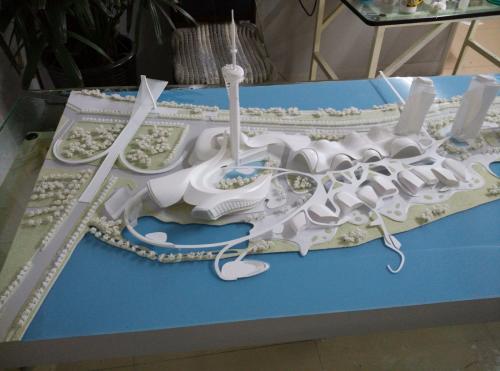
Which material is most commonly used for 3D printing? It is estimated that the first material that pops out of the minds of people familiar with the 3D printing industry is photosensitive resin. Photosensitive resin is a kind of 3D printing material, it is similar to ABS material, the surface is smooth, the precision is high, the surface can be painted, and the hardness is also ok. Photosensitive resins are very suitable for printing prototype models, such as models for exterior designs. There are also special functional requirements in addition to appearance, such as those that need to withstand high temperatures or have higher toughness.
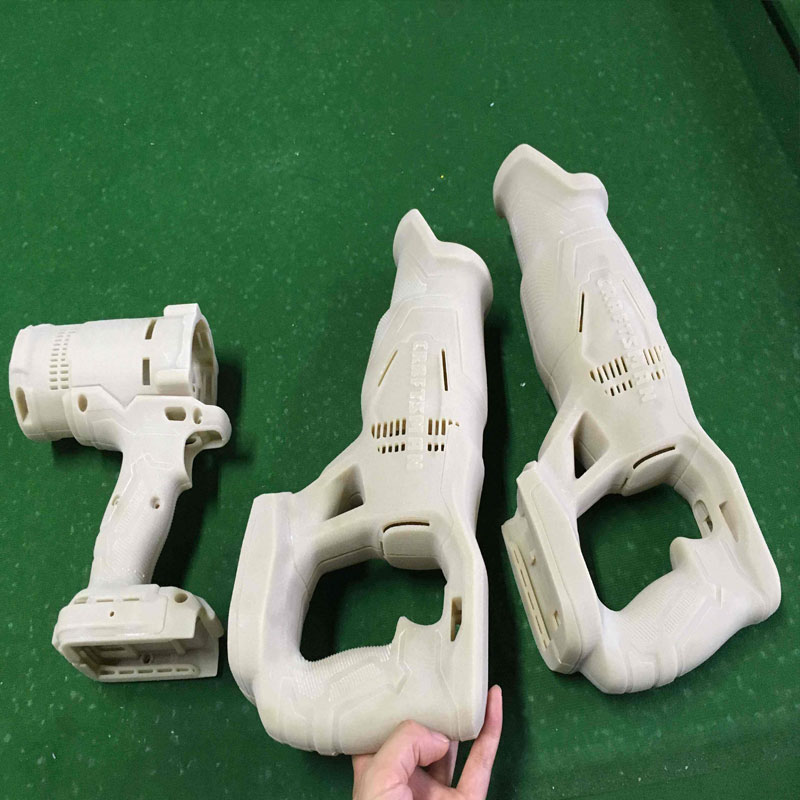
Photosensitive resin is formed by SLA / DLP technology. SLA is also called selective laser sintering. It uses ultraviolet light or other light beams to cure liquid photosensitive resin. Photosensitive resin, literally, is a resin material that is sensitive to light.
Compared with SLA, DLP printed items have smooth surfaces and high molding quality, so many DLP models are positioned as jewelry. The characteristics and applications of photosensitive resin are introduced in detail below.
Characteristics of photosensitive resin
Photosensitive resin is generally in a liquefied state, and objects printed with this material generally have high strength, high temperature resistance, and water resistance. However, if the photosensitive resin material is not used for a long time, it is likely to cause hardening.
The specific characteristics of photosensitive resin have the following points
1. Low viscosity;
2. Small curing shrinkage;
3. Fast curing rate;
4, small swelling;
5, high light sensitivity;
6, high degree of curing;
7. High wet strength.
In addition, the price of photosensitive materials is more expensive than that of desktop-grade PLA. At the same time, it is easy to cause waste because it needs to be poured into a container during use.
Application of photosensitive resin
The finished 3D printed photosensitive resin material has good details and high surface quality, and can be colored by painting and other processes. However, if the items printed with photosensitive resin are exposed to light for a long time, they will gradually become brittle and yellow. This kind of material is mostly used to print fine models and complex design models that require high model accuracy and surface quality, such as handboards, handwork, jewelry or precision assembly and so on. But it is not suitable for printing large models. If you need to print large models, you need to disassemble and print them.
In addition to the high toughness, high temperature resistance and ordinary photosensitive resins mentioned above, there are also translucent and fully transparent photosensitive resins. However, it needs to be reminded that after translucent and full transparency are printed, post-polishing is required. If the polishing is not possible, the transparency will be slightly worse.
Photosensitive resin materials are not only good for molding, but also relatively cheap, so they have become the materials of choice for printing hands. For the appearance and function verification of a sample before the product is available, this proofing fee is really very cost-effective, compared to direct production without proofing, it can save a lot of money.
However, many customers have such a question. As a liquid material, photosensitive resin also has a chemical odor, so is it toxic?
In fact, the photosensitive resin material cannot be simply said that it is toxic or non-toxic. Toxicity must be discussed in combination with the dosage. Generally, there is no problem after normal light curing. The photo-curing resin is a matrix resin of the photo-curing coating, and it is compounded with a photoinitiator, a reactive diluent and various auxiliary agents to form a photo-curing coating. Light-curing coatings are the earliest examples of large-scale successful application of light-curing technology in the industry, and are currently the largest production and sales products in the field of light-curing industry, so they can be safely contacted.
In fact, from the perspective of the commonly used chemical materials in our lives, it is not difficult to find that most polymers are non-toxic, and plastics are usually used. In fact, many melamine-based tableware, which is a bit like porcelain, is Melamine, melamine should be familiar to everyone, but its polymers are non-toxic. Of course, some black workshops use bad raw materials or poor technology, which is indeed toxic.
Therefore, users who are worried about the toxicity of photosensitive resin materials can cause harm to the human body. As long as the photosensitive resin materials you purchase are regular, in addition to the need to pay attention to ventilation protection during printing, the items after 3D printing are non-toxic. Can be assured to use and contact.
Advertise on APSense
This advertising space is available.
Post Your Ad Here
Post Your Ad Here
Comments