In-house Vs. Outsourced Data Cleansing Services
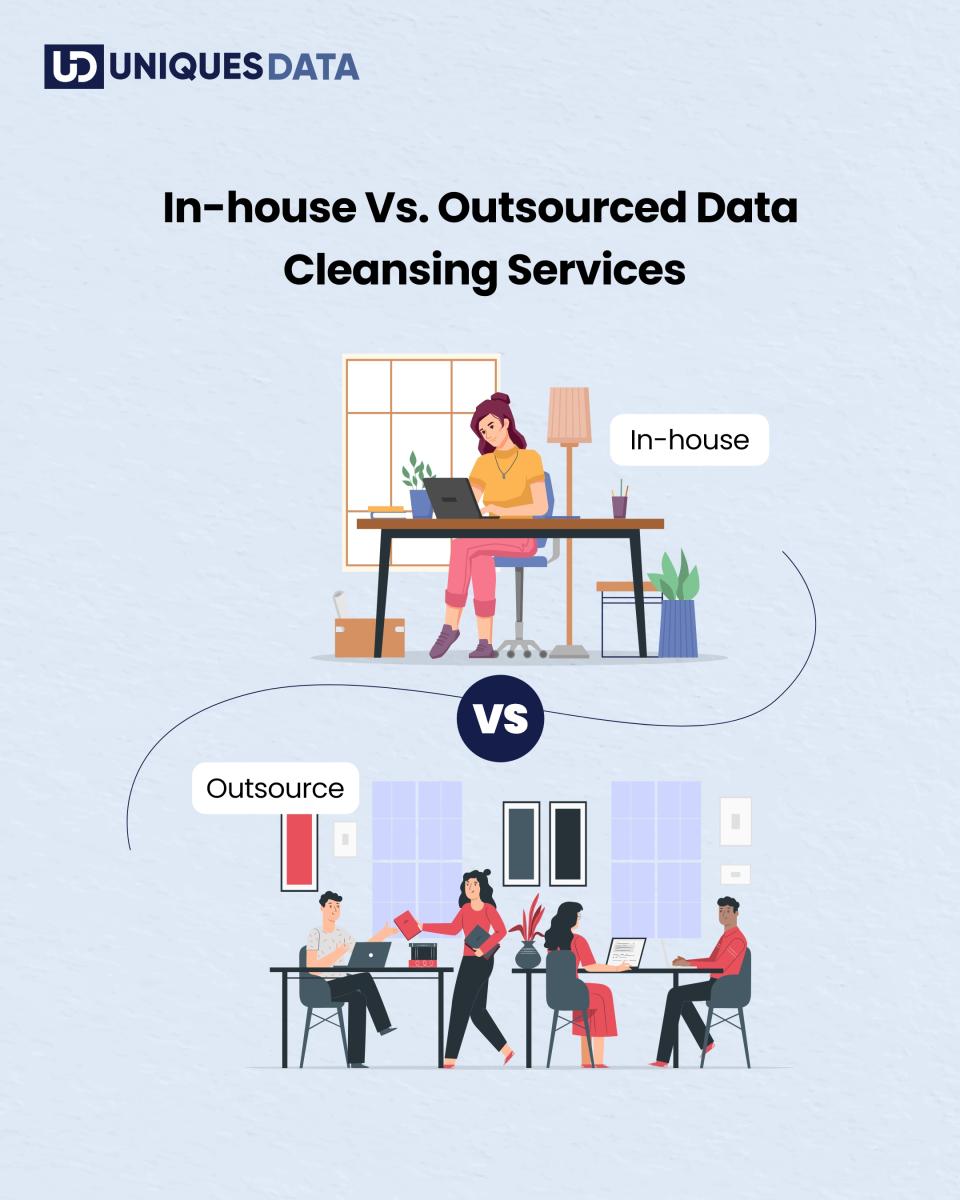
In-house data cleansing offers businesses maximum control and security over their data, while outsourced data cleansing services provide scalability, cost savings, and access to specialized expertise.
Key Benefits of Each Approach
In-House:
-
Full control over processes and custom standards, ideal for businesses with strict data governance
-
Greater internal security, with sensitive data never leaving the organization
-
Immediate adaptability and quick fixes for urgent data issues
-
Enhanced quality control and alignment with business priorities
Outsourced:
-
Significant cost savings by reducing the burden of staffing, infrastructure, and technology investments
-
Improved scalability to handle fluctuating data volumes or project-based needs
-
Access to highly specialized expertise and advanced data cleaning technology
-
Faster turnaround, freeing internal teams for strategic tasks
-
Enhanced compliance, leveraging up-to-date knowledge of regulations and robust audit processes
Considerations & Challenges
-
In-house requires investment in recruitment, training, and ongoing maintenance. It may lack the latest technology or experience for complex issues.
-
Outsourcing introduces concerns over data privacy, vendor reliability, and loss of direct oversight. Providers often use strict access and privacy controls, but trust is crucial.
-
The right approach depends largely on data sensitivity, business scale, project complexity, compliance needs, and available resources.
Both solutions have distinct advantages—in-house is best for firms needing full control and absolute data privacy, while outsourcing excels for those demanding efficiency, scalability, and cost effectiveness.

Comments