3D Cell Culture Market Size, Share, Growth & Forecast 2025-2033
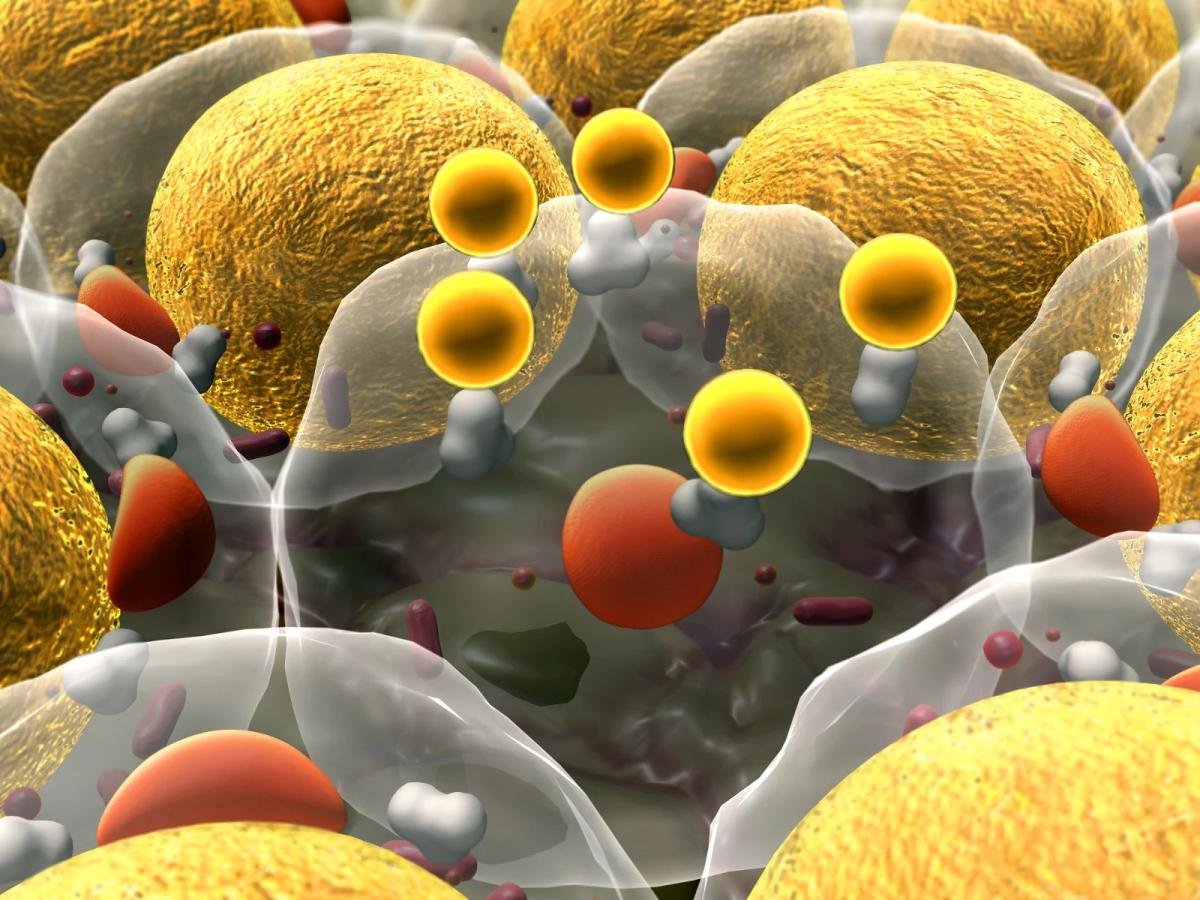
Market Overview:
The 3D cell culture market is experiencing rapid growth, driven by rising demand for alternatives to animal testing, expanding government and institutional support, and technological innovations and new product launches. According to IMARC Group's latest research publication, "3D Cell Culture Market: Global Industry Trends, Share, Size, Growth, Opportunity and Forecast 2025-2033", The global 3D cell culture market size was valued at USD 2,643.1 Million in 2024. Looking forward, IMARC Group estimates the market to reach USD 7,819.7 Million by 2033, exhibiting a CAGR of 12.69% during 2025-2033.
This detailed analysis primarily encompasses industry size, business trends, market share, key growth factors, and regional forecasts. The report offers a comprehensive overview and integrates research findings, market assessments, and data from different sources. It also includes pivotal market dynamics like drivers and challenges, while also highlighting growth opportunities, financial insights, technological improvements, emerging trends, and innovations. Besides this, the report provides regional market evaluation, along with a competitive landscape analysis.
Get Your Free "3D Cell Culture Market" Sample PDF Report Now!
Our report includes:
- Market Dynamics
- Market Trends And Market Outlook
- Competitive Analysis
- Industry Segmentation
- Strategic Recommendations
Growth Factors in the 3D Cell Culture Market
- Rising Demand for Alternatives to Animal Testing:
There’s a growing movement to reduce reliance on animal testing, and 3D cell culture is a big part of that shift. Traditional animal models can be costly, ethically controversial, and sometimes don’t provide results that translate well to humans. That’s where 3D cell cultures come in—they offer a more human-relevant option for assessing drug safety and disease behaviors. More than 1.39 million new cancer cases are diagnosed in India every year, and the push for better, faster treatments has researchers and companies leaning into advanced cell culture options. International regulatory bodies and advocacy for the 3Rs (Replacement, Reduction, Refinement) are encouraging researchers to find alternatives, fueling adoption. In fact, pharmaceutical and biotechnology companies are using these models to minimize animal use, trim laboratory costs, and speed up early-stage drug screening, which is making a real impact on industry growth.
- Expanding Government and Institutional Support:
Major investments from governments are energizing the 3D cell culture market across the globe. In India alone, the National Biotechnology Development Strategy has allocated $1.2 billion in funding to strengthen biotechnology infrastructure and drive adoption of advanced cell culture systems in academic and research settings. Over 200 Indian universities now offer biotechnology courses, building a steady talent pipeline for laboratories and research groups. Meanwhile, the United Kingdom’s regulatory agencies, such as the Medicines and Healthcare products Regulatory Agency, are promoting the move to human-relevant research models. In China, robust government funding is flowing into stem cell research and biotechnology, especially targeting organoid technology and drug discovery. These initiatives, workshops, and incentives are making advanced 3D cell culture methods far more accessible, accelerating innovation and driving sustained industry demand.
- Technological Innovations and New Product Launches:
Innovation is happening at lightning speed in the 3D cell culture world, and it’s changing what’s possible in the lab. Companies like Molecular Devices recently introduced the CellXpress.ai Automated Cell Culture System, powered by machine learning. This new tech blends automation with artificial intelligence to handle complex routines, speeding up drug discovery and reducing the risk of errors. Corning developed the Ascent Fixed Bed Bioreactor, which can scale up cell culture production from just one square meter up to one thousand—no need to switch platforms or techniques. Product releases like these make it easier for researchers to handle larger studies, work more efficiently, and explore new fields such as personalized medicine. With the global 3D cell culture market now valued more than $1.5 billion and leading companies racing to introduce advanced tools, tech evolution remains one of the strongest forces powering this industry’s expansion.
Key Trends in the 3D Cell Culture Market
- Adoption of Organoid and Organ-on-a-Chip Models:
Organoid and organ-on-a-chip technologies are rapidly becoming the frontrunners in next-generation 3D cell culture. These models can mimic complex human tissues and organs at a miniature scale, opening up a world of uses from real-time monitoring of cardiac cell activity to simulating disease progression. Hospitals and pharmaceutical companies are now able to test drug safety and effectiveness on patient-specific cells prior to prescribing treatments, making personalized medicine more attainable. The integration of organ-on-a-chip systems allows researchers to run experiments that closely resemble in-vivo conditions without needing animal models. As a result, this trend doesn’t just improve research outcomes; it has the potential to change everyday clinical practice by letting doctors predict exactly how a patient will respond to therapy.
- Automation and Artificial Intelligence Integration:
Manual cell culturing is time-consuming and prone to human error, but automation is setting a new standard. Machine learning algorithms and robotics are now running much of the routine work—feeding cells, monitoring growth, collecting data—leaving scientists free to focus on interpretation and design. AI-powered systems like CellXpress.ai deliver consistent results and can handle large sample numbers at once. Automation is especially valued in large pharmaceutical pipelines, where shaving off even a day or two per experiment can mean millions in savings. The development of automated imaging systems, real-time data analysis, and even predictive modeling tools is expanding fast. This tech wave isn't just adding convenience, it’s raising the bar for precision, scalability, and the volume of experiments anyone lab can manage.
- Focus on Personalized and Precision Medicine:
Personalized medicine, where treatments are tailored to an individual's unique biology, is driving strong demand for 3D cell culture models that reflect patient-specific responses. In India, hospitals and research programs have ramped up investment in 3D models to address the country’s growing cancer burden, with over 45% market share for cancer-related applications. Pharmaceutical firms are now using scaffold-based 3D cultures—especially hydrogels and polymeric scaffolds—to simulate how patient tumors or tissues might react to various therapies. These insights are invaluable, helping to design custom treatment plans that promise higher efficacy and fewer side effects. This pivot toward precision medicine is being reinforced by collaborative projects between universities, biotechnology companies, and hospitals worldwide, further solidifying 3D cell culture’s critical role at the heart of modern healthcare.
Leading Companies Operating in the Global 3D Cell Culture Industry:
- 3D Biotek LLC
- Advanced Biomatrix Inc.
- Avantor Inc.
- CN Bio Innovations Limited
- Corning Incorporated
- Emulate Inc.
- InSphero AG
- Lonza Group AG
- Merck KGaA
- Promocell GmbH
- Synthecon Inc
- Thermo Fisher Scientific Inc.
3D Cell Culture Market Report Segmentation:
By Product:
- Scaffold-Based Platforms
- Scaffold-Free Platforms
- Microchips
- Bioreactors
- Others
Scaffold-based platforms represent the largest segment as they provide a supportive environment that mimics the natural extracellular matrix of tissues.
By Application:
- Cancer Research
- Stem Cell Research
- Drug Discovery
- Regenerative Medicine
- Others
Cancer research holds the biggest market share owing to the increasing occurrence of cancer among the masses.
By End User:
- Biotechnology and Pharmaceutical Companies
- Contract Research Laboratories
- Academic Institutes
- Others
Biotechnology and pharmaceutical companies represent the leading segment. These companies increasingly rely on 3D cell culture technologies due to their ability to offer more physiologically relevant models compared to traditional 2D cultures.
Regional Insights:
- North America (United States, Canada)
- Asia Pacific (China, Japan, India, South Korea, Australia, Indonesia, Others)
- Europe (Germany, France, United Kingdom, Italy, Spain, Russia, Others)
- Latin America (Brazil, Mexico, Others)
- Middle East and Africa
North America's dominance in the 3D cell culture market is attributed to increasing investments in medical research to develop various novel drugs.
Research Methodology:
The report employs a comprehensive research methodology, combining primary and secondary data sources to validate findings. It includes market assessments, surveys, expert opinions, and data triangulation techniques to ensure accuracy and reliability.
Note: If you require specific details, data, or insights that are not currently included in the scope of this report, we are happy to accommodate your request. As part of our customization service, we will gather and provide the additional information you need, tailored to your specific requirements. Please let us know your exact needs, and we will ensure the report is updated accordingly to meet your expectations.
About Us:
IMARC Group is a global management consulting firm that helps the world’s most ambitious changemakers to create a lasting impact. The company provide a comprehensive suite of market entry and expansion services. IMARC offerings include thorough market assessment, feasibility studies, company incorporation assistance, factory setup support, regulatory approvals and licensing navigation, branding, marketing and sales strategies, competitive landscape and benchmarking analyses, pricing and cost research, and procurement research.
Contact Us:
IMARC Group
134 N 4th St. Brooklyn, NY 11249, USA
Email: sales@imarcgroup.com
Tel No:(D) +91 120 433 0800
United States: +1-631-791-1145
Comments