MEP BIM & Digital Twins: Trends to Watch in the AEC Sector
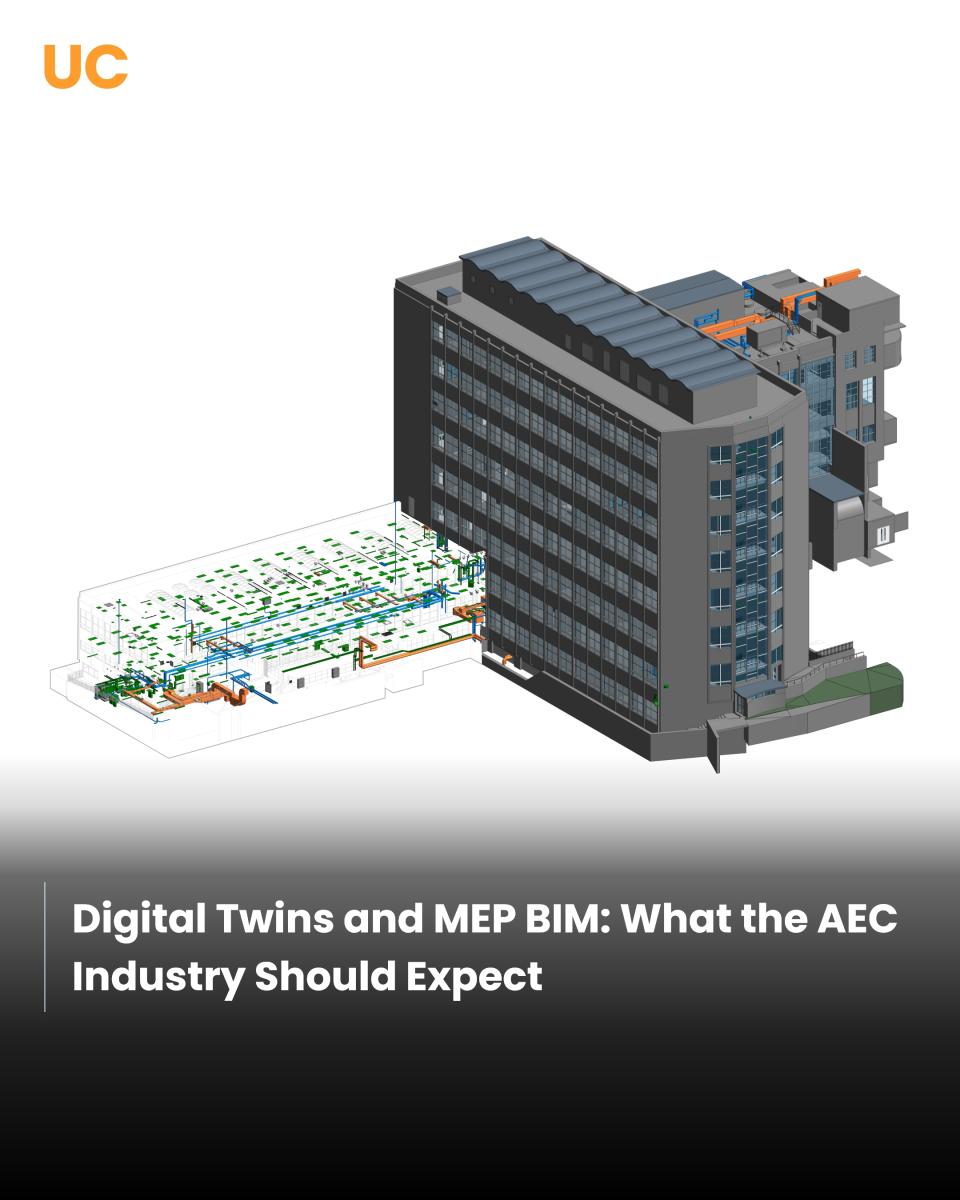
In the Architecture, Engineering, and Construction (AEC) sector, BIM (Building Information Modeling) and Digital Twins are rapidly evolving trends, particularly in MEP (Mechanical, Electrical, and Plumbing) design and operation. These technologies are revolutionizing the design, construction, and management of buildings, with a focus on enhanced efficiency, sustainability, and data-driven decision-making.
Key Trends in MEP BIM
- The transition from 2D to 3D Modeling: MEP design is rapidly moving from 2D documentation to 3D modeling, enabling better visualization, clash detection, and cross-disciplinary coordination. Tools like Revit and AutoCAD MEP are central to this shift, supporting more innovative design and simulation before construction begins.
- Prefabrication and Modular Construction: Fabrication-ready MEP shop drawings are streamlining off-site manufacturing, reducing waste, and shortening construction timelines. BIM-driven workflows increasingly support prefabrication.
- High-Precision Coordination: BIM-based coordination ensures that HVAC, plumbing, fire, and electrical systems are optimized and clash-free, improving spatial planning and reducing costly RFIs (Requests for Information).
- Lifecycle-Centered Maintenance: Asset tagging and integration with Building Management Systems (BMS) are now standard, allowing Revit MEP models to feed data into facility management systems for predictive maintenance and reduced downtime.
- AI and Automation: Artificial intelligence is being utilized for design automation, including routing, load balancing, and component placement, thereby making MEP design faster and more efficient.
- Sustainability and Carbon Tracking: BIM is increasingly used for energy modeling, carbon accounting, and supporting net-zero goals, helping projects achieve LEED and WELL certifications.
Digital Twins in the AEC Sector
- Real-Time Virtual Replicas: Digital twins are dynamic, data-rich virtual models that accurately replicate physical assets in real time. They integrate data from IoT sensors to simulate and monitor conditions, performance, and usage throughout the asset’s lifecycle.
- Predictive Maintenance & Energy Optimization: By leveraging real-time data, digital twins enable predictive maintenance, reducing downtime and operational costs. They also help simulate and optimize energy consumption for greener operations.
- Lifecycle Management: Digital twins provide continuous insights into asset health, supporting long-term tracking, facility management, and extending the lifespan of buildings and infrastructure.
- Integration with BIM: Digital twins are built upon BIM frameworks. While BIM provides static design-phase data, digital twins extend this by incorporating real-time performance metrics, allowing for simulation, optimization, and data-driven decision-making throughout the building’s operation.
- Smart Cities and Infrastructure: Digital twins are being utilized for large-scale urban planning, infrastructure management, and innovative city initiatives, enabling the simulation of traffic flow, energy distribution, and predictive maintenance at the city scale.
Integration of MEP BIM & Digital Twins
| Trend | Impact on the AEC Sector |
|---|---|
| 3D MEP Modeling & BIM Coordination | Reduces design errors, improves collaboration, and speeds delivery |
| Digital Twin Integration | Enables real-time monitoring, predictive maintenance, and lifecycle optimization |
| AI & Automation | enhance design efficiency and accuracy, reduce manual work |
| Sustainability Focus | Supports energy modeling, carbon tracking, and compliance with green standards |
| Prefabrication & Modular Construction | Streamlines off-site manufacturing, reduces waste, and shortens timelines |
Challenges and Opportunities
- Data Integration & Interoperability: The full benefits of digital twins depend on accurate, up-to-date, as-built BIM models and seamless integration of data from multiple sources. Interoperability and standardization remain ongoing challenges.
- Skill Requirements: Implementing advanced BIM and digital twin solutions requires expertise in IoT, AI, and data analytics, which can be a barrier for some firms.
- Regulatory Adoption: Governments are increasingly mandating BIM for large projects, and digital twins are expected to become essential for compliance, especially in public infrastructure.
Conclusion
The convergence of MEP BIM and digital twin technologies is expected to transform the AEC sector in 2025. Firms that adopt these trends will benefit from more innovative designs, enhanced collaboration, predictive maintenance, and increased sustainability. As digital twins become standard, accurate BIM models and robust data integration will be critical for maximizing value throughout the building lifecycle.
Related
- https://www.designheed.com/uncategorized/2025-mep-trends-to-watch-in-smart-buildings/
- https://www.uniquescadd.com/point-cloud-to-bim-trends-2025/
- https://www.bimsrv.com/top-5-bim-trends-in-2025/
- https://vavetek.ai/blog/aec-industry-for-2025/

Comments