Net Zero in the Transport Sector: Green Solutions for a Sustainable Future
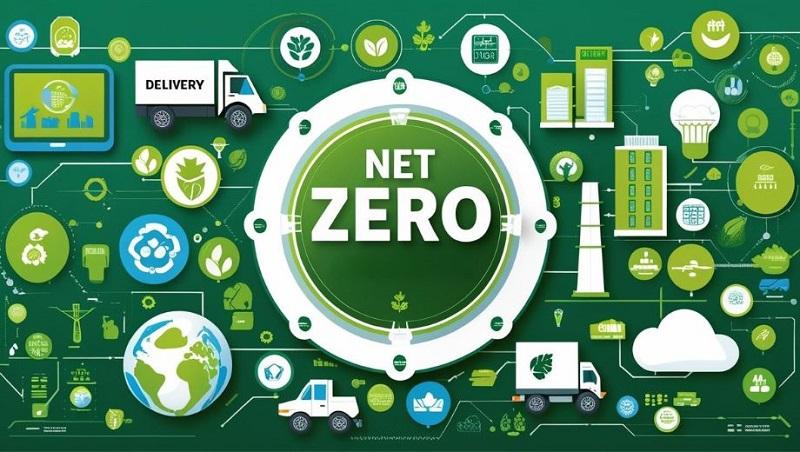
In an era of increasingly severe climate change, the concept of Net Zero has become a crucial goal for many countries and businesses, including those in the transport sector. So, what is Net Zero? Why is it important, and how can we contribute to achieving this goal?
What is Net Zero?
Net Zero refers to the state in which the total amount of greenhouse gases emitted by human activities is balanced by the amount removed from the atmosphere over the same period.
In simpler terms, if you emit a certain amount of CO₂, you must offset it by an equivalent amount through measures such as tree planting, carbon capture technologies, or investing in renewable energy.
Distinguishing Net Zero from Carbon Neutral
While both Net Zero and Carbon Neutral aim to balance greenhouse gas emissions, they differ in scope and commitment:
| Criteria | Net Zero | Carbon Neutral |
|---|---|---|
| Definition | Net greenhouse gas emissions of zero across the entire value chain | Balancing emitted CO₂ with an equivalent offset |
| Scope of greenhouse gases | Includes CO₂, CH₄, N₂O, HFCs, etc. (all GHGs) | Primarily focused on carbon dioxide (CO₂) |
| Level of commitment | Higher – requires significant emission reductions before offsetting | Typically involves offsetting emitted CO₂ |
| Long-term focus | A long-term goal (often by 2050) to combat climate change | Can be achieved in the short term, more flexible |
The Importance of Net Zero
Net Zero is not just a trendy "green" concept—it is a vital target if we want to protect the planet from severe climate change. When human emissions exceed nature’s capacity to absorb them, the Earth warms, leading to melting ice, rising sea levels, extreme weather, and ecological imbalance.
Why Net Zero Matters:
-
Mitigates climate change impacts: Net Zero helps limit global temperature rise to below 1.5°C—a threshold scientists warn we must not exceed to avoid irreversible consequences.
-
Protects ecosystems and biodiversity: Rising temperatures shrink natural habitats. Cutting emissions is a practical way to preserve nature.
-
Stabilizes the global economy: Natural disasters, droughts, and floods caused by extreme weather events result in billions of dollars in annual damage. Striving for Net Zero supports sustainable development.
-
Drives green tech innovation: From renewable energy to electric mobility and carbon storage—Net Zero opens vast opportunities for innovation.
-
Enhances brand credibility and competitiveness: As consumers prioritize eco-friendly products, Net Zero becomes a brand advantage in the era of “responsible consumption.”
Net Zero in the Transport Sector
The transport sector is currently one of the largest sources of greenhouse gas emissions, accounting for about 15–20% of global emissions (according to the IEA). Due to its heavy reliance on fossil fuels, achieving Net Zero in transportation is not just a trend—it’s a critical necessity in combating climate change.
Why the transport sector needs to transition to Net Zero:
-
Reduce CO₂ emissions from fossil fuels: Trucks, buses, ships, and planes largely rely on diesel or gasoline, which are major sources of emissions. Switching to electric, hydrogen, or biofuel-powered vehicles can significantly cut CO₂ emissions.
-
Improve energy efficiency: Green transport technologies like electric and hybrid vehicles not only save fuel but also run more quietly and require less maintenance.
-
Comply with strict emission regulations: Regions like the EU, USA, and South Korea have implemented strict emission standards in logistics. Companies slow to adapt may be excluded from global supply chains.
-
Boost brand image: Transport firms adopting Net Zero vehicles are often more highly regarded by consumers and partners, opening up new business opportunities.
Recognizing this trend, heavy truck manufacturer Sinotruck has pioneered the development of electric trucks with the launch of the autonomous Howo T5G electric truck.
In Vietnam, VIMID – a partner of U-TRUCK – is leading innovation in the transport sector by developing truck lines that meet EURO 5 emission standards, the highest current benchmark. Some of the EURO 5 engine truck models distributed by U-TRUCK include: Howo TS7, V7X, TH7, T7H, NX, and Howo MAX.
Conclusion
Net Zero is not just a climate solution—it’s our commitment to the future. From individuals and businesses to nations, everyone can contribute to this shared goal. Will you choose to stand by, or take action today?

Comments